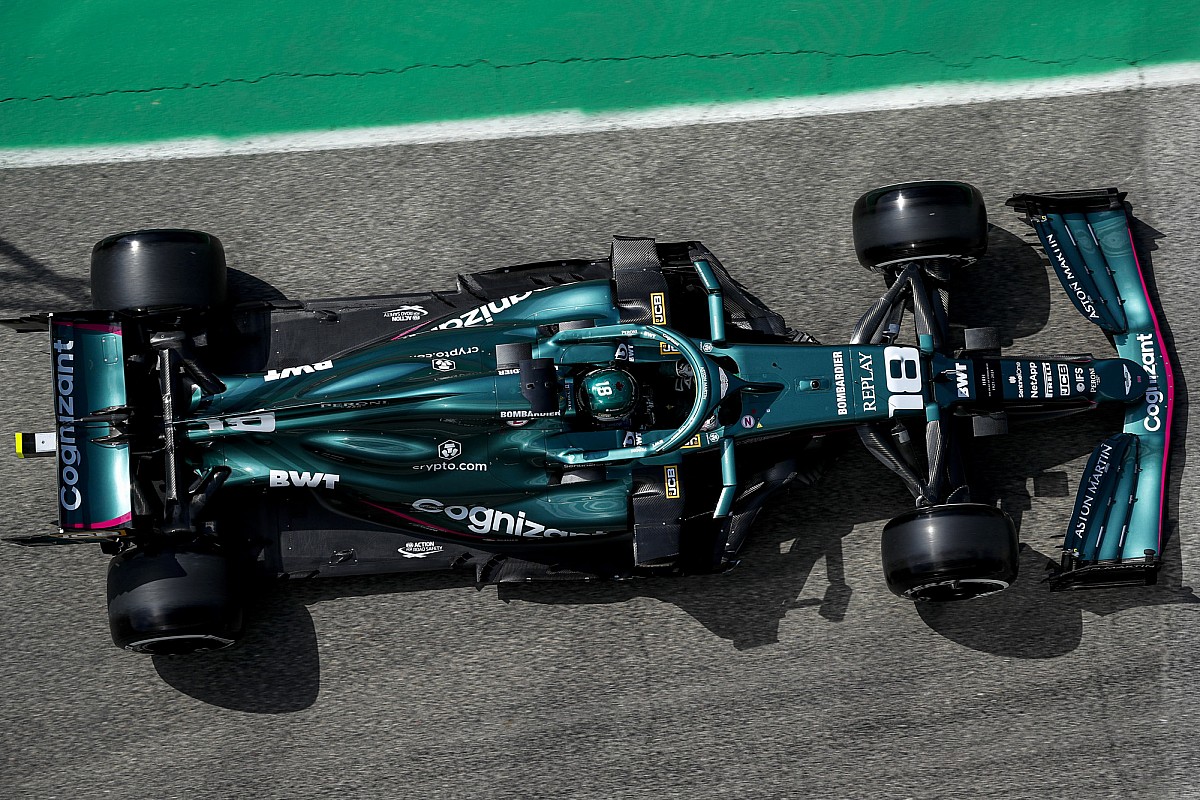
But while politics continues to rumble in the background, the team has also attacked its auto developments quite aggressively in an attempt to catch up with the opposition.
After changing its floor design for the first race of the season, Aston Martin came to Imola with further changes to improve the aerodynamic performance of the AMR21.
Also read:
This time it turned its attention to the sidepods and the various aero surfaces that surround them.
The sidepods were already incredibly tightly packed on the AMR21, but to increase aerodynamic performance, the design team focused on reducing the size of the inlet and, as a result, the size of the sidepod’s shoulder.
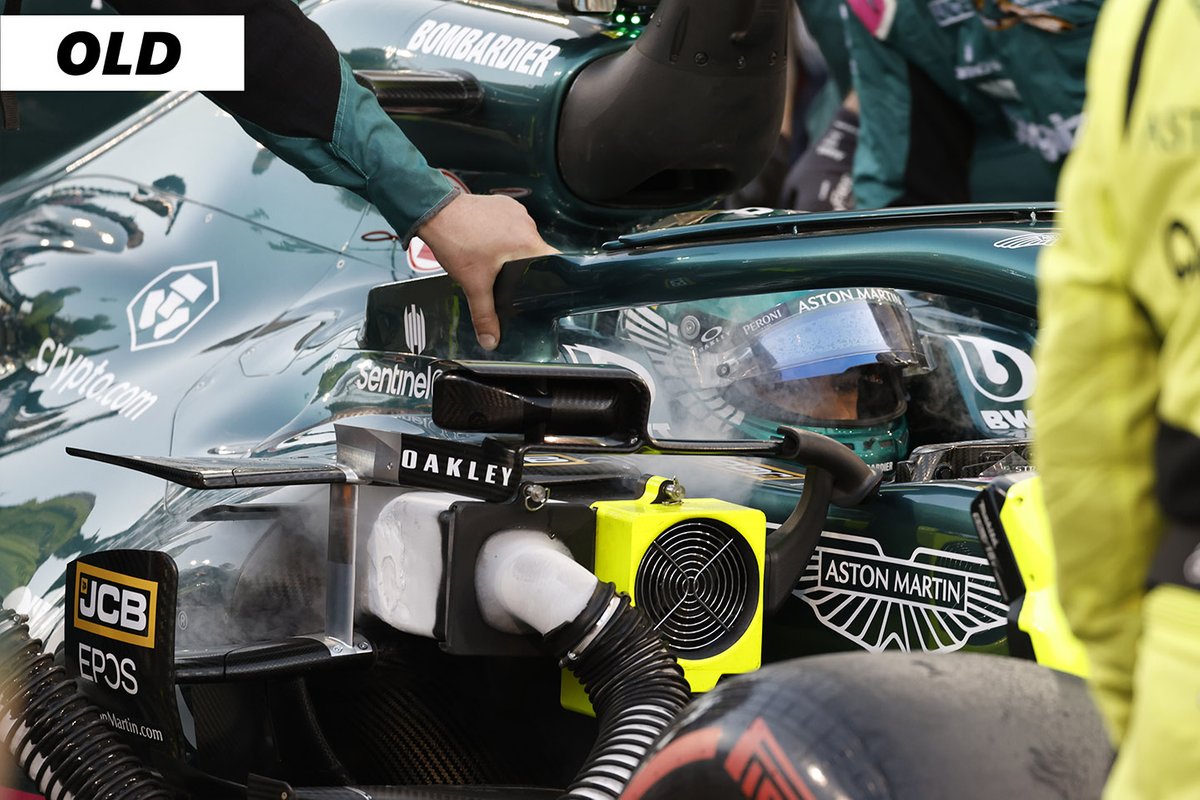
After removing both features from the checklist, Aston Martin was able to look for more wins. The sidepod wing, which extends from the cockpit to the edge of the floor, is now warped while using a much larger endplate to define the outermost edge (white arrow).
This design will likely give off a more intense vortex than the previous solution (see below).
This change is also extremely interesting as it is much more in line with the aerodynamic philosophy that the team had in its previous guise as Racing Point.
As for the aerodynamic surfaces attached to the sidepod, we have to mention the blade-like fin attached to the shoulder of the sidepod (blue arrow) that was previously mounted horizontally but is now enlarged and fixed at an angle of almost 45 degrees .
In the meantime, the lower side impact spar housing that extends towards the side box deflector has also been redesigned as it now falls down to meet the vertical flow diverter (green arrow), thereby changing the ratio in its division of flow around the Side box changes.
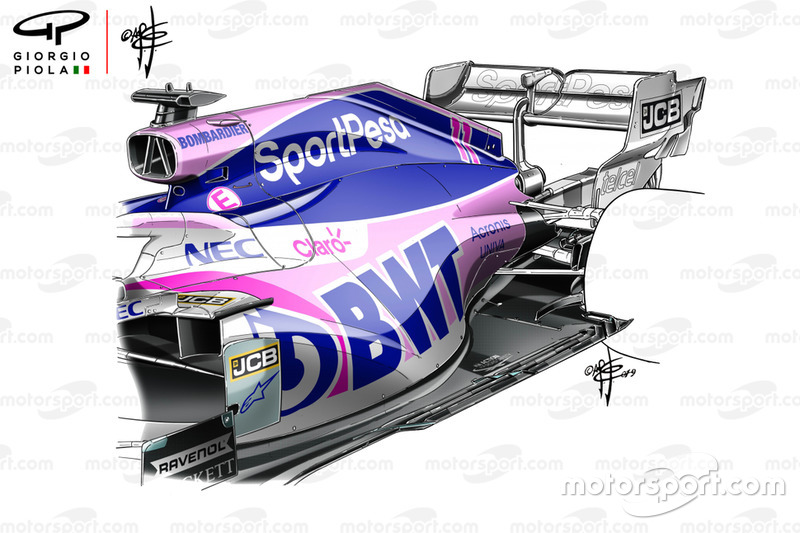
Racing Point RP19, side capsules
Photo by: Giorgio Piola
Aston Martin has also chosen to redesign the design of its wing mirrors and their supports, with the main cockpit support now at right angles (red arrow) rather than curved.
As a result of this added rigidity, the lower support that ran under the mirror was removed. In the meantime, the mirror housing is hung under the structure via two brackets rather than one, while the lower bracket is attached directly to the mirror.
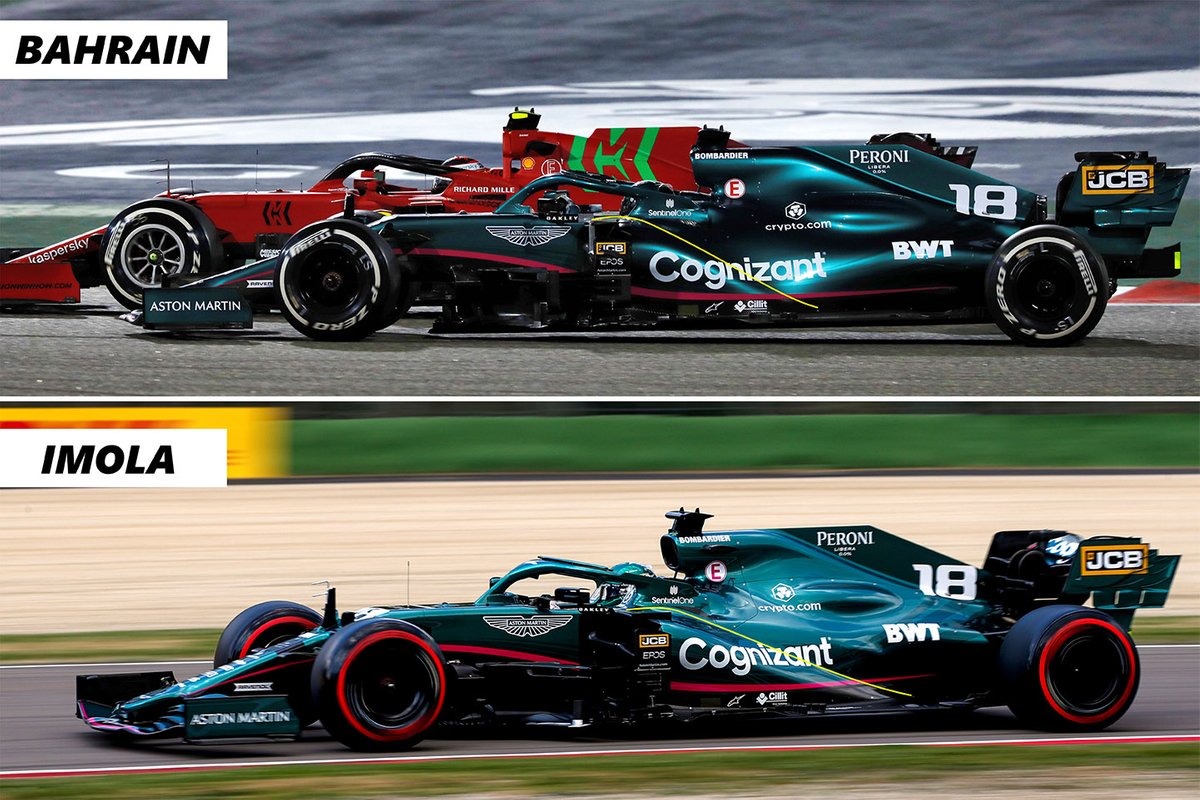
Comparison of the packaging of the Aston Martin AMR21 Sidepod and engine cover
Photo by: Not in the credits
The changes are not limited to the front area of the sidepod, however, as the ramp-shaped section of the body was also taken into account as part of the update (as made clear by the yellow line). The ramp has been lengthened significantly so that it hits the ground much further down in the car.
This has several consequences, with not only changing the aerodynamic properties, but also redesigning the internal flow for cooling.
This has also resulted in the bodywork of the engine cover being redesigned, with the shape of the cooling outlet being redesigned to accommodate the longer ramp (see section around the BWT logo), while the bulge firmly aligns with this year’s Mercedes’ larger inlet chamber Engine is wrapped around it could also have been subtly modified.
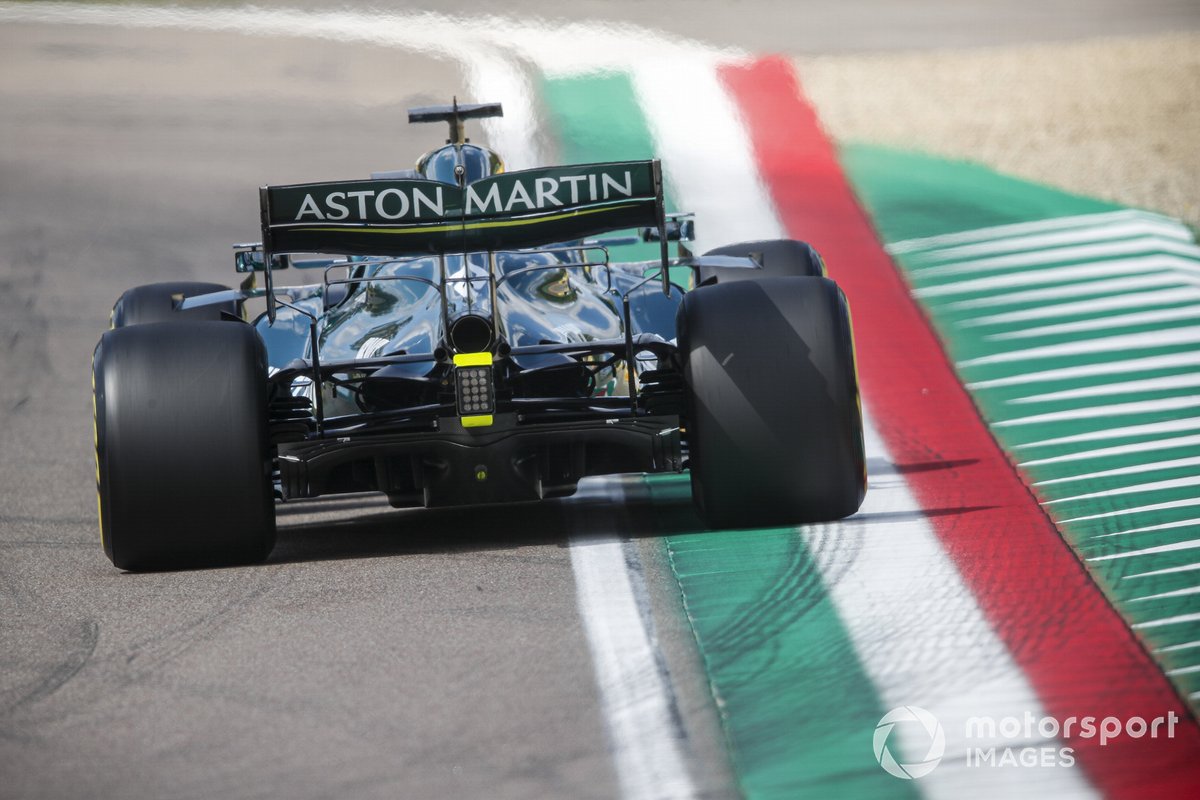
The team also had a new rear wing arrangement at Imola with a spoon-shaped design that was preferred to the traditional straight-edged design. It’s a solution that the team previously turned to in its earlier guises that reduces drag created on the outer extremities while providing the downforce required by the midsection.
Lance Stroll, Aston Martin AMR21
Photo by: Charles Coates / Motorsport Images
Return >>>
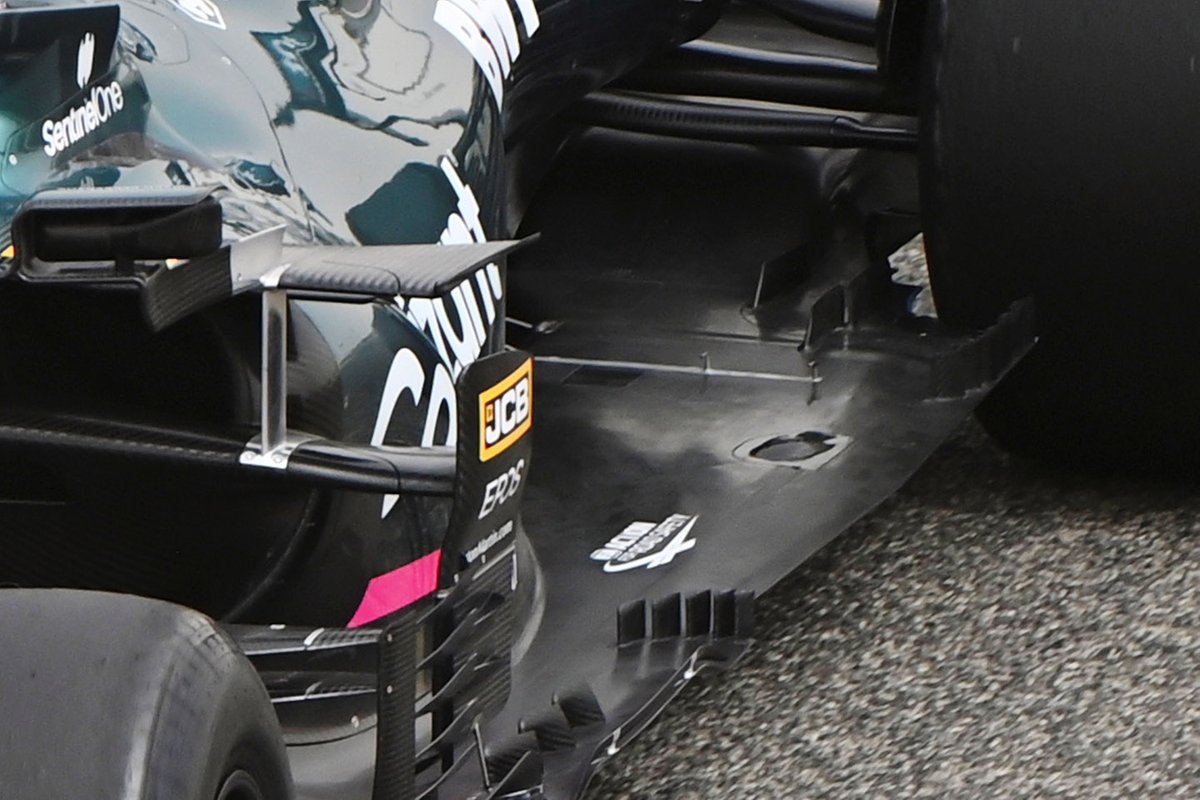
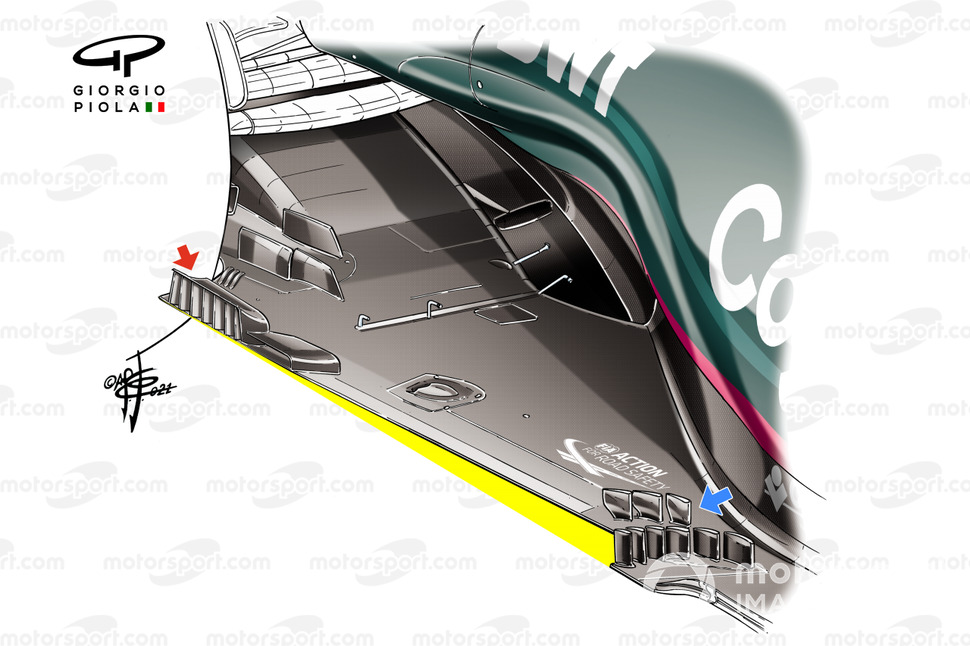
Aston Martin started with the Z-shaped floor cut-out preferred by most grid lines today, but its first attempt wasn’t quite as extensive as the new solution that arrived at the first race of the season (right).
Aston Martin AMR21 detail
Photo by: Not in the credits
Aston Martin AMR21 floor
Photo by: Giorgio Piola
With the latest solution, the team is furthest in the previous cut-out spectrum, with most of the floor being returned parallel to the center line of the vehicle. There is also a double row of sipes to direct flow at the start of the cutout and a wrapped set of sipes lines the bottom edge in front of the rear tire.
The post How Aston Martin F1 is fighting a low rake deficit first appeared on monter-une-startup.