
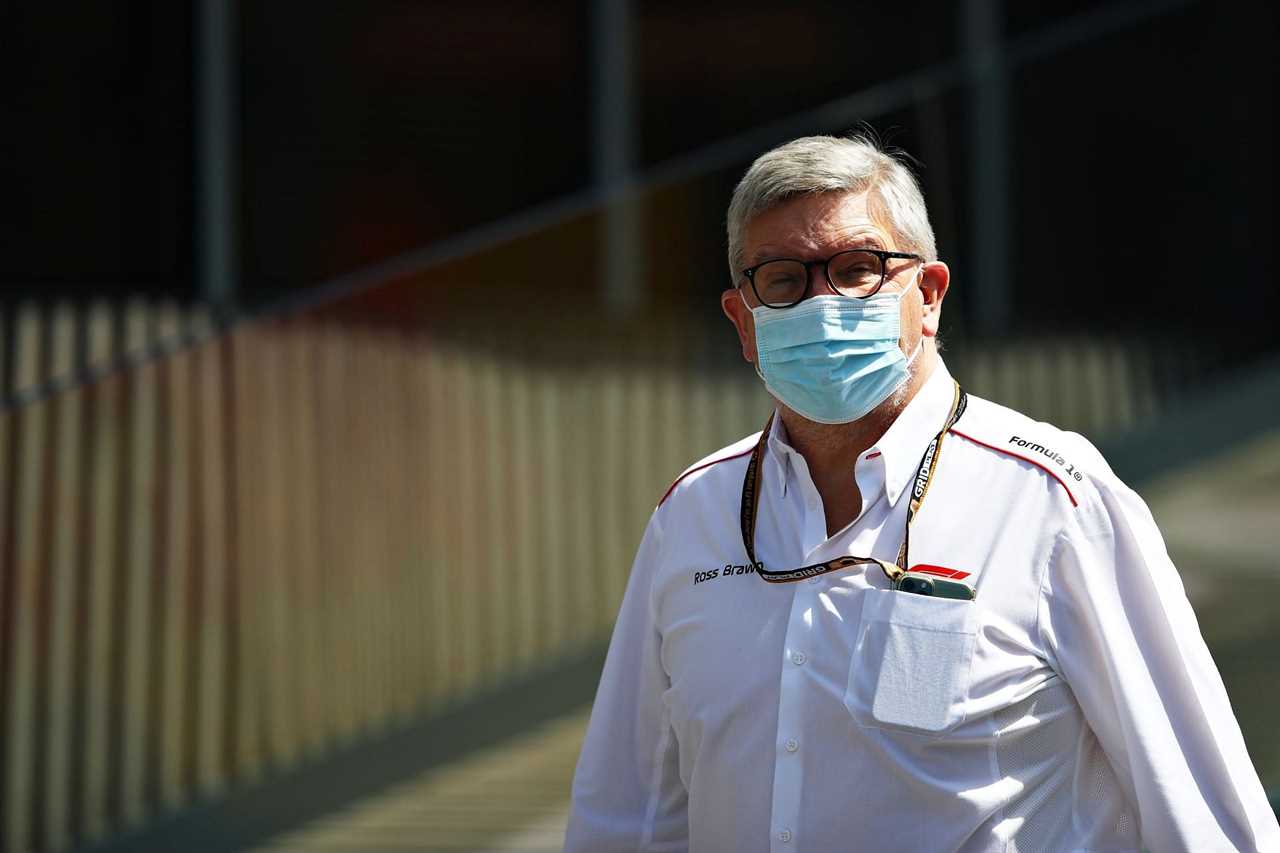
Ross Brawn explained that he and his team have tried to overcome the possibility of any regulatory loopholes while structuring the framework for the 2022 F1 season.
The sporting director revealed his team of experts went through a period of “rule breaking” until they were able to iron out most of the loopholes in the regulations.
Speaking to The New York Times and explaining the phase of shaping the rules for 2022, Brawn said:
“Trying to anticipate every gap or interpretation is very difficult, but certainly our process was to understand the problem and fix the problem. Our group spent some time looking at the sensitivities of different areas to see where there might be room for teams to evolve and change their designs.”
Brawn was an integral part of the team that designed the rules framework for the 2022 season. According to the ex-Ferrari technical director, they may not have ironed out all the loopholes, but they managed to make the frame almost perfect.
Explaining the testing phase of the rules and regulations, Brawn said:
“Then we had a rule-breaking phase where we tried to break the rules and see what loopholes we could find. We’ve been through that. I won’t pretend we’ve found every loophole, but we’ve definitely been through a regulatory testing phase to see where we can find some opportunities.”
In 2009, Brawn’s own F1 team, the Brawn GP, was able to find a loophole in the rules to make a double diffuser on their car. It helped them dominate the championship. Although competing teams had picked up the technology, Brawn GP and their driver Jenson Button emerged victorious, taking both titles that year.
What is different in the F1 regulations in 2022?
The 2022 F1 regulations call for all-new cars with ground-effect aerodynamics and new 21-inch tyres. Ground effect essentially means that the majority of the downforce is generated from the underside of the car and not from the front, rear or sides as previously seen.
A new era has dawned
Your first look at the full-size 2022 F1 car!
#F1 #F12022
A new era has dawned Your first look at the full-size 2022 F1 car!#F1 #F12022 https://t.co/e8RQaV5g7P
also readThe article continues below
The cars will have a shorter wheelbase and different rear wings. The 2022 cars will resemble a hybrid of an old F1 car and the Indy cars, making the upcoming season exciting in terms of innovation and development.
Sign in to reply

Did you miss our previous article...
https://formulaone.news/mercedes/toto-wolff-admits-misjudgment-led-to-mercedes-horrendous-start-to-2021-f1-season





