
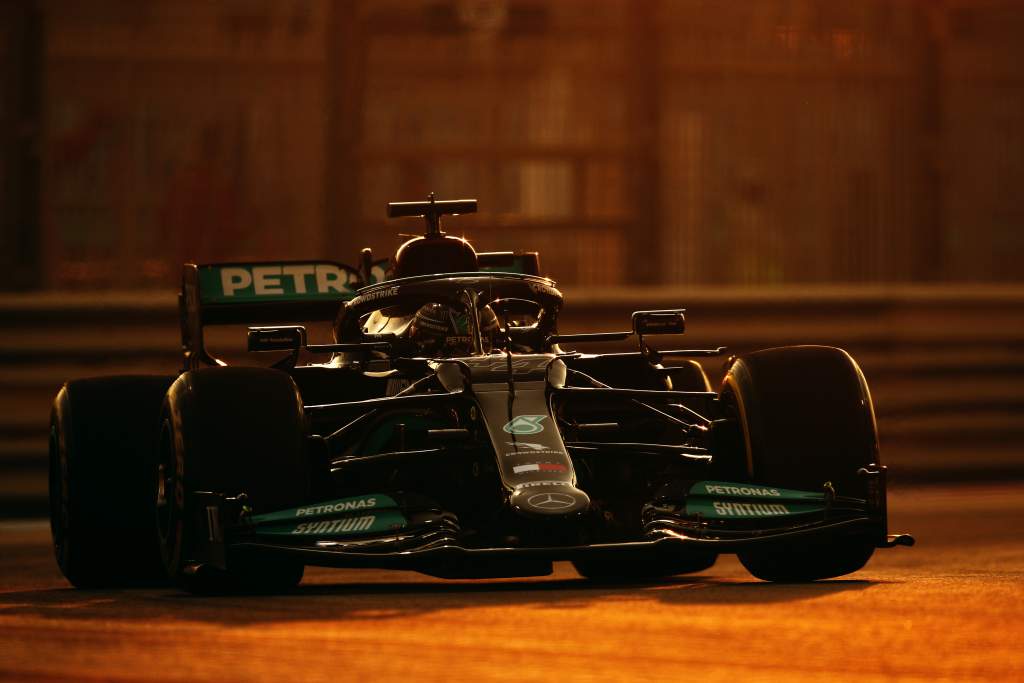
Challenged tougher than ever during the V6 turbo hybrid era of Formula 1 in 2021, Mercedes held the Constructors ‘Championship for a record-breaking eighth straight season, but Lewis Hamilton missed the drivers’ title.
It says a lot about the tremendous success of this team that this year could not be perceived as a failure in any way.
With the 2020 cars, the W12 was a revamped version of last year’s all-conquering W11. But crucial to understanding the more difficult season were the four aerodynamic rule changes that were incorporated into the ’21 regulations last year in two phases. Combined with improving Red Bull, this made for a much tougher campaign.
It also explains the fact that Mercedes never introduced the modified nose it had associated its two evolution tokens with. This decision was made before the final rule adjustments were added to the 2021 regulations, but it soon became clear that the impact of the rule changes on balance was prioritizing other priorities.
The triangular cut into the rear half of the floor that started 1,800 mm behind the rear axle, the elimination of the floor slots, the reduction in the height of the diffuser struts and the shortening of the winglets in the lower part of the rear ducts hurt the low-rake cars more.
That resulted in a car that wasn’t as competitive as hoped in pre-season testing against a Red Bull that could generate more peak downforce. The higher downforce ceiling potential of the high rake concept was always beneficial, but these changes increased the contrast.
“With a dominant car like we used to have, balance doesn’t matter,” says technical director Mike Elliott. “I don’t think that the main problem at the beginning of the season was balance, but that we lost a lot in terms of aero performance overall.
“We cannot say whether that hit us harder than others. But when we had done our job over the winter and showed up on the track, the advantage we had had was gone. “
But team boss Toto Wolff and Hamilton liked to point the finger at the rule changes. The reason for this was to prevent an increase in downforce and overloading of the Pirelli tires, which were taken over for the third time in a row.
While it’s not as wrong a reason as some have suggested, the fact that this resulted in slightly slower cars in 2021 means that the proposals for the changes, motivated in part by a desire to cut Mercedes, cannot be entirely rejected.
But it would also be unfair to ignore the fact that Red Bull and Honda have also taken a big step this year and would likely pose a greater threat even without those changes.
Not that the Mercedes wasn’t a strong car from the start. Hamilton won three of the first four races, although that record was skewed a little by the fact that the win at the season opener in Bahrain was very much against the course of the game, which grabbed the position on the track with an undercut.
“It wasn’t a crisis,” says Elliott about this phase of the season. “[It was a question of] getting on the tires, working out the optimal set-up for the car and how we can get more out of it. The whole season was like that. You only find those little things that bring little dividends.
“After we got the hit for the Reg changes, we found ourselves on a really steep development curve – which is what you’d expect when the car is really restless. Our bigger problem was that the development curve flattened out pretty quickly. “
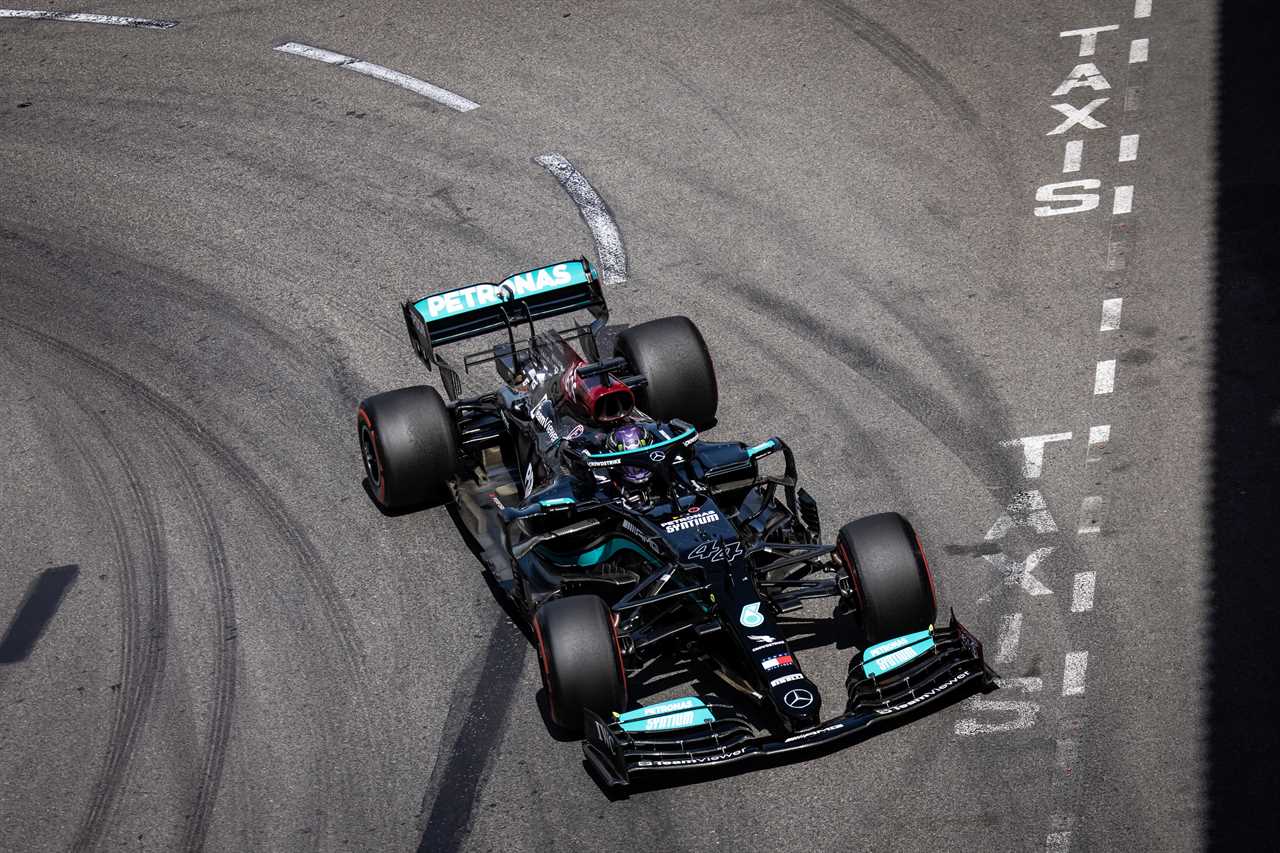
While Mercedes went through this process, the Red Bull was more often the stronger car in the first half of the season, which was underscored by a series of five wins in a row from Monaco to France.
Then came the Silverstone upgrade, which Mercedes track engineer Andrew Shovlin described as “pretty extensive in terms of the front and rear cake pans, the entire area around the bargeboards, the floor”. This enabled Mercedes to turn the tables and be ahead more often in the second half of the year.
The race’s technical director, Gary Anderson, immediately described these changes to the floor and bargeboards as a turning point given the changing priorities that focused on making the entire sub-floor harder.
“Mercedes has changed the aerodynamic flow structure from its original design, which pulls the flow out from under the raised front of the chassis and routes it around the undercut side box, to a version that includes the underbody, and therefore the diffuser, by rotating the airflow upwards along the front Corner of the floor, ”wrote Anderson at Silverstone.
“This increases the performance of that critical front corner of the subfloor. All of these airflow structures work together, but you can influence their priorities. “
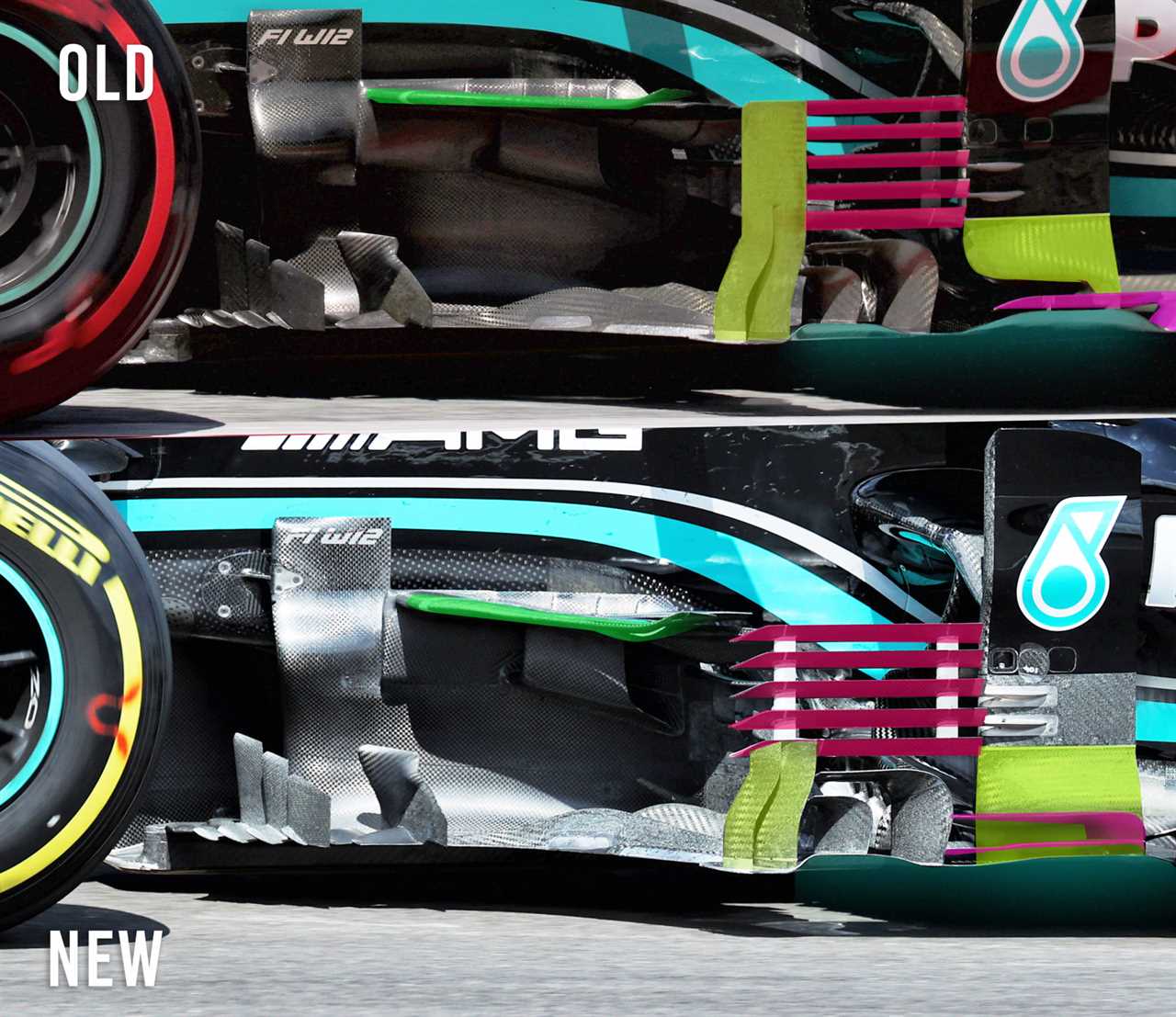
The introduction of this package resulted in a flattening of performance, but by then Mercedes had a package that should prove to be the stronger in the second half of the season.
While Red Bull had the faster car at Silverstone and only the falling temperatures in qualifying on Friday evening tore Red Bull out of the window and allowed Hamilton to take pole position, the Mercedes was more often stronger from Hungary.
There were still tracks where the Red Bull was ahead of the game thanks to its downforce, especially Zandvoort – where it went surprisingly quickly through steep Turn 3, where the longer wheelbase of the Mercedes was a limiting factor – and in Mexico City. Verstappen dominated the race there, although he increasingly struggled in the course of qualifying and ended up behind the Mercedes drivers due to the rising temperatures.
It was followed by a win in Austin, where the Mercedes was over a lap faster, but a combination of tire performance that once turned into a long run and Verstappen’s brilliance led to a Red Bull victory. Verstappen added two more wins in the second half of the year thanks to his excellent pole position lap in Belgium and the pass on the final lap in Abu Dhabi.
With the two cars’ performance still close enough for conditions and track configurations to swing out of balance, the key advantage of Mercedes was that it had an aero-efficient car – aided by its rear suspension system that lowered the rear end and at high speed created a diffuser stall, reducing drag. While it wasn’t a new system, or indeed unique to Mercedes, it worked particularly well.
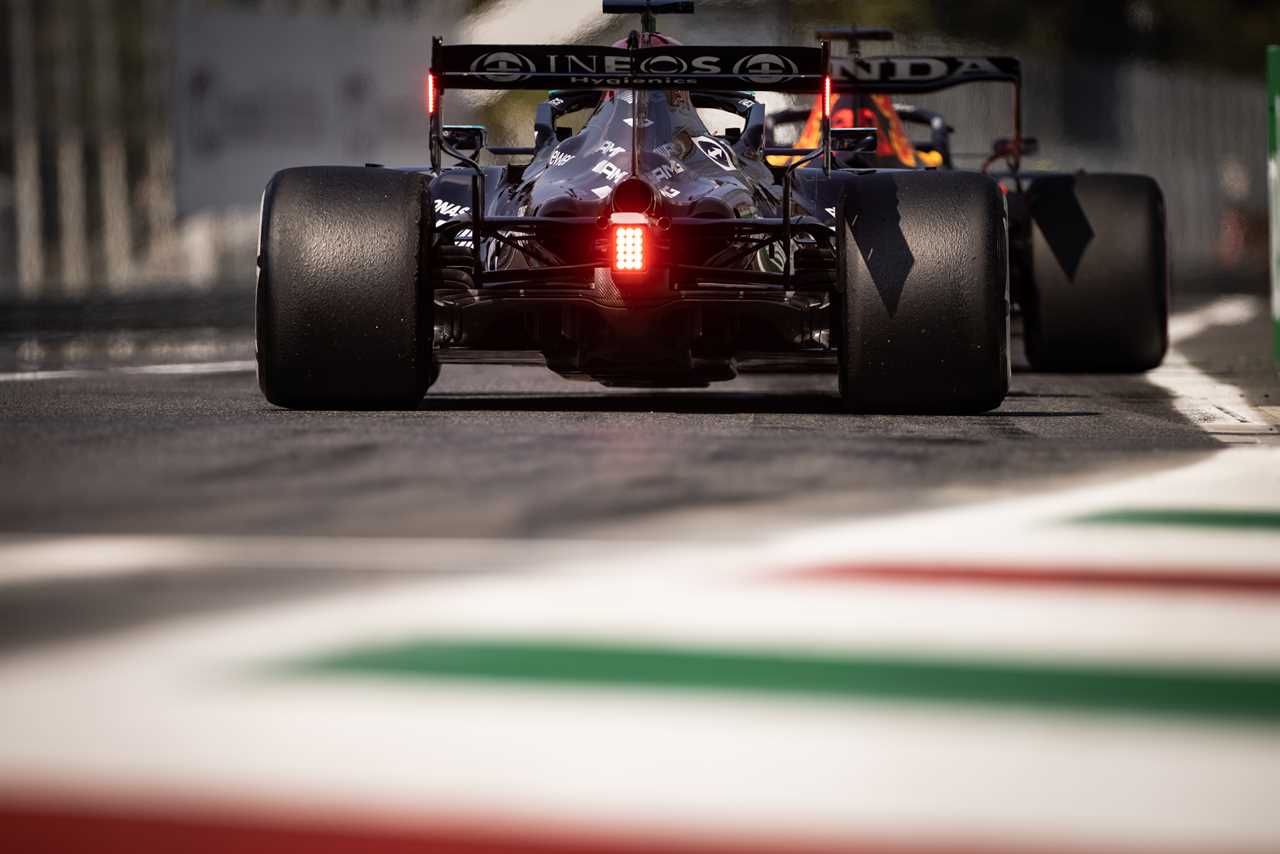
“We’ve had that for years,” says Elliott. “If you look at Red Bull, they only use all of their trips in a soft spring. On a racing car, you have your center spring for ride height, but you also use your rocker geometry to change your rate, so when you change ride height, your rates of stiffness change.
“We also have something smarter about our car than that that does practically the same thing.”
The result was that Mercedes was usually able to drive higher downforce on compromise tracks in the second half of the year in order to remove any cornering speed disadvantage for Red Bull while maintaining its strength on the straights.
As a result, Red Bull sparked suspicions about engine performance and, indeed, allegations about flexible aerodynamics, especially as Mercedes late introduced a number of changes to the drive unit through a combination of reliability issues and worrying deterioration (the latter hardly a problem for Honda).
The Mercedes engine was certainly another step forward this year, to which the conspicuously large plenum also contributed.
So which car was better, the Mercedes or the Red Bull? It’s a more complicated question than previous seasons where the average performance advantage was more apparent. But in the pure fastest single lap pace, the Mercedes 12 was 22 times faster than the Red Bull with an average advantage of just under 0.1%.
Given that things were so tight, it was always influenced by the little details of a given weekend. Mercedes particularly benefited from the fact that it was more of a “car for all seasons”, especially in the second half of the season.
But it was close enough that both teams could have won the constructors ‘championship and the same could be said of Verstappen and Hamilton in the drivers’ championship.





