
On the track, Formula 1 cars are designed to be faster than ever. Off the beaten track, hackers speed up ransomware attacks. They’re making headlines, making safety and speed a top priority for consumers and businesses alike.
For Pure Storage® as well as for Mercedes-AMG Petronas, prevention, safety and speed are crucial. You could say that we both work in “safe mode”: With Mercedes F1 it is uncompromising commitment to the safety of the driver. At Pure, we protect our customers’ data with immutable SafeMode 
snapshots that help them recover quickly from ransomware attacks.
Follow the leader: safety innovations on and off the track
F1’s safety record is almost as impressive as its record breaking speeds. For a sport that offers high-octane thrills and the fastest cars in the world, drivers are in many ways safer than they have been in 70-year F1 history. This commitment to security sets the bar high for innovators in every industry, from healthcare to data storage.
Like Pure Storage ransomware solutions, built for security and unparalleled speed, F1 has taken and developed numerous precautions to protect the sport. These range from preventive vehicle and route functions to flags that inform teams about dangers on the route. We also implement both monitoring technologies to help teams spot problems and act quickly if something goes wrong.
Look out for the following in this season’s Grand Prix races:
The cars
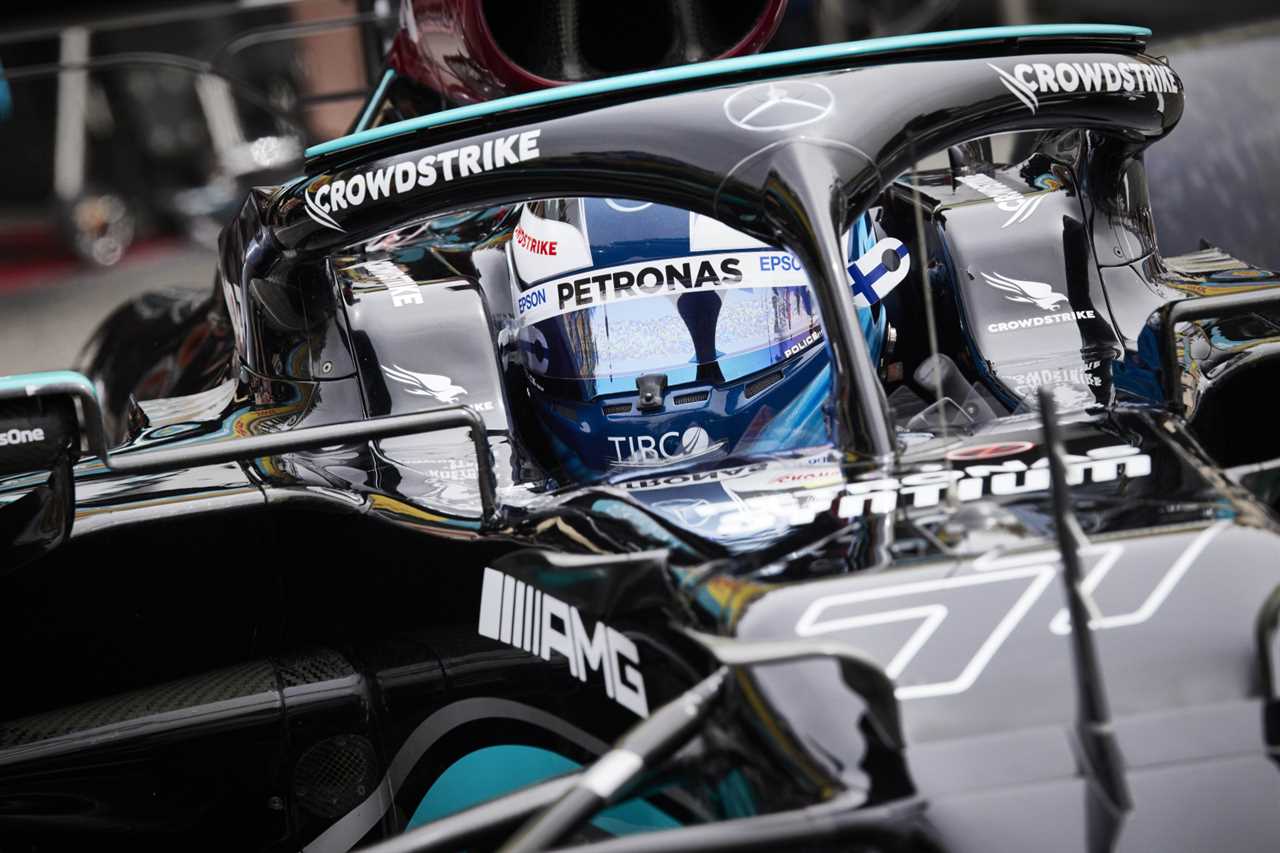
A front view of the Mercedes-AMG Petronas car at the French Grand Prix. The black bar above the driver’s face with the center support is the halo. Photo courtesy Mercedes F1.
Let’s start with the cars. Of course, they’re faster than ever, but they’re also much safer – all without sacrificing performance. From fires to flying tires, these cars are built to endure a lot. You may not see all of these features on screen, but they are there and offer some level of security.
- The accident data recorder. All F1 cars have an accident data recorder, which is like an airplane’s black box. It collects information about crashes and collisions. It also collects data on the effectiveness of safety equipment to help engineers improve the safety of F1 cars. This data can even inform medical teams of the severity of an impact so they know what to expect.
- The “survival cell”. The Survival Cell was made of 6 mm thick carbon fiber composite with a Kevlar coating and bears its apt name. It can suppress fires, resist penetrations, and absorb large amounts of energy during an impact. The fireproof foam can be controlled remotely by teams or by the driver from the car.
- Upgrades to wheels, headrests, seat belts and steering wheels. Then there are the functions that every car shares. But these are not your average cars. Wheel mounts protect both the crowd and other drivers from tires that travel hundreds of kilometers per hour. Headrests are designed for massive G-force absorption, the HANS device protects against neck and head injuries and seat belts act like belts to keep the driver safe. “The Halo” is made of aerospace-grade titanium and provides an aerodynamic shield to protect drivers from debris – or even guardrails, as demonstrated by Romain Grosjean’s devastating accident in Bahrain earlier this year.
- Safety data in the car. Sensors in the car report problems with engine failures, tires and more to the team in real time so they can tell the driver to drive past the pits or to go into the pits. The steering wheel allows the driver to report problems back to the pit team, view live data about the car and make adjustments on the track. Cameras directed at the driver also record data about an impact.
The tracks and rules of the road
The layout, the local environment, the weather, accidents and even animals can thwart a race. F1 teams and drivers prepare for each race by learning the tracks by heart – check out this post about some of the toughest tracks – but sometimes the unexpected happens. F1 keeps tracks and teams safe with:
- Weather warnings. Experts weigh up how rain, wind and heat will affect driving conditions and how cars can be set up accordingly before a race.
- Marshals. These volunteers play a huge role, waving safety flags, showing up in the event of accidents, and providing assistance with training on fire safety and more.
- Better barriers and wider run-out areas. Remember when stacks of hay bales lined the F1 circuits? Things have come a long way. TechPro barriers are designed to absorb massive bumps and keep drivers and spectators safer – like Max Verstappen’s unfortunate spinout that cost him victory in Azerbaijan earlier this month.
- The flag system. Every sport has rules and F1 is no exception. The flag system sends signals to drivers and teams alike when conditions change or when there is a threat of danger on the track. For example, yellow flags indicate that overtaking is prohibited due to hazards in the vicinity, on or on the track. A red flag interrupts the race. There is even a flag when an animal is on the track – because no driver wants a roadkill to ruin their chance of the podium!
Other rules such as the refueling ban and the super license have been implemented to improve safety. Nowadays drivers have to pass tests and make sure they are experienced on the track and competent enough to race.
Security and medical cars
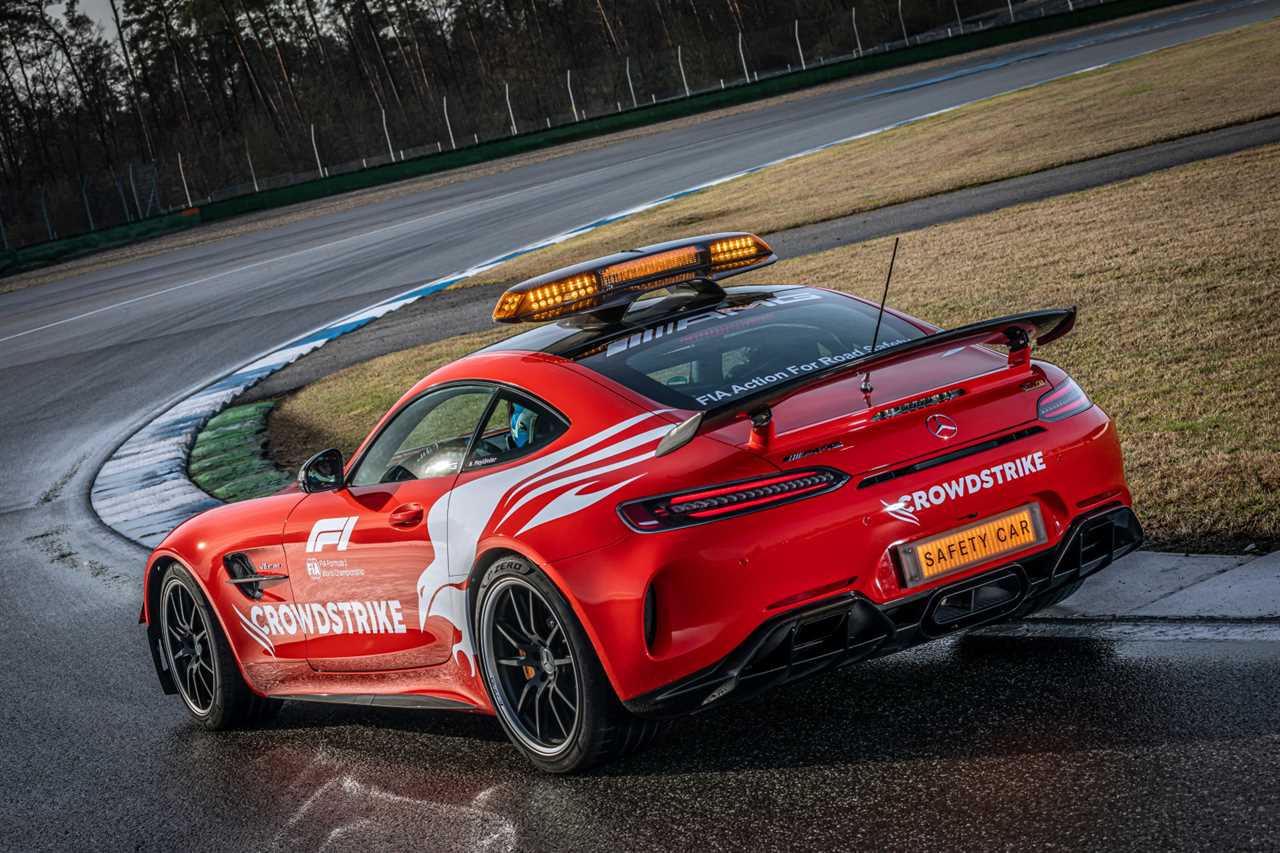
Official Mercedes-AMG Safety Car. Image courtesy of Mercedes F1.
Mercedes and Aston Martin are supplying this year’s safety and medical cars. The Mercedes AMG GT R has a top speed of 315 km / h and has been in use since 2018. The Aston Martin Vantage Safety Car and DBX Medical Car debuted in Bahrain this year. The Medical Car has the same engine type as the Vantage and is equipped with a defibrillator, fire extinguishers and a burn kit for emergencies.
Driver suits and equipment
Helmets, gloves, suits and devices on the driver isolate the driver from the elements, but there are many high-tech components that make the driver almost bionic. These include:
- Accelerometer earbuds. F1 drivers have accelerometers built into their earcups. These tiny devices collect data on the forces acting on the driver and their precise head movements in the event of an impact.
- Biometric gloves. Glove sensors can transmit the driver’s pulse and blood oxygen content to the race management in real time.
- Full face helmets. Carbon fiber helmets are designed and tested to withstand impact and fire.
- Suits. The driver’s suits are equally light and durable and are made of breathable material with a Nomex coating. Everything from the socks to the zippers is designed to protect the rider from 600 to 800 degrees for more than 11 seconds.
Safety and speed – behind the wheel and in the data center
It’s easy to see that F1 drivers are never in “Safe Mode” – but can you say the same for your company’s data?
With ransomware attacks escalating to an all-time high, Pure Storage can provide the ultimate solution for businesses who can calm down from attacks and fight back quickly – avoiding costly ransoms, lost revenue, and downtime.
Like the aerodynamic design of the Mercedes-AMG Petronas car, Pure’s SafeMode snapshots deliver results when it matters. When switched on, this free integrated function enables companies to recover immediately after an attack. Ransomware attackers often have no ransom and businesses can resume without interruption.
The safety standards of Formula 1 are technical masterpieces that are worth imitating. If you want the same for your data and your business, partner with Pure and win the race against ransomware once and for all.

Author: Carey Wodehouse
Carey Wodehouse is an IT / development content writer at Upwork who aims to make the complex world of web development a little easier. Based in Richmond, VA, Carey has worked for clients ranging from online retailers and global market research firms to financial companies. … Show complete profile >
The post How Mercedes-AMG Petronas wins with safety and speed first appeared on monter-une-startup.




