
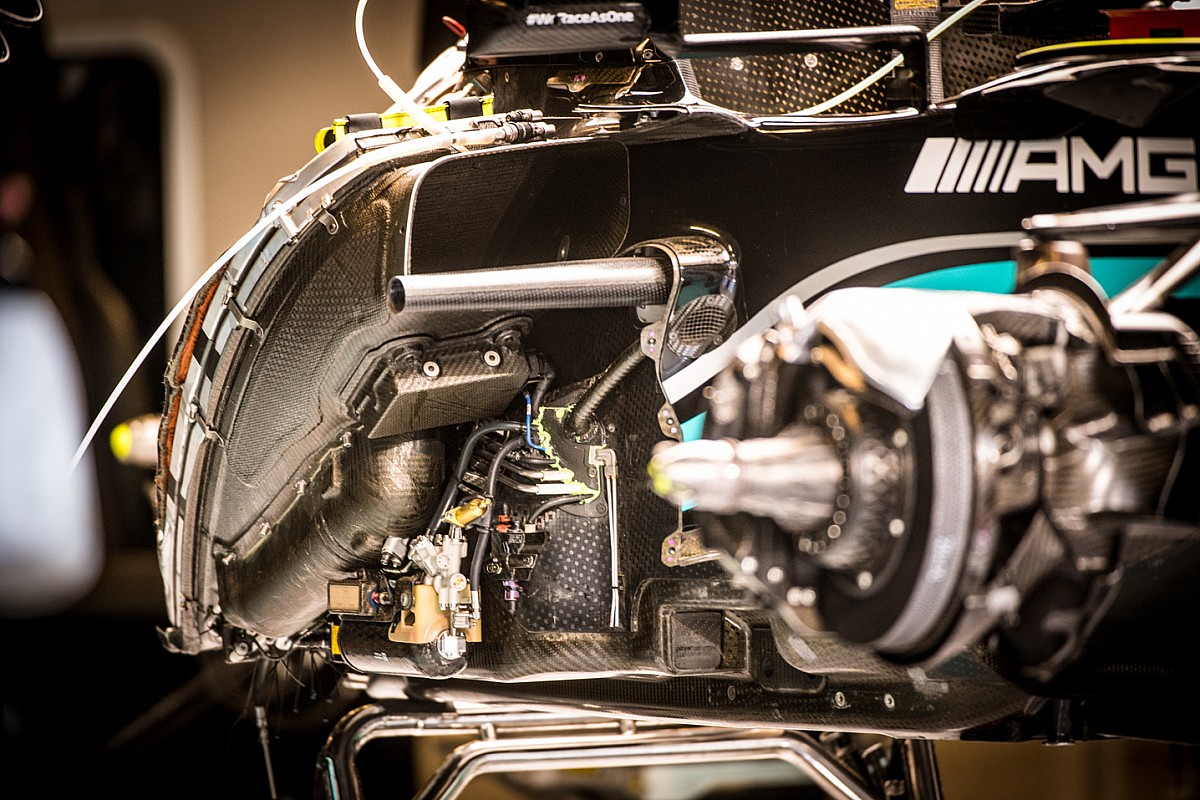
The elaborate technology that generates electricity from exhaust heat has proven to be expensive and complex since the introduction of the new turbo-hybrid regulations in 2014.
Since Formula 1 wants to attract new manufacturers from 2026, the presence of the MGU-H was seen as an essential part of the discussions.
Because the Volkswagen group, which wants to get into Formula 1 with its brands Audi or Porsche, hesitated to keep the MGU-H.
It felt that the cost of developing the technology, which has limited applicability to road vehicles, as well as the head start current manufacturers have had in understanding that technology, was not worth it and their continued presence could lead to it becoming keep away from joining.
Earlier this summer, Mercedes F1 team boss Toto Wolff said the German automaker was ready to drop the MGU-H if other elements of the rules were agreed.
“I think it’s a compromise that I can’t speak for anyone, but at Mercedes we are ready to make it to make the Volkswagen Group’s entry easier,” he said. “But there are a few other issues where trade-offs” need to be found. “
In the subsequent discussions between the current automakers and VW, it was agreed that the MGU-H can be omitted if other elements are proposed – such as a cost cap that ensures that new entrants do not trigger a new spending war.
As a result, the FIA’s World Motor Sport Council has confirmed that there will be four key elements of the new engines coming in 2026.
The previous 1.6-liter V6 engine will be retained, the electrical output increased to 350 kW, the MGU-H abolished and an upper cost limit set for engine development.
In addition to the increased electrical output, the FIA has also approved the framework concept for F1, which runs on 100 percent sustainable fuel.
Another important element is the attractiveness of the units for fans.
The FIA said it wanted to avoid “a powerful and easy-revving engine, car performance, sound, drivers’ ability to race, excessive differentiation.”





