
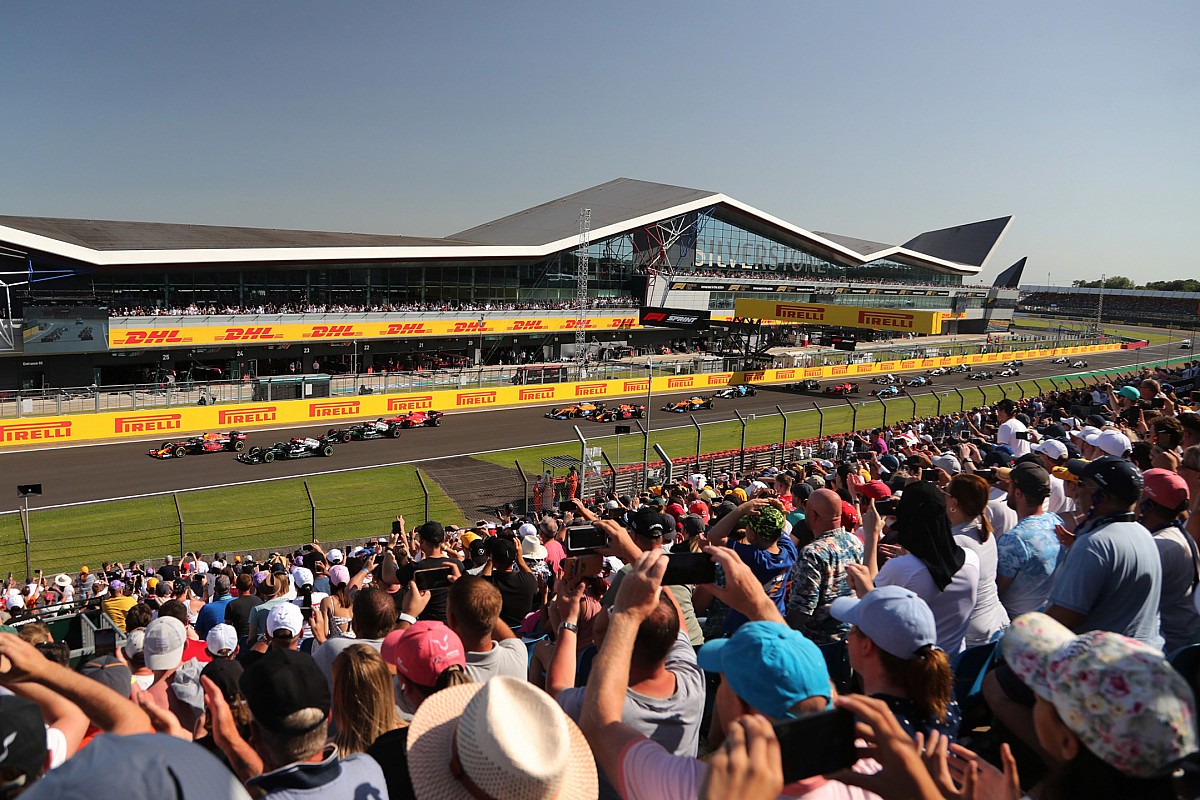
For Formula 1’s first sprint qualifying race, it was always difficult to live up to the hype that had been building around it for weeks.
Hopes of 100km full-throttle races, where riders battled for the top positions with their wheels slamming after not worrying about tire wear and fuel, would likely never come true.
But Silverstone’s first sprint can certainly be seen as a commendable first attempt, even if it does offer some warning signs of potential problems on the horizon if it becomes a regular feature.
On the plus side, there was some good track action and it was a race where the drivers didn’t just sit there waiting for a pit stop to give them a chance to overtake.
At the top it became clear what Carlos Sainz Jr. had predicted before the weekend: seven fun corners and then a procession.
Max Verstappen’s aggressive weaving in the first round and Lewis Hamilton’s brave attempt to circumvent his Red Bull rival in Copse from the outside were brilliant to see – and likely something that wouldn’t be expected in a regular two-hour GP.
The spectacle was certainly saved by the brilliance of Fernando Alonso, who switched on his softs at the start and advanced from eleventh place on the grid to fifth place after the first lap.
Fernando Alonso, Alpine A521, Lando Norris, McLaren MCL35M, and Sergio Perez, Red Bull Racing RB16B
Photo by: Charles Coates / Motorsport Images
Since the battle for the top four positions had stabilized pretty much from then on, all the attention was on Alonso, who valiantly tried to hold the middle runners back behind him.
It was a difference in strategy that is seldom seen in regular F1, as stints are usually much longer than the 17 laps involved in the sprint. Alonso would never have entered the soft gamble on a normal Sunday because he would have stopped early and ruined his racing chances.
It will be particularly exciting to see whether the very narrow crossing point between soft and medium for the Silverstone Sprint can also be reached at other venues.
Because if the soft was out of the question (and keep in mind that Valtteri Bottas couldn’t benefit much from it) then the sprint would certainly have been a lot less exciting.
When the sprint arrived, it wasn’t just about delivering a brilliant 30-minute spectacle on a Saturday afternoon.
As F1 boss Ross Brawn has repeatedly said in recent weeks, the format change was about improving the entire race weekend – with a focus on every day. That means a Friday qualifying, a Saturday sprint and a Sunday main race.
Friday’s British GP undoubtedly showed that the move spiced up the opening day of practice.
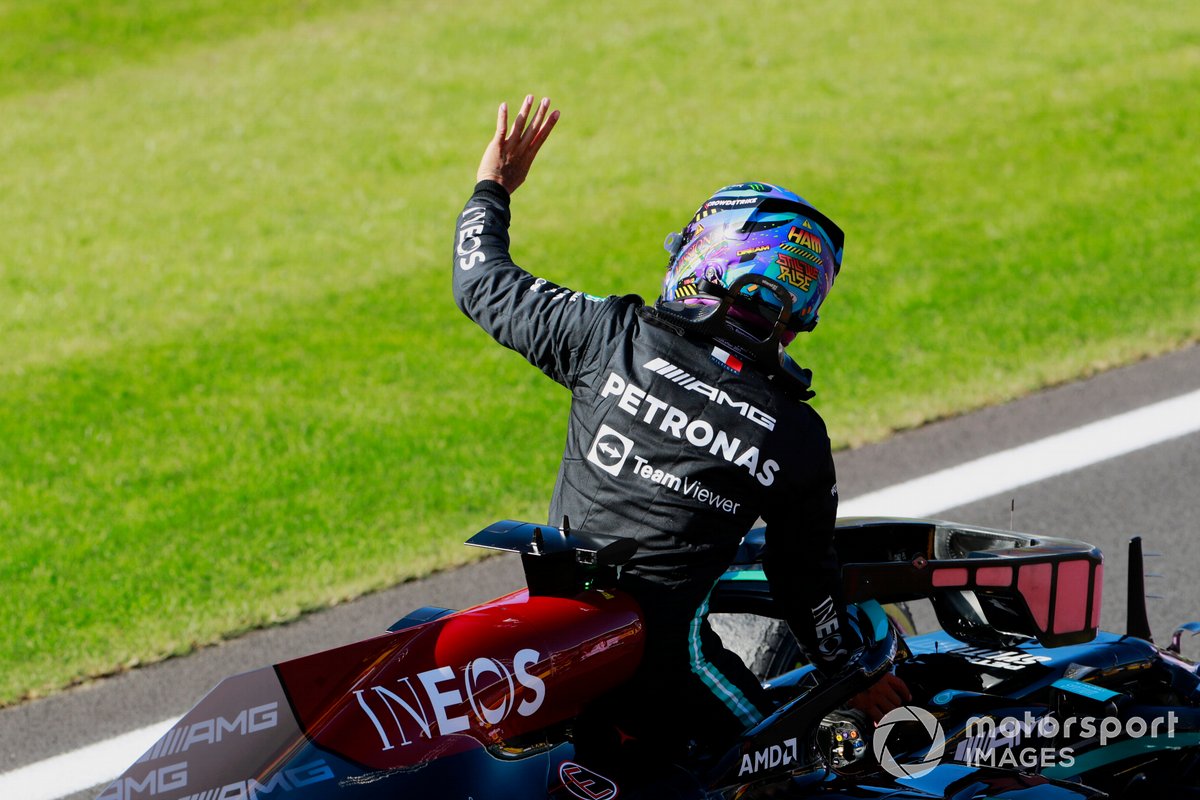
Lewis Hamilton, Mercedes, waves to the fans
Photo by: Steven Tee / Motorsport Images
The crowd’s delight in seeing Hamilton take a pole (that wasn’t a pole) was plain to see. In terms of engagement, eyes were certainly bigger on the sport on a Friday than when the teams were focused on their long-term data.
What needs to be taken into account, however, is that the Silverstone weekend benefited from the novelty factor. Hamilton’s Pole and George Russell’s Q3 performance were a highlight because they were something new in a race that had a strong home crowd behind the home heroes.
What we cannot say yet is whether the intensity and value of Friday qualifying could drop massively in the future if the teams realize that the starting positions for the sprint race are not so important.
Now, if the main difference between teams in competition is getting good escapes and strong first laps, drivers could quickly switch off if they care too much about what happens on a Friday.
And as soon as the drivers say: “I don’t care, I qualified fourth, I know that the sprint race will change everything”, then the fans will quickly pass this message on and switch off the Friday action themselves.
However, some benefit of the Friday move for the fans is that the lack of practice time means that the teams have a greater chance of going wrong with the setup.
The Parc Ferme rules mean that riders will be locked in their set-up from Friday afternoon, which means that there will only be a single session to decide on their approach for the weekend.
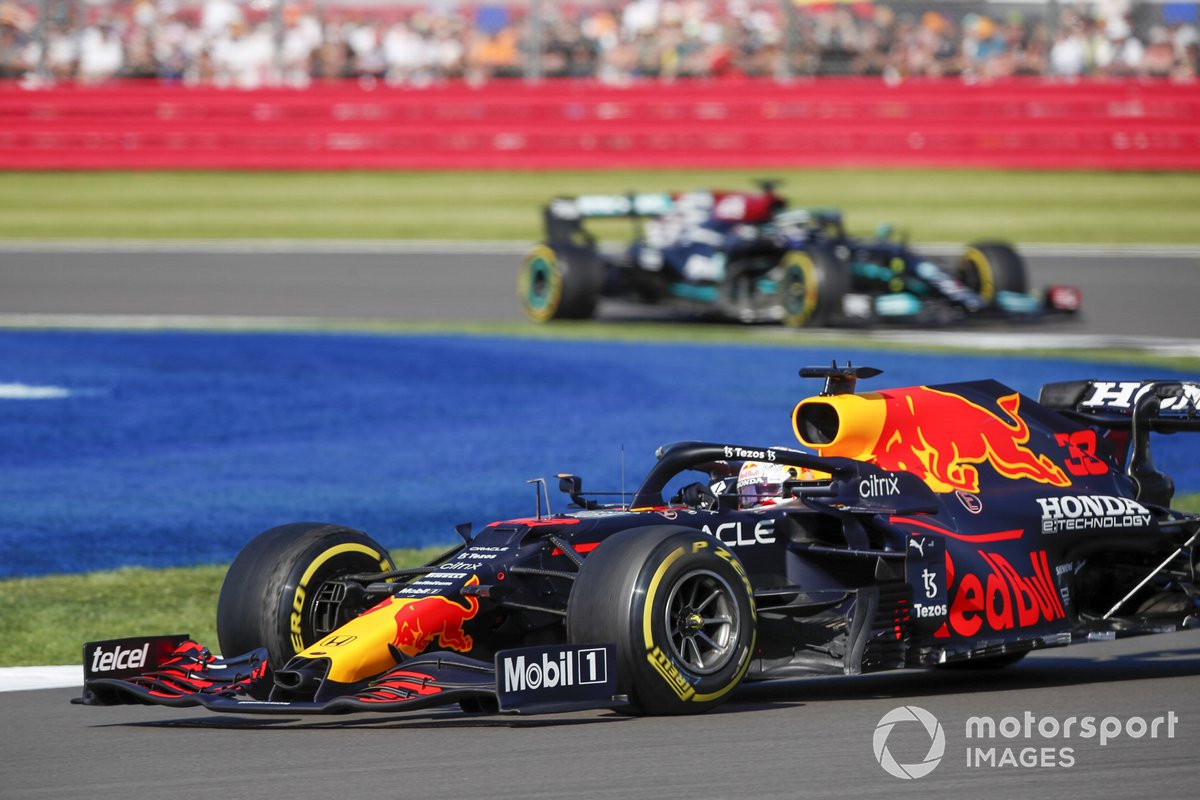
Max Verstappen, Red Bull Racing RB16B
Photo by: Charles Coates / Motorsport Images
In the case of Red Bull, his dominant form in opening practice on Friday convinced him to prepare for a high downforce. With rival Mercedes choosing to take the wing off and go at straight speed instead, it means that Verstappen is now stuck on something he knows isn’t ideal. Such a hazard can be good for the provision of entertainment.
As Verstappen fears, the Parc Ferme rules have triggered the consequence of making the last free practice session on Saturday morning somewhat superfluous. It cannot be used as a session to make setup changes to the car so it is only an opportunity to check the life of the tires.
At Silverstone, the fine gaps between the soft and medium tires meant it was beneficial for the teams to get their cars out and see what was the best path. Dave Robson, Head of Vehicle Performance at Williams, admitted that he was “pretty impressed” with how much the teams ran in FP2. “But what’s the point of adding extra on tracks where the softest tire can easily survive the full sprint race Mileage for engines and racing cars?
What we do not yet know exactly is what influence the spectacle of today’s sprint race will have on the main Grand Prix.
With Parc Ferme rules in place and the riders all starting on the same mid-size tires, there is little reason to believe that everything will be different in terms of pace.
Fans already know the Red Bull looks too fast on the corners for Hamilton to follow close enough that the only hope of a turnaround on Sunday is for strategy to come into play. Does that make things more or less exciting than if we had started the full race today?
A look at the target order of the sprint race shows that there was not so much excitement, only Alonso and Kimi Raikkonen were able to improve strongly in the afternoon.
| Friday qualifying position | driver | F1 sprint position | difference |
| 2 | Max Verstappen | 1 | +1 |
| 1 | Lewis Hamilton | 2 | -1 |
| 3rd | Valtteri Bottas | 3rd | = |
| 4th | Charles Leclerc | 4th | = |
| 6th | Lando Norris | 5 | +1 |
| 7th | Daniel Ricciardo | 6th | +1 |
| 11 | Fernando Alonso | 7th | +4 |
| 10 | Sebastian Vettel | 8th | +2 |
| 8th | George Russell | 9 | -1 |
| 13th | Esteban Ocon | 10 | +3 |
| 9 | Carlos Sainz | 11 | -2 |
| 12th | Pierre Gasly | 12th | = |
| 17th | Kimi Raikkonen | 13th | +4 |
| fifteen | Lance walk | 14th | +1 |
| 14th | Antonio Giovinazzi | fifteen | -1 |
| 16 | Yuki Tsunoda | 16 | = |
| 18th | Nicholas Latifi | 17th | +1 |
| 19th | Mick Schumacher | 18th | +1 |
| 20th | Nikita Mazepin | 19th | +1 |
| 5 | Sergio Perez | 20th | -fifteen |
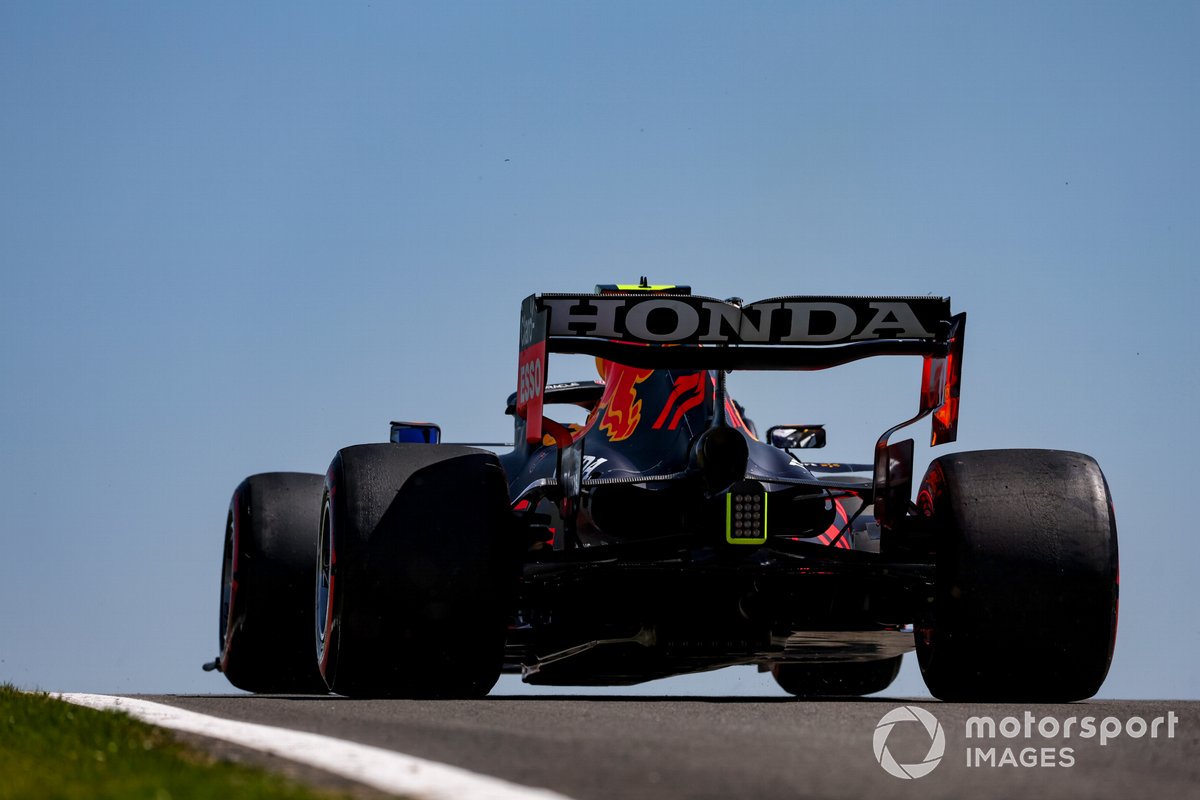
Sergio Perez, Red Bull Racing RB16B
Photo by: Glenn Dunbar / Motorsport Images
The biggest loser was Sergio Perez, who brought him to the bottom of the field with his spin. He is now expected to start out of the pit lane on Sunday, with Red Bull being able to make setup changes to the car to help move him forward.
But it’s hard to judge the value of sprint races when the drivers are big losers and falling behind. Is F1 really better off if it were, for example, Verstappen or Hamilton, who start from behind on Sunday and have little hope of challenging their rivals at the top?
One of the big social media debates over the weekend was about messaging and naming. Formula 1 was particularly careful not to call the sprint race a “race”. In the FIA regulations it is referred to as a sprint qualification. F1 owners Liberty Media have dubbed it the “F1 Sprint”. But for fans, it’s the kind of marketing nonsense that just upsets them.
As the post-race F1 media interviewer Jenson Button rightly told Verstappen when he kept tripping over himself for not saying the R-word, “I don’t want to call it a race, but it was a race … “
Then the disputes over whether the pole position at the 2021 British Grand Prix should be attributed to Verstappen or Hamilton will rage forever.
In FIA terms, it is the Dutchman who starts from pole position after winning the sprint qualifying and starts from pole position for the race on Sunday. For many fans (including Verstappen himself and Sebastian Vettel), Hamilton should be credited with what he did in qualifying on Friday …
“Pole position should be earned with a quick lap, that’s a real pole position for me,” said Verstappen.
Finally, it can be argued that the sprint race is actually just the first stint of the real Grand Prix, but with an automatic red flag after 17 laps and a restart the next day.
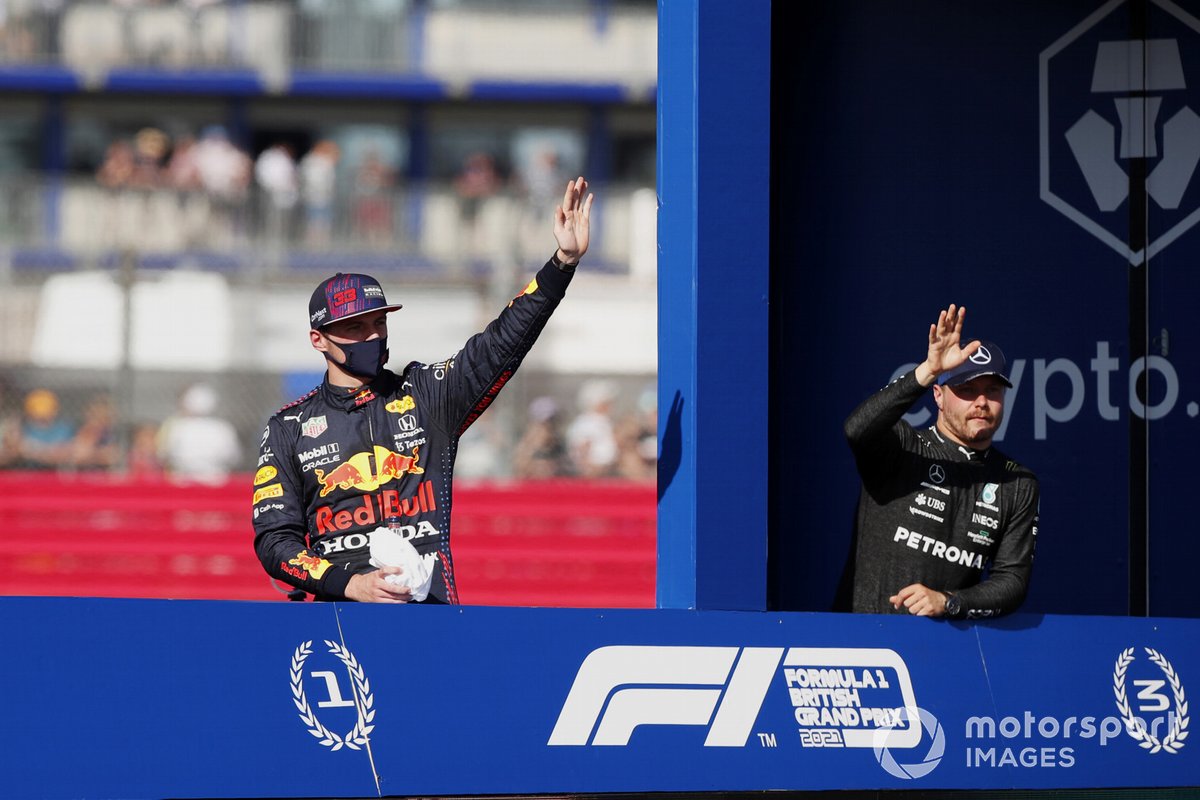
Max Verstappen, Red Bull Racing, 1st place, and Valtteri Bottas, Mercedes, 3rd place, drive across the track in the lap truck after the sprint qualifying
Photo by: Charles Coates / Motorsport Images
Whether or not sprint races are the future of F1 is still uncertain, but what is clear is that F1 did the right thing by at least experimenting and trying something new. It has a lot to tell fans and the media; and that can only be a win for F1.
As McLaren CEO Zak Brown said Saturday morning, “I think what worked well is people talking about the weekend and the format.
“Ultimately, that gets the interest, and whether these people are for what they see or not, it gives people a reason to maybe tune in on Friday that they might not have done before, and I think everyone will Watch sprint race.
“You will never get an unanimous opinion about what the correct answer is. But so far I like what I’ve seen because it makes for conversation. “
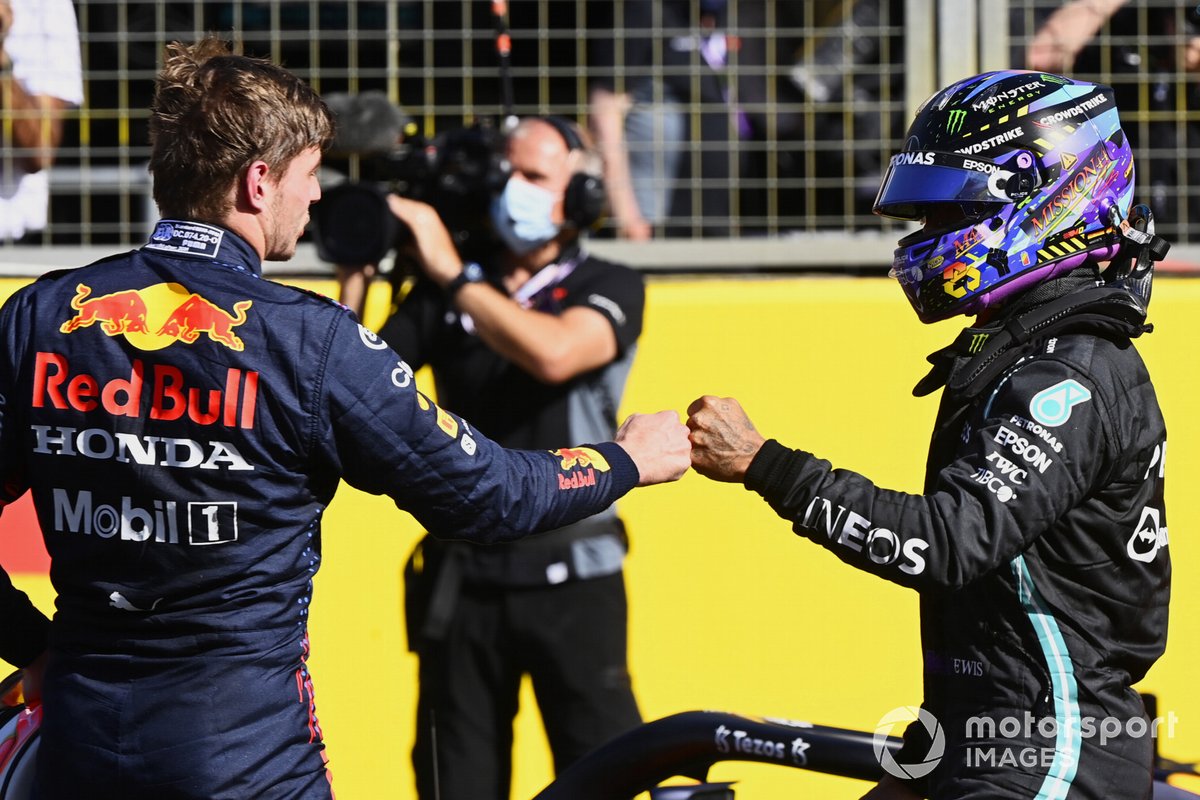
Max Verstappen, Red Bull Racing, 1st place, and Lewis Hamilton, Mercedes, 2nd place, each congratulate after the sprint qualifying
Photo by: Mark Sutton / Motorsport Images
The post The successes and warning signs from the first F1 sprint race first appeared on monter-une-startup.




