
Elon Musk often claims that Tesla was never really set out to make money selling electric cars, but rather to encourage other automakers to make greater efforts and advance battery performance development. Well, on both counts, Tesla can be considered a success – it still struggles to make a profit, despite being the best-known name in electric cars, and it has definitely given the world’s major automakers a serious kick in the pants.
The best evidence of this is that the same automakers, many of whom have been in business for a century or more, are now racing not just to bring vehicles to market to compete with Tesla’s lineup, but to mimic the core practices of Tesla and other innovative silicon Valley company.
The agility of a start-up is currently considered to be the key to developing new electric cars and bringing them to market quickly.
One of them is Audi, which recently formed a new group called Project Artemis. Named after the Greek goddess of the hunt (should Tesla be afraid?), Artemis is conceived as a “stink work” within the Audi group monolith that can move faster, react to changes and accelerate product design and development.
In fact, Audi did not turn to another company suit for Artemis’ chief honcho, but to Alex Hitzinger, whose experience does not lie in automobile construction, but in the fast-paced (literally and figuratively) world of motorsport.
Development engineer
Hitzinger began his automotive career as a development engineer at Toyota Motorsport. At Ford-Cosworth he was the youngest chief development engineer in Formula 1. Under his leadership, the first Formula 1 engine with a speed limit of up to 20,000 rpm was created in 2006.
After working with Red Bull Technology, Hitzinger joined the Volkswagen Group for the first time and built up the extremely successful motorsport team at Porsche, which won the Le Mans 24 Hours and the World Endurance Championship from 2015 to 2017.
He then spent three years at Apple in Silicon Valley, where he set up and headed product development for autonomous vehicles, and Hitzinger returned to the Volkswagen Group in 2019 to develop autonomous driving and the electric ID.Buzz project at VW Commercial Vehicles.
“I appreciate Alex Hitzinger for his strengths in innovation and implementation. We need both qualities in order to achieve major technological advances, ”said Audi CEO Markus Duesmann, who also has overall responsibility for research and development at the Volkswagen Group.
“I also rely on his expertise to work with the development departments of our major group brands to integrate future achievements into new products. In the medium term, I expect Artemis to provide a blueprint for a fast and agile development process in the group, as agile as in a racing team. “
Alex Hitzinger: His experience does not lie in automobile construction, but in the fast-moving world of motorsport
Will Hitzinger’s motorsport experience be of great use? After all, aside from the occasional sponsorship dance, most of the big Silicon Valley corporations typically don’t put much emphasis on racing circles.
“At Audi, the experience from motorsport has always been a big boost for many projects and the way of thinking of the engineers – in terms of quick decisions, high speed in the further development of technologies and of course working in permanent competition” Josef Schlossmacher, Press Officer at Audi told The Irish Times.
“Please understand that it is still a little early to talk about the details of Artemis’ first projects. However, we pursue a holistic approach for already defined e-vehicle projects – Artemis is responsible for the entire technology architecture inside and outside the car and draws on the know-how and resources of the group-wide development departments. “
confidentiality
While Artemis remains under secrecy, some details are now crystallizing, such as that it will develop a completely new family of software systems, ranging from in-car entertainment to autonomous driving to shared ownership setups and with a twin a similar project at Volkswagen called Project Trinity.
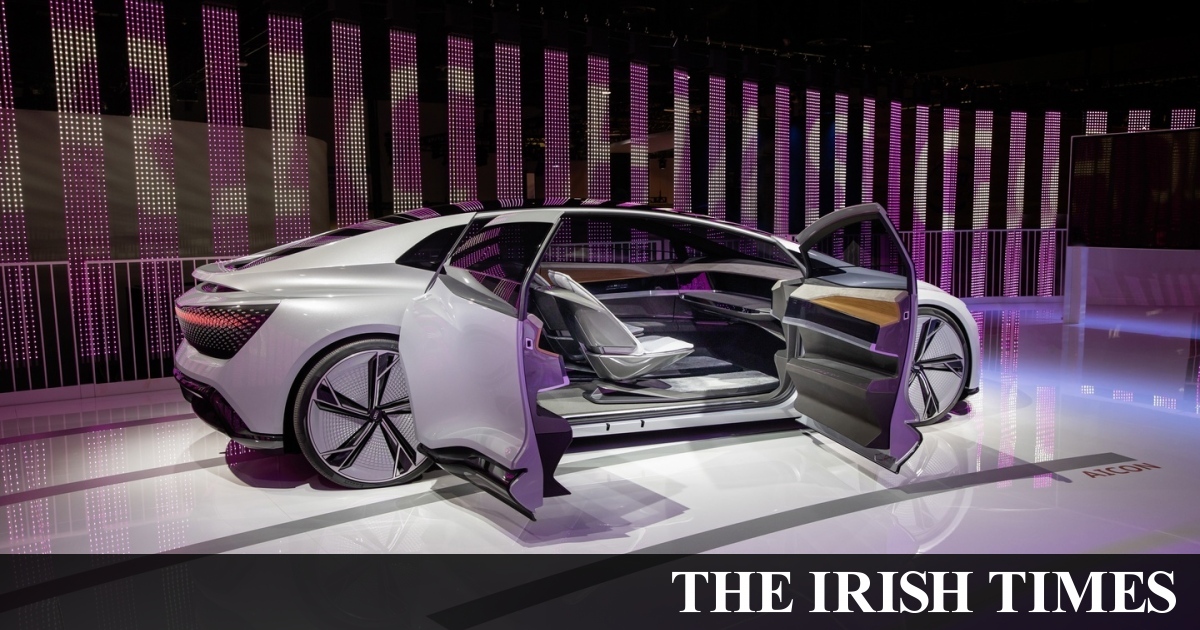
It’s not all about binary code, however – rumors have spread that his first project will be a top-of-the-range luxury electric sedan, possibly with the A9 e-Tron. Apparently, the design of the Ai: Con concept car is supposed to be an A7-sized luxury coupe with the interior of an A8 sedan.
Schlossmacher didn’t want to confirm that to us, but he was happy to talk about what is most important to the Artemis team.
“Just one keyword – range, one of the decisive factors in every purchase decision for an electric vehicle,” he says. “We want to develop a highly efficient electric car. We not only consider the battery capacity, but also focus on numerous other parameters in order to make electromobility suitable for everyday use. We will also work on the charging infrastructure, partnerships with providers, fast charging options and user-friendliness.
“We already have the first generation of electric cars on the road – our e-Tron family. When you look at it, you can immediately tell that you are seeing an Audi, and when driving you should finally say that every detail, such as steering feedback and driving behavior, was developed by Audi engineers.
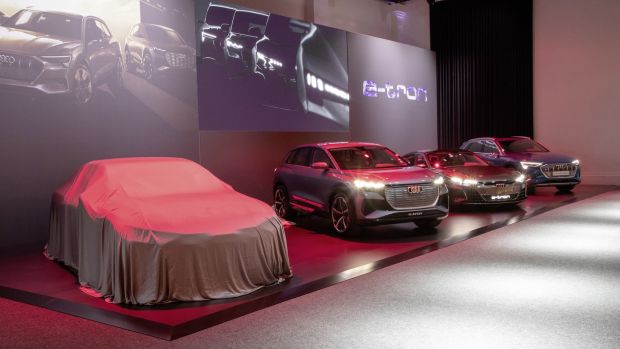
The Artemis project will use agile processes to create a highly efficient electric car for Audi by 2024
Just think of the Audi e-Tron S with the torque vectoring system for the drive train – the translation of quattro into the age of electromobility. And believe me, our engineering and design team will continue to work hard in the future to maintain the typical Audi look and feel. “
Quality assessment
Is the “Move Fast and Break Things” model of Silicon Valley right for large automakers?
That remains to be seen, not least given the recent wrong kind of advertising for Tesla. The company received a terrible initial quality rating from automotive experts JD Power and was legally reprimanded in Germany for selling its electronic driving aids as self-driving.
Silicon Valley companies often essentially use their customers as beta testers, which is fine when the problem could be faulty software for your smartphone, but less so when it comes to critical security systems for a new car .
Tesla’s lousy quality rating is perhaps less surprising when you recall the history of the 1990s McLaren F1 supercar. Designer Gordon Murray claimed that the hardest part of this project wasn’t developing a 612 hp BMW V12 engine or a racing-specific carbon fiber chassis and body, but rather the supposedly mundane task of getting the door seals to keep the rain out. So-called legacy automakers may not have the speed of response expected from a San Francisco startup, but they are pretty good at the day-to-day aspects of making quality cars.
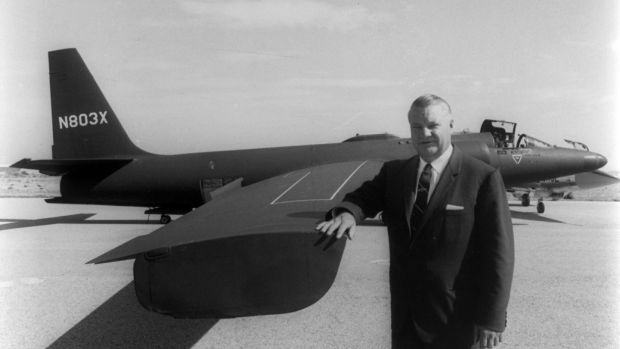
Clarence Kelly Johnson: He realized that he needed a team of people who could not only think outside the box, but come up with a whole new box in which to implement that thinking
Perhaps then the combination of responsive special units within a large corporate structure is the right thing. Ford formed the so-called Project Edison team to lead the development of the new Mustang Mach-E electric SUV, and that car’s development director, Darren Palmer, has no doubt about the effectiveness of the idea.
“It opened our eyes to a whole new Ford. There is a lot at stake. The challenge is higher. Our job is to determine the future direction of the company, ”wrote Palmer. “It’s the shift in mindset that really makes a difference at Ford and gives the team the license to work in a completely different way.
“Changes don’t happen overnight, but things happen quickly for our team. The team is cross-functional and on any given day you will be sitting next to someone working on marketing our electric vehicles, someone researching the profit potential of our electric vehicles, or taking a coffee break with someone involved in our charging strategy. “
Corporate monolith
While Silicon Valley might highlight its superiority over legacy automakers, it should be remembered that the model of agile decision-making did not come from the latest tech companies, but from the corporate monolith Lockheed Aviation.
In 1943, Lockheed’s Head of Advanced Engineering, Clarence Kelly Johnson, realized that he needed a team of people who could not only think outside the box but come up with something completely new to meet the U.S. Army / Air Force requirements for a jet fighter meet box in which you can do this thinking.
The Skunkworks (officially known as the Lockheed Advanced Development Projects Office) were to develop not only America’s first operational jet fighter (the P-80 Shooting Star), but also the famous SR-71 Blackbird spy plane.
Not only was the Blackbird built in absolute secrecy, it is still officially the fastest aircraft ever (triple the speed of sound), was bought in titanium and essentially smuggled out of the Soviet Union where it was spied, and even required its own bespoke kerosene .
If Ford and Audi and others can pick up such a rapid development tiger and mix it with their own, existing production know-how, then Tesla should indeed be very concerned.
The post Big automakers are struggling to adapt to the Silicon Valley model first appeared on monter-une-startup.




