
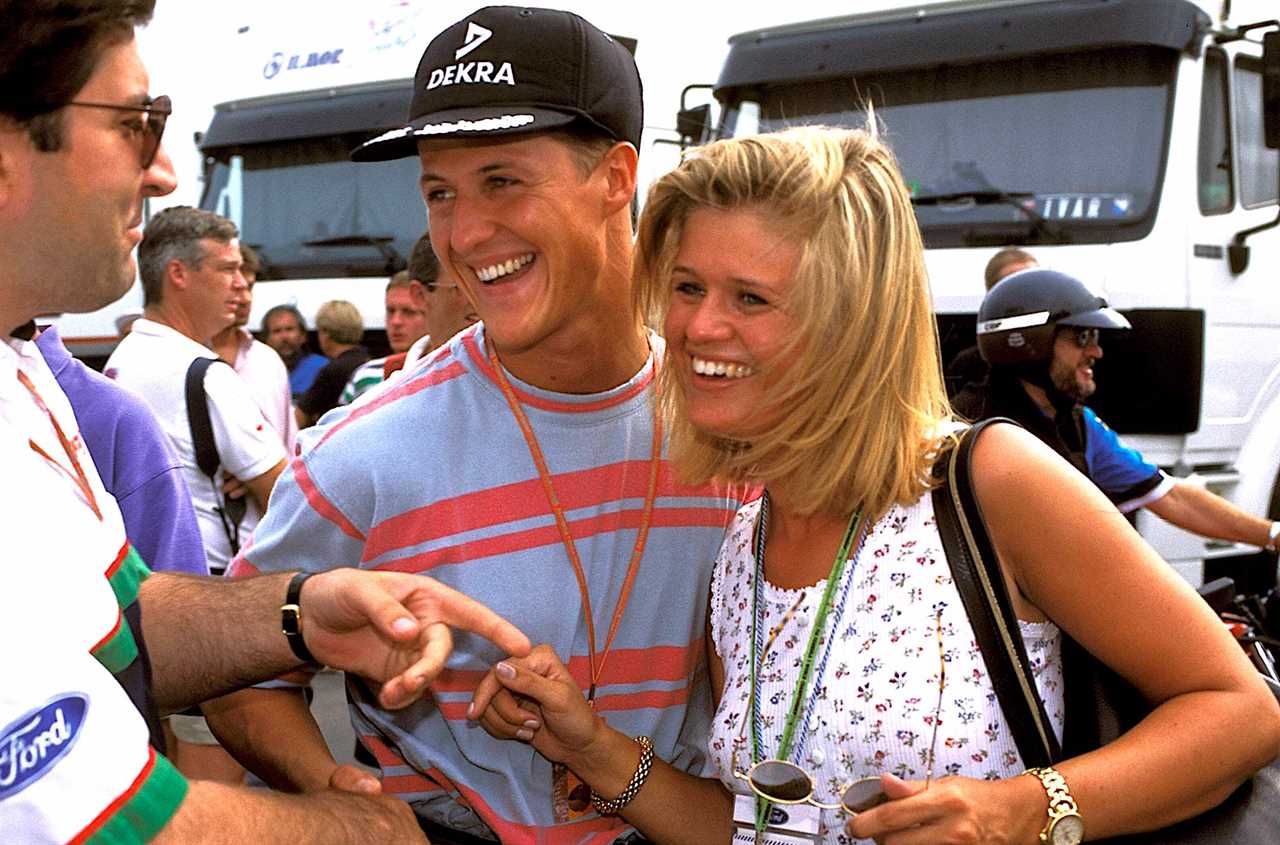
His wife Corinna is a major contributor to Netflix’s new Bio-Doc, and while she sheds some light on their lives together – he was an impeccable husband and father, enforced his own rule that “private is private” used to sing “My Way” at parties and loved to throw people into swimming pools – nothing is revealed about its condition. “Michael has always protected us and now we protect Michael,” she explains. His son Mick, who now drives for the Haas F1 team, adds a poignant personal touch. “I think we would understand each other differently now, simply because we speak a similar language, the language of motorsport. And about which we would have a lot more to talk about … I would give up everything for that. “
Michael’s fate casts a melancholy veil over history, but he was far from sentimental during his phenomenal ascents up the motorsport ladder. He drove karts when he was barely learning to walk, learned how to fix them with disused spare parts (his family was not wealthy) and ruthlessly honed his racing skills. Success in Formula 3 and in sports cars earned him a Formula 1 debut with Jordan in 1991, and after a single Grand Prix he was ambushed by Flavio Briatore’s Benetton team, which controversially snatched him from Eddie Jordan’s grasp (Schumi endures the media , pictured above / Getty Images).
The film traces Schumacher’s championship wins with Benetton (although allegations of the team’s use of illegal traction control software are tactfully omitted), then his brave decision to switch to Ferrari in 1996 with the aim of bringing the legendary but then utterly chaotic Scuderia back to the title to lead – gain fame. Thanks to Schumi’s driving brilliance and his ability to inspire the entire team from mechanics to pasta chefs, this earned him five consecutive world titles in the years 2000-2004.
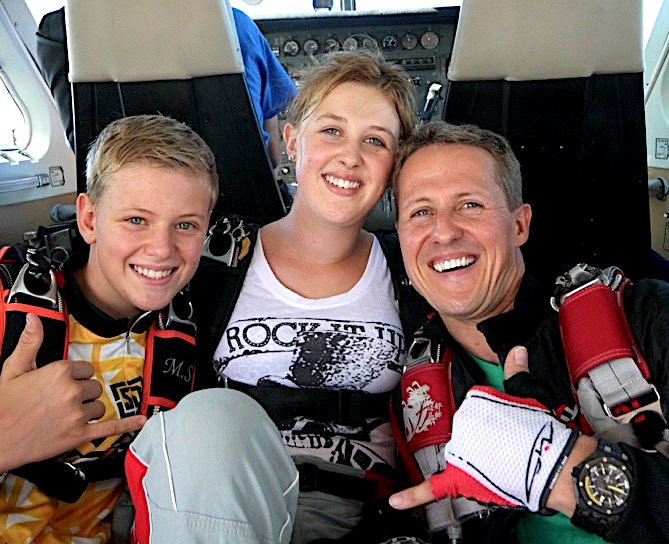
All of this is meat and drink for F1 fans, illustrated with dynamic race footage and behind-the-scenes footage, along with interviews with the likes of Briatore, Damon Hill, David Coulthard, Mark Webber, Bernie Ecclestone, Eddie Irvine and Mikka Hakkinen. The electrifying air raid siren from Murray Walker’s comment highlights many of the most dramatic moments, while archive interviews with Schumacher reveal an introspection we don’t always associate with him. His thoughts on the death of Ayrton Senna and the way in which he first thought of being killed on the track are particularly striking (Schumacher with his children Mick and Gina, pictured below).
Unfortunately, however, the film lacks the raw, outspoken audacity of Netflix’s hit F1 series Drive to Survive. You have the feeling that although you get to know Schumacher, you still don’t really know him. As an avid party-goer off the beaten track, he stayed away and unrecognizable at work. And with all his gifts there will always be question marks. He was involved in controversial accidents even before he was in Formula One, and his collisions with Damon Hill and Jacques Villeneuve can only be seen as cynical attempts to win the World Championship by force. His ex-manager Willi Weber ironically remarks that Michael is a Capricorn, and Capricorns cannot apologize because they are always right and never make mistakes.
This is essentially a hymn of praise for Schumacher’s laser-focused campaign to reach the top of F1 Everest, accompanied by rather monotonous, grandiose music, as Wagner rearranged by James Last. Personal photos of Michael with his family and home videos of them skydiving and diving warmly evoke their close bond. Had they felt able to lift the curtain just a fraction and allow the possibility that he had flaws and a dark side, it would surely have resulted in a more aggressive but penetrating portrait.
- Schumacher will be available on Netflix from September 15





