
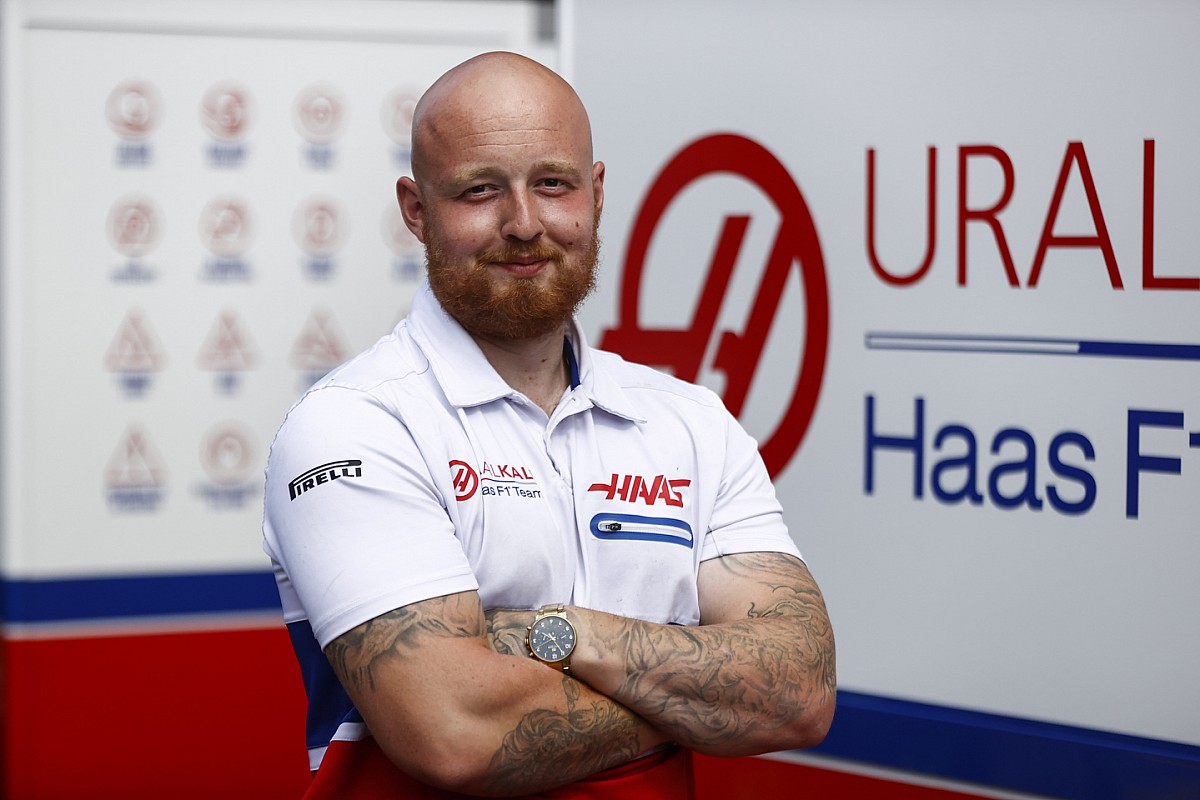
From putting stickers on cars to driving forklifts to transporting goods, the day of a workshop technician is never boring. It’s also one of the more hands-on roles on a Formula 1 team, allowing someone to get up close and personal with the cars and tools used in driving a Formula 1 car. To find out what it would take to take on that role, we spoke to Ryan Cottee – a garage technician for the Haas F1 team – about his job.
What is your role
I’m a garage technician, so I check the consumables case on the route and check the sea and air freight that enters and leaves the route, is loaded and unloaded. I also put all the stickers on the cars and the garage. My secondary lead role is the front-of-house. We are two of us who control the front-of-house and make sure that it meets Formula 1 standards at all times.
How do you become a workshop technician?
When I joined the Haas F1 team, I was an IT technician. I was in the role for three years, but wanted a change – I wanted to be more on my feet and get involved a little more.
What qualifications do you need?
I think you need all of your standard GCSEs. A truck driver’s license is always a bonus. Nowadays we don’t drive our own trucks to events, we use external resources, but in the off-season there are many times where we would drive these vehicles. Much of the training you need to get is on-the-job. For example, you may need to drive a forklift in order to receive the training to obtain this driver’s license. There’s a lot I’ve learned just by working.
Nikita Mazepin, Haas VF-21
Photo by: Andy Hone / Motorsport Images
What should you learn in school?
Math is always a useful subject because you are working with numbers, for example if you are working with fuel you will be doing the numbers. Depending on the position you are aiming for, a motorsport degree can be helpful.
What other skills are useful?
Be very practical. If you are a practical person and a more mechanically minded person, you can be useful anywhere. The role of the garage technician is very diverse, so in a minute you can clean up the garage or polish the cars, route the air lines and make sure they are pressurized up to 300 BAR. 10 minutes later you could load a truck and another 10 minutes later you could drive a forklift and move pallets around the paddock. You have to be very practical and you have to be eager and ready to work and happy to do anything. The team relies on the garage technicians to do whatever it takes.
How can I gain work experience?
The junior formula, Pro Cars, would like to accept apprenticeships and work experience. Formula 1 is the elite – it is the pinnacle of motorsport. From my own experience, my military background helped me get started in motorsport. They do similar things in the sense that you are being set up and taken down and kept busy all the time, plus it’s very physical. I would always suggest emailing a team and asking if you can do an internship or maybe even just come over to see what is going on.
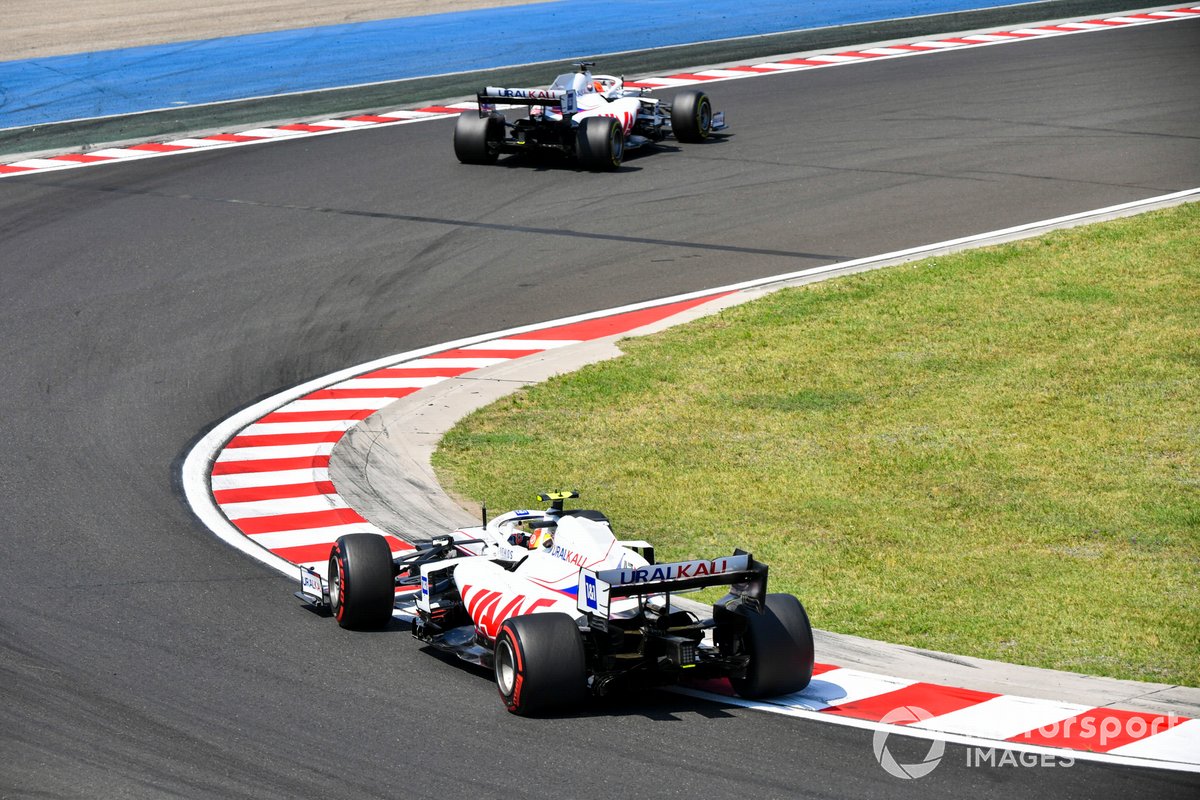
Nikita Mazepin, Haas VF-21, Mick Schumacher, Haas VF-21
Photo by: Mark Sutton / Motorsport Images
Can you take part in races?
Yes – I go to every event.
What does a working day look like for you?
From the beginning of the week to the end of the week is 100% different. We are the first to arrive from the team – for European races, which can be Monday, and for flyaway races, Saturday or Sunday. We will usually go in from Monday to Sunday at 8:00 a.m. and set up the garage, set up the portal system and unload all six trucks. Later in the week, your timings will be based on the mechanics with the car builder. Fridays are the super long days and you work until the curfew. When the FP2 finishes, you are still working about eight hours after it. Saturday is standard with us and you go with the schedule. Race day is about making sure everything is ready for the race and you will be making a few pit stops too. After the race, depending on where we are, we start with the pack-up. There are many variables that will determine how long this process will take.
What role do you play in pit stops?
I’m at the back on the left, wheel on. I started in the back right, put the bike on, and went over to help the team with a faster process. I’ve been doing this for two and a half years now. Of the entire event, it’s the best three seconds of the week. You’re relaxed, relaxed and watching the race and then you get your standby call and your heart rate starts to increase a little. Then get on your way and start prepping all of your bikes and you are buzzing. You watch the car come in and fear is great for the first couple you do but after that it’s pure adrenaline. Your heartbeat is beating through the roof and all you want to do is put on the bike and send the car back asap. If you’re competing against other teams and your pit stop is important, it’s even better. If you have a great stopover, it’s amazing.
This article was produced in collaboration with Motorsport Jobs. Find the latest jobs in motorsport, as well as jobs with the Haas F1 Team, on the Motorsport Jobs website.

The post How to become a Formula 1 garage technician – qualifications, skills & more first appeared on monter-une-startup.





