
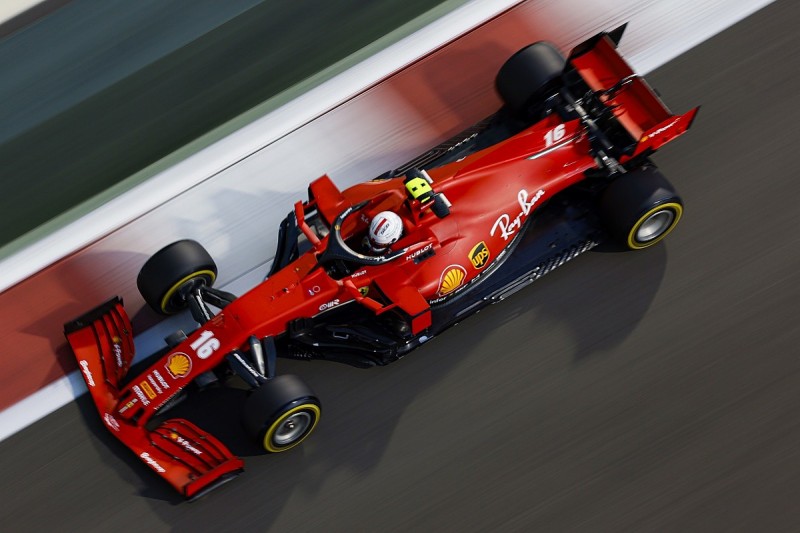
The 2020 campaign was derailed by a combination of a towing car and a less powerful engine than the 2019 version.
This lack of performance was the result of a series of engineering guidelines the FIA issued prior to last season to stop teams using clever tricks to circumvent fuel flow metering regulations.
The extent of Ferrari’s engine fighting was brought to light in pre-2020 tests, but any hopes of major engine upgrades during the campaign were dashed by a development freeze introduced in response to the COVID-19 pandemic.
This meant that Ferrari had to go through the entire season with the same engine, with changes only possible over the winter.
PLUS: The spectacular ups and downs of Ferrari’s cyclical history
The team’s 2021 engine is now in the advanced stages of development and is believed to have some interesting developments that it hopes will provide a useful boost in performance.
Rather than aiming at something revolutionary, Ferrari is trying to make incremental changes to all aspects of the thermal properties and the electric powertrain, which it believes will result in significant overall gains.
It is understood that Ferrari evaluated a change in concept, taking the Mercedes route of splitting the turbine and compressor on either side of the internal combustion engine.
However, while the evaluation of this idea is being continued in a project group headed by Wolff Zimmermann, who was commissioned with the Graz AVL to examine long-term innovative solutions, the two turbo components remain where they were for the time being.
Instead, the most important change that Ferrari engine boss Enrico Gualtieri will introduce is the debut of a “super-fast” cylinder head – originally slated for 2022.
The new design will help achieve stronger fuel atomization and higher pressure in the combustion chamber as the teams try to get closer to the 500 bar limit set in the regulations.
In addition to a redesigned piston crown (which is still made of steel) and intake ports on the camshaft, Ferrari is believed to have considered using new alloys that help ensure that reliability is not compromised by the increase in performance.
The new Ferrari engine will also not do without the wastegate valve (which can be removed for the first time this year) to take full advantage of the aerodynamic effect of the blown exhaust.
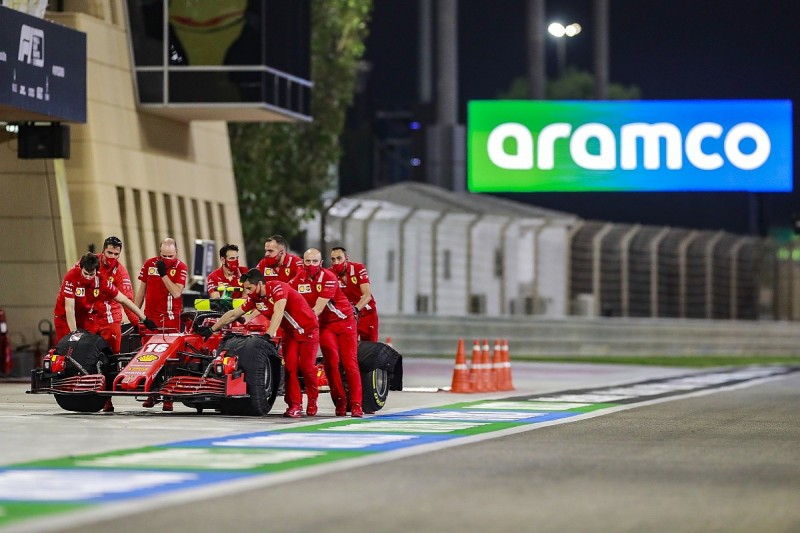
The reliability problems with the narrow exhausts also seem to have been solved, because thanks to a new gearbox, the “Cola bottle” area of the car is larger and the piping has to be packed in less space.
The engine cooling systems have also been redesigned to change the radiator design used in 2020 which ultimately creates too much drag in the side pods and further hampers the straight-ahead speed of the SF1000.
The new Ferrari powerplant is also believed to have a slightly smaller turbine than that of the 065/2 to improve electrical charging.
The idea is to have a more efficient energy recovery system so that the MGU-K’s roughly 160hp power can last longer throughout the lap. This will be important to reduce the overall deficit with Mercedes.






