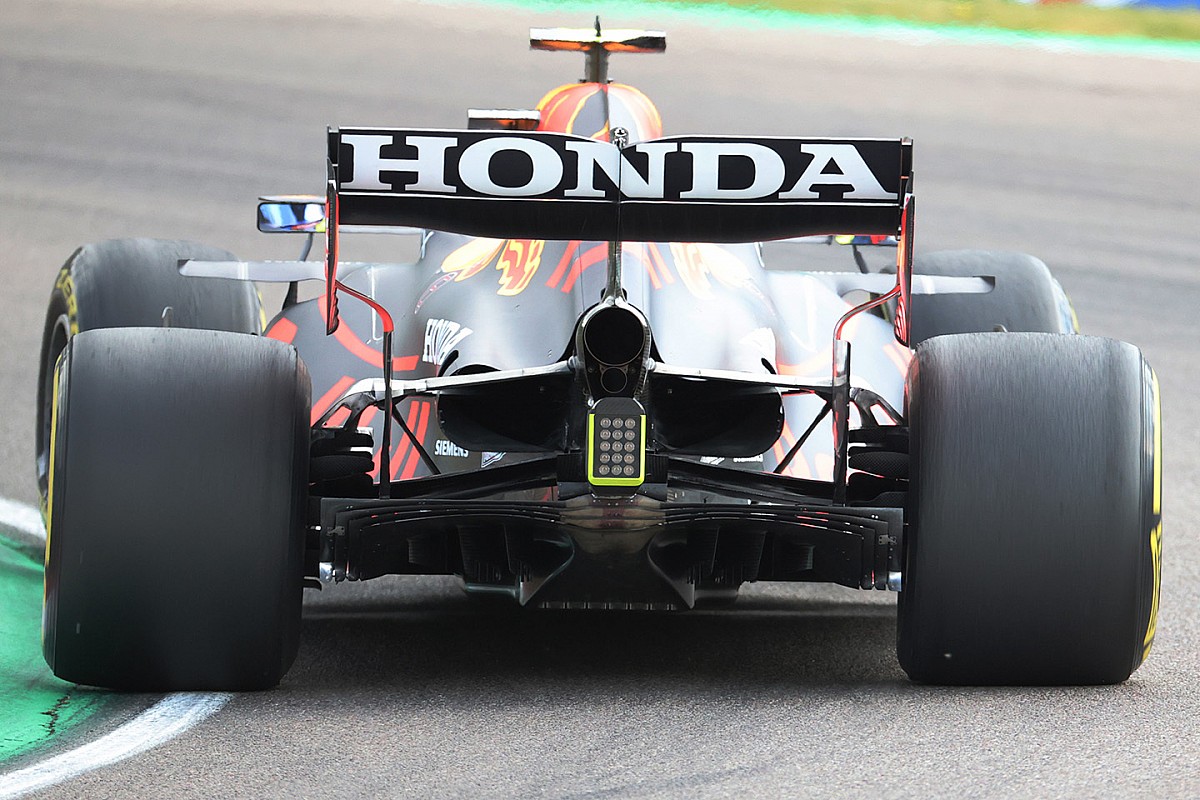
The 2021 tech regulations introduced an interesting subplot into Formula 1, particularly in terms of the impact it will have on teams using low-rake aero concepts.
The rules in particular appear to have hampered Mercedes and Aston Martin, while teams like Red Bull that use higher rake designs have been able to capitalize on them.
This has pushed Red Bull and Max Verstappen firmly into the battle for the title, highlighting the potential of offering Lewis Hamilton the greatest competition he has faced from a competitor outside of his own team since turbo-hybrid regulations came into effect in 2014.
Meanwhile, Aston Martin has misjudged its own decline in performance thanks to the new rules and announced that it should begin lobbying the FIA to unlock the rules and reduce their disadvantage.
But why is there such a discrepancy between the two concepts when it comes to the new rules? Here is an explanation to examine the effect of rakes and Aston Martin’s next steps.
George Russell, Williams FW43B, Mick Schumacher, Haas VF-21, Kimi Raikkonen, Alfa Romeo Racing C41 and Lewis Hamilton, Mercedes W12
Photo by: Mark Sutton / Motorsport Images
What is rake?
Rake applies to the tilt of an F1 car viewed from the side.
A high-rake car has a more noticeable difference in angle between the front of the car and the rear, where the diffuser is significantly jacked up and the front floor pan is very close to the floor.
A low rake car has a greatly reduced angle, and therefore the slope of the diffuser means that it is much closer to the ground.
Rake is one of the key elements of the aerodynamic design of a car and one of the aspects that define a concept of a car – where everything else has to be built around it.
Why do teams choose high-rake designs?
The idea behind increasing the rake is to increase the effective volume of the diffuser while speeding up the airflow underneath.
By increasing the speed of the air flow, the ground can create a lower pressure and thus the suction created creates more downforce.
In scientific terms, this refers to Bernoulli’s principle, which is an energy conservation equation. In short, by increasing the velocity of a fluid, the static pressure is decreased.
As liquid – in this case air – moves from a small volume to a large volume, the velocity increases to create this pressure reduction.
The best way to describe this is to imagine yourself putting your thumb halfway over a tube of tubing. By creating a greater difference between the volumes, the water from the hose accelerates and sprays out at a much faster rate.
However, this has traditionally been associated with greater sensitivity. In the past, the low-rake teams also had the slots in the floor to compensate for this, creating a seal to develop a much more even level of downforce.
But without these slots, which have now been removed from the 2021 regulations, Mercedes and Aston Martin have lost more downforce compared to the high-rake teams.
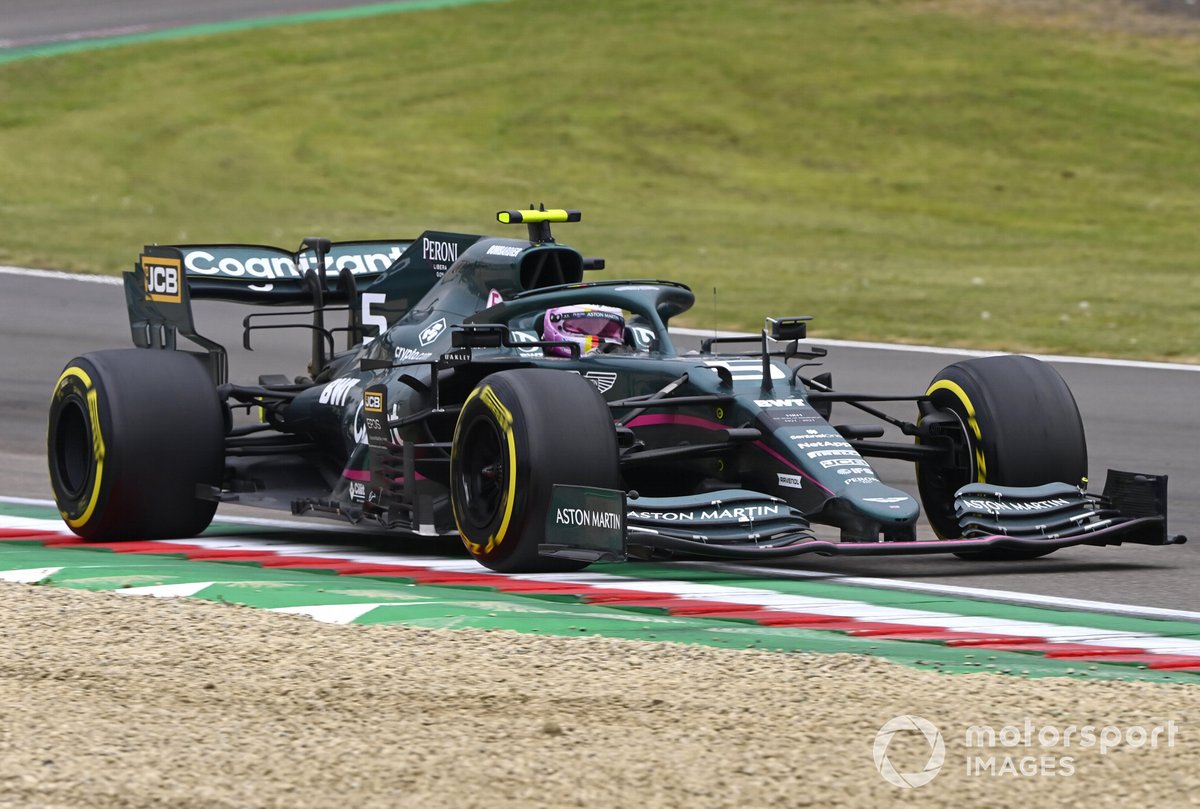
Sebastian Vettel, Aston Martin AMR21
Photo by: Mark Sutton / Motorsport Images
What are Aston Martin’s main complaints about the 2021 rules?
As Aston Martin lost downforce, he fell behind in midfield – of which he was one of the frontrunners as Racing Point in 2020.
After Racing Point developed a car that was deeply rooted in the design of last year’s Mercedes, it was able to switch to a low-rake design and benefit from the tools available for the ground to help it perform.
Now that it has lost that feat, Aston Martin believes the 2021 rule changes that include the floor cuts along with the winglet size of the diffuser and brake duct have put low-rake cars at a disadvantage.
The teams can’t make particularly big changes, however, and any change in the computational concept would require a new suspension package that is now homologated and cannot be changed due to the 2021 token system.
Aston Martin spent its tokens in developing its chassis to introduce a new sidepod inlet design, and therefore had to forego any changes to the suspension.
On the Grand Prix weekend in Imola, Aston Martin team boss Otmar Szafnauer expressed his displeasure with the introduction of the rules.
The FIA made the flooring for safety reasons due to the increased downforce of modern F1 vehicles, which would have made the Pirelli tires cope with loads they were not designed for.
But Pirelli changed the tire construction anyway to make it more robust, and Aston wondered if the ground cuts were even necessary.
Aston Martin has also suggested that F1’s role as the holder of trade rights goes beyond its purview and influence changing the rules to get runaway leader Mercedes back.
Szafnauer stated that the changes to the rules should be the sole responsibility of the FIA and wanted to initiate discussions with the governing body to make the changes more equitable for the low-rake teams.
“I think the right thing to do is to talk to the FIA,” said Szafnauer, “and find out exactly what happened and why. Then we can see if something can be done to make it more just.
“I think this is the right thing to do. We as a team have to work hard to get back everything we can. At the same time, we should hold talks with the FIA to make it a little fairer. “
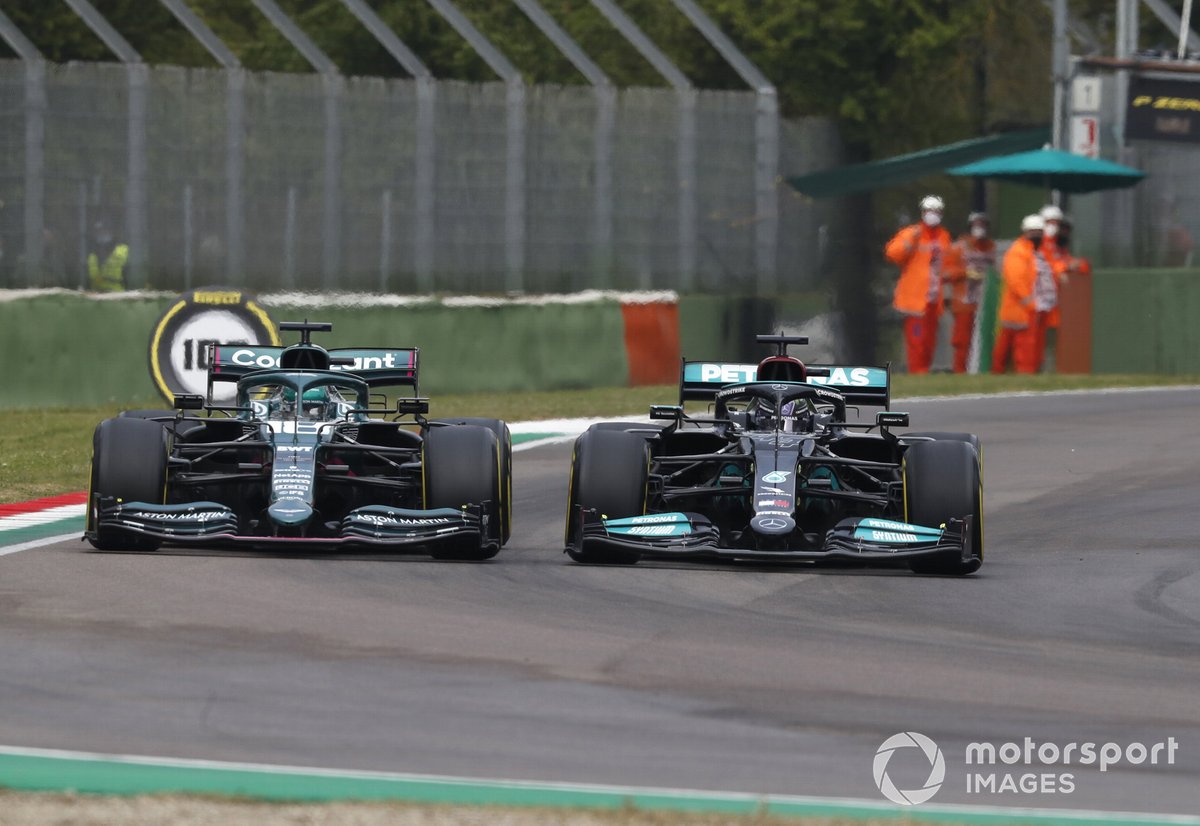
Lewis Hamilton, Mercedes W12, fights with Lance Stroll, Aston Martin AMR21
Photo by: Charles Coates / Motorsport Images
Will Aston Martin take legal action?
Szafnauer has hinted that if Aston Martin has a case, he could claim he was unfairly disadvantaged by the 2021 rules.
“I think we’ll get to that point after the discussions,” he said. “It’s hard to predict. I think the right thing is to see what can be done. “
However, Red Bull team principal Christian Horner believes Aston Martin is a bit naive and underlined that the Milton Keynes team was also the target of regulations to tie it back before.
“There is a procedure for the introduction of regulations, which was voted unanimously through the various regulations,” Horner told Sky after the training session in Imola.
“Aston Martin or Racing Point should have voted before they were passed through the Formula 1 Commission and the World Council. They were all elected unanimously.
“When there was a front wing change a few years ago, it really hurt us. We voted against it, but you just have to accept it.
“It seems a little naive to believe that after sampling a single race, the rules will suddenly change after the process is fully followed.”
Mercedes CEO Toto Wolff added that he respected Aston Martin, who had the right to question the FIA’s decision-making process, but added that the team was doing “collateral damage” to reduce Mercedes’ dominance.
“I think there is always the right to review, look at and discuss things with the FIA to find out what actually happened and how things happened.
“So I respect Aston Martin’s investigation into the whole thing. Maybe things were directed at us and it is collateral damage. So yes. That’s OK.”
The post What is rake in F1 and why might Aston Martin complain about changes? first appeared on monter-une-startup.