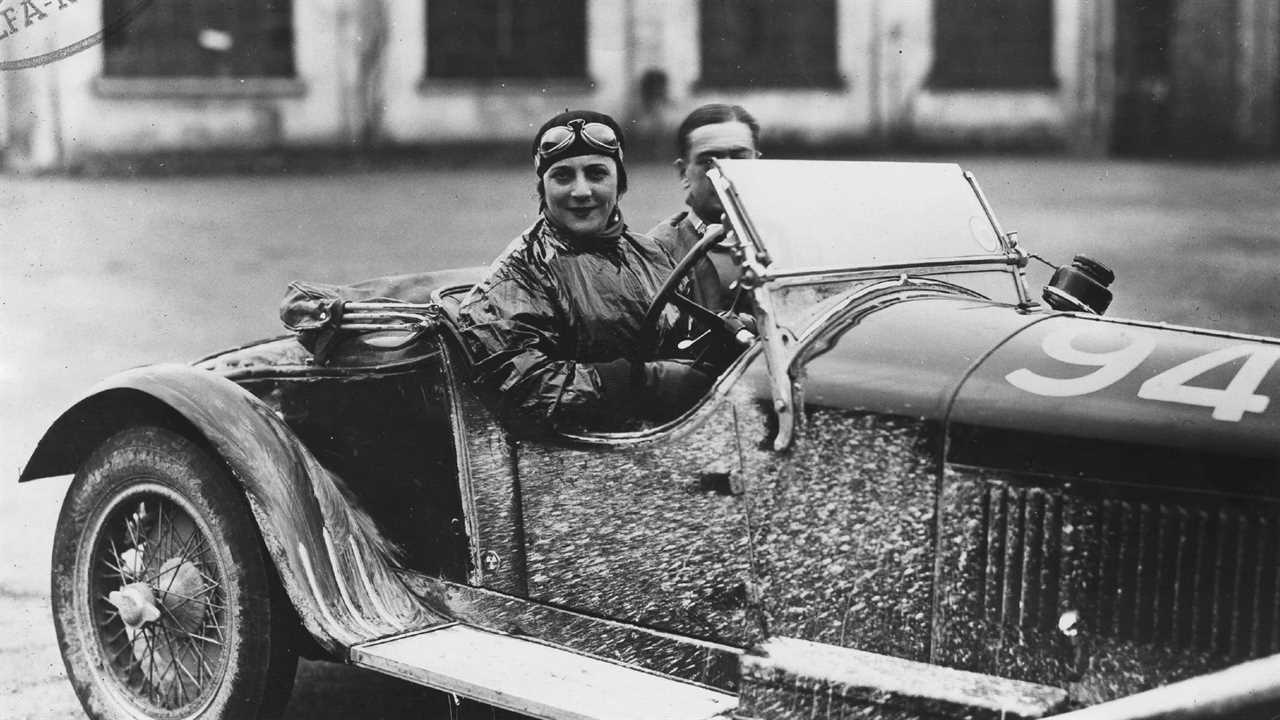
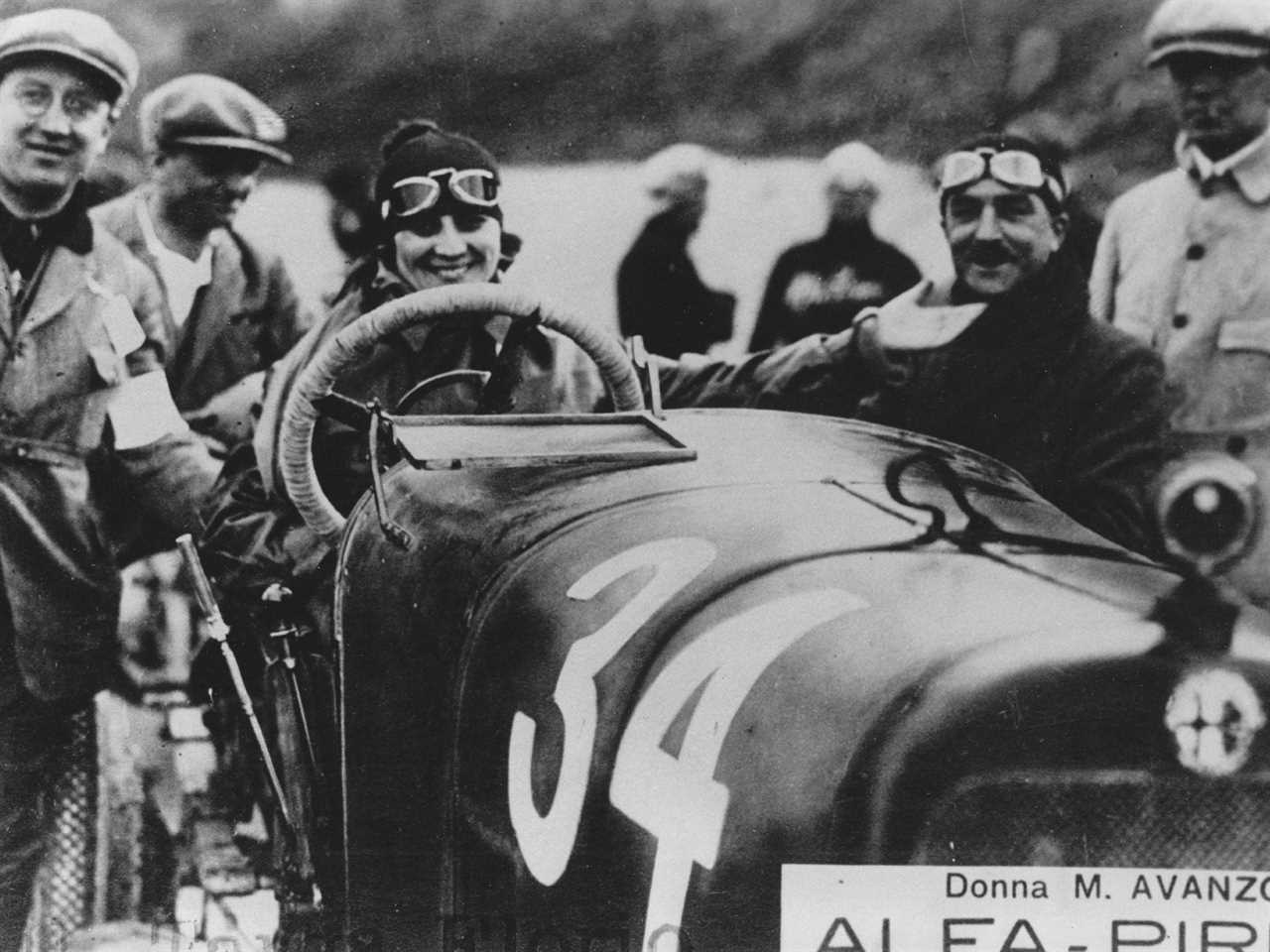
You’ve heard of pioneer racing drivers Louise Smith, Shirley Muldowney, Michele Mouton and Janet Guthrie. Maria Antoinetta Avanzo was less known on the world stage, but popular in her native Italy. She was the first and most famous female racing driver in Italian history, starting in the 1920s.
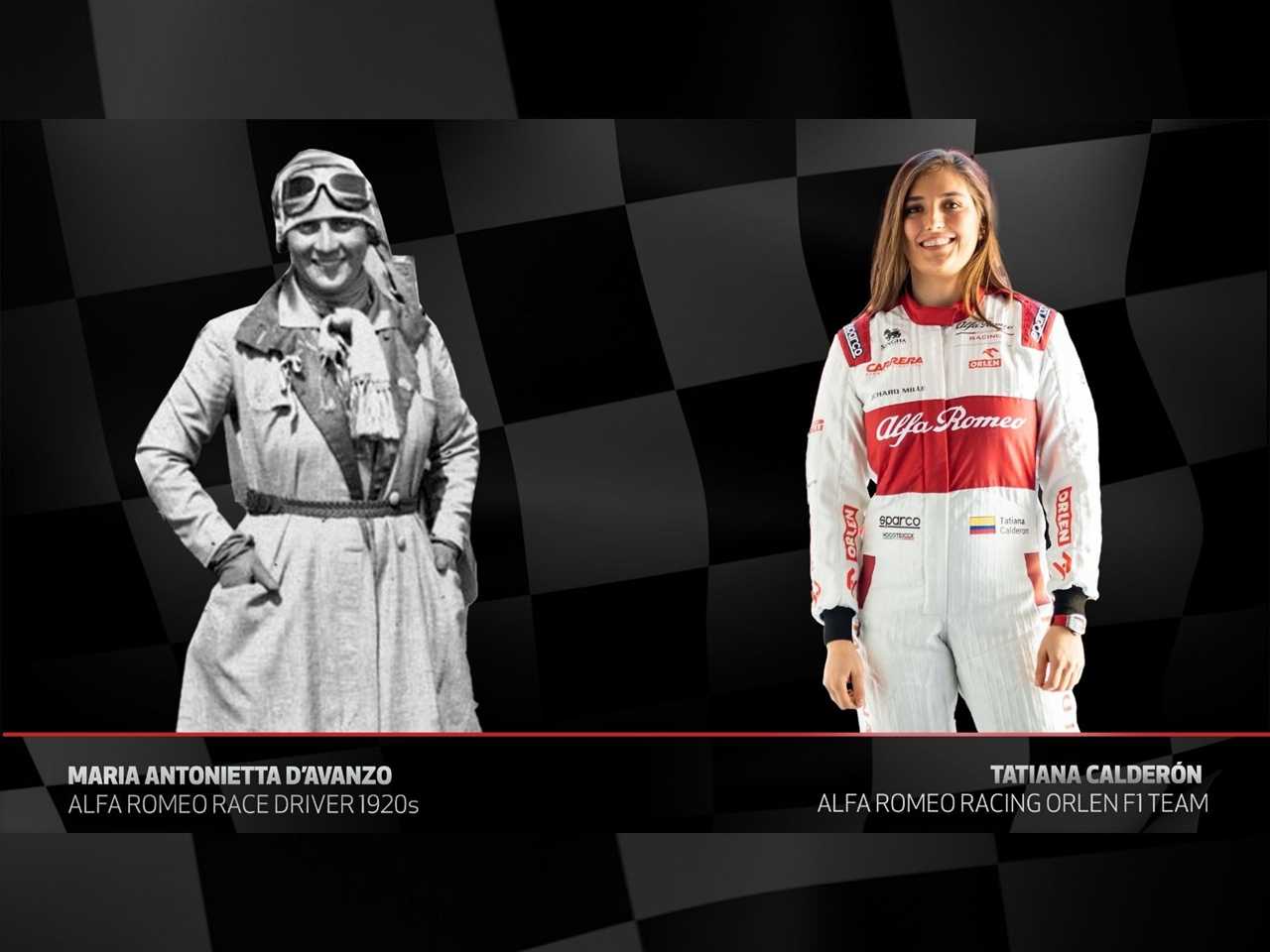
Back then, it was extremely unusual for women to drive racing cars. Their rights were limited and it was not until 1945 that Italian women were given full voting rights. Avanzo’s zeal for things with engines began with her father De Dion-Bouton’s “tricycle” when she was a child who, in Italian colloquial language, described a three-wheeled single-cylinder motorcycle rather than the toddler trike that came to mind. After that, she literally went to races as soon as she got behind the wheel of a car, setting the stage for drivers like Tatiana Calderón, the first Latin American woman to drive an F1 car as an Alfa Romeo test driver.
Alfa Romeo
At the age of 19, Maria Antoinetta Bellan married Baron Eustachio Avanzo in 1908; He ran a newspaper on aviation and cars. He was also a wealthy landowner, and it was typical of the aristocratic class at the time to add the prefix d ‘to family names, much like “van der” in Dutch culture. You can find her as Maria Antoinetta d’Avanzo in some accounts of her life and only Avanzo in others. The couple had two sons in 1909 and 1911, and the baron fed his wife’s craze for cars by buying her a 35-horsepower SPA (Società Piemontese Automobili, which was eventually bought by Fiat) to run around.
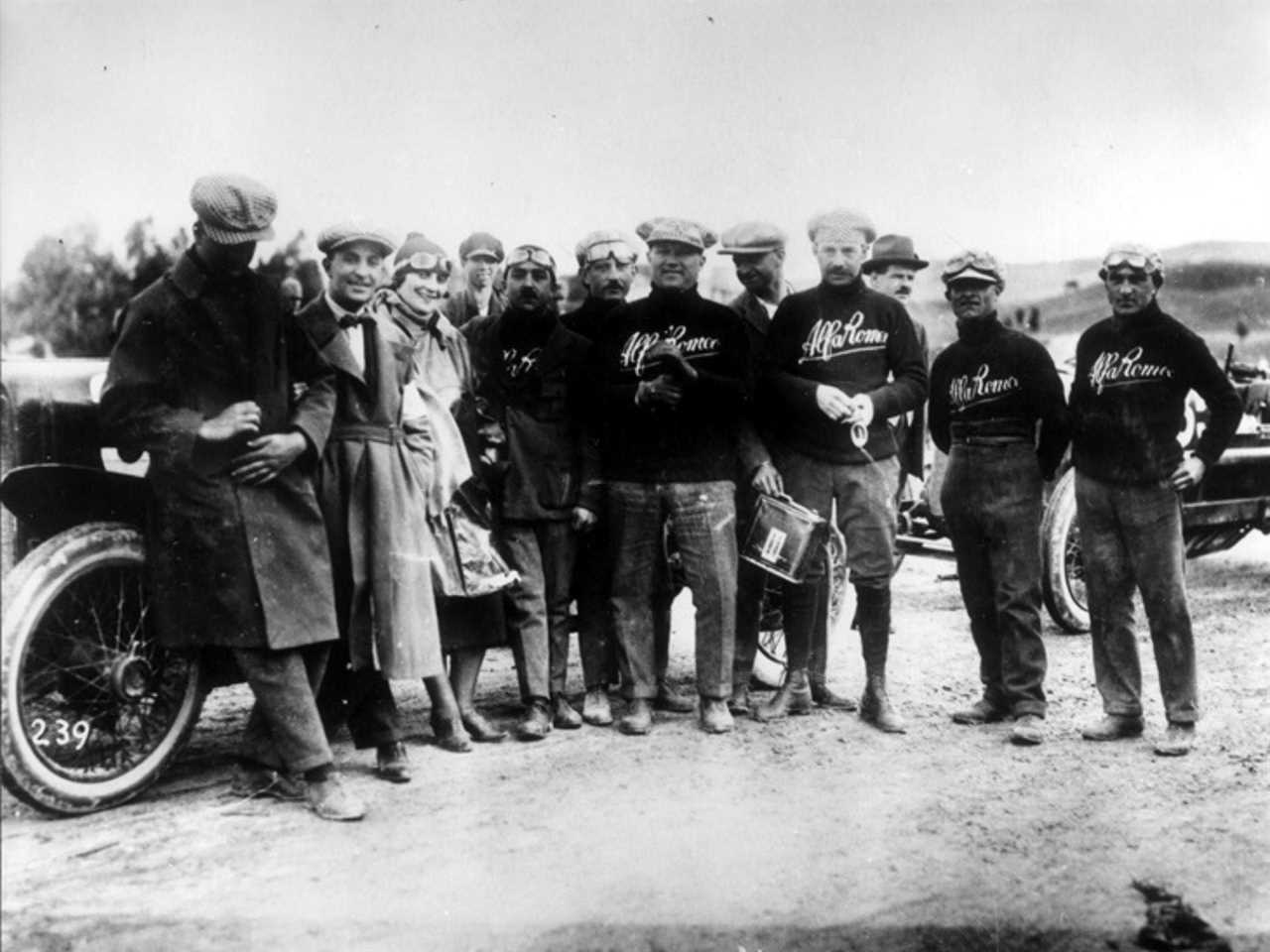
Shortly after World War I, Avanzo started races, starting with the 1920 Giro del Lazio (which is now a cycling race); She won her class despite a setback that required a tire change. Later that year she registered a Buick for the Targa Florio, which at the time was one of the toughest long-distance competitions in Europe on the island of Sicily, but never ended. Avanzo caught the eye of Alfa Romeo who invited her to join the Alfa Scuderia team and she won third place in an Alfa Romeo 20-30 ES in Brescia in 1921.
At this point in history, Alfa Romeo had an impressive racing team that won 11 of 24 Mille Miglia enduro races (thousand miles, in Italian) and four Le Mans 24 hour races. Avanzo drove an Alfa 6C 1750 GS but encountered mechanical problems. Avanzo would take on the punishing Mille Miglia four more times.
Alfa Romeo
“I think it was difficult and dangerous to be a driver in the 20s and 30s. It was stressful; You would have to drive 10 hours without stopping and the cars were very heavy, ”said the curator of the Museo Storico Alfa Romeo, Lorenzo Ardizio. “Maria probably had to work hard to develop resistance and performance. The hardest part for them, however, was entering the racing world. it was incredibly masculine then. However, she was not hired just because she was a woman. She deserves it. “
Avanzo had a wild and charming personality, without fear and confident. She raced against a young Enzo Ferrari and while they later became friends they were tough competitors in the early races. In 1921 Avanzo told a journalist that Ferrari had “stolen” one of their carburetors and claimed that he had asked them to test a carburetor and had not returned hers. Another great story about Avanzo is when she was driving a twelve-cylinder Packard 299 on the beach on the Danish island of Fanø and it caught fire. To put out the flames, Avanzo drove her straight into the sea, and when she appeared she said she would like to trade it in for a Fiat. Shortly afterwards, competitor Antonio Ascari took Avanzo’s Packard home and gave her a bright red Fiat.
At some point in the early 20’s, Avanzo left her husband and moved to Australia to pilot planes and tractors. There are reports that she took part in a few exhibition races there and after a five year hiatus, she returned to Europe to get back on track. There she drove a variety of cars and different types of races, and pushed her limits.
Alfa Romeo
“Maria was always considered a ‘real driver’,” says Ardizio. “Nobody complained about her, and that was probably the important part of her role: the ability to be seen not as a driver, but only as a driver. Others saw her as a competitor and sometimes an enemy.
“She has achieved some important victories and unexpected victories in very poor conditions,” continues the curator. Cars were open and unreliable. Being a driver means being aggressive and soft at times when it comes to protecting the car. You also need to be able to swap out a tire, refuel, and troubleshoot. At the end of the race, she would arrive with dust and grease on her face and still be seen as an elegant person. “
At the same time, she developed important relationships with the most important people of the time, such as the poet, journalist and soldier Gabriele D’Annunzio, as well as with various politicians, artists and famous actors in the cinema world. Two of them were her nephew Roberto Rossellini (father of Isabella Rossellini) and director Luchino Visconti.
Alfa Romeo
Avanzo drove many cars: Spa, Fiat, Buick, Packard, Alfa Romeo, even Ferrari. However, at the end of her career she preferred Alfa Romeos, especially her Giulietta Sprinter in the 50s and 60s. And she never stopped driving until her death in 1977. My favorite story about Maria Avanzo is the one her son tells: in her 70s she drove her Giulietta through Rome as fast as she could. When the police stopped her, she said, “My car can reach 180 [kilometers per hour]So I drive 180. “
I hope to be as wild as Maria Antoinetta Avanzo in my 70s.
Do you have a tip? Send the author a message: [email protected]
The post Grand Prix racing driver Maria Avanzo fought a young Enzo Ferrari in the 1930s first appeared on monter-une-startup.