
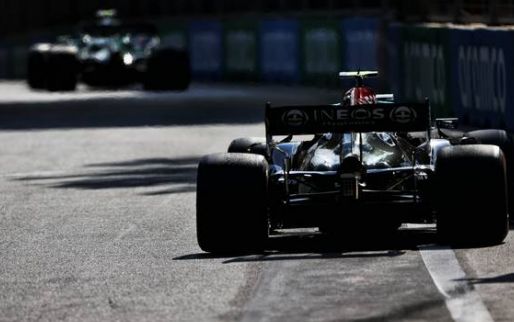
In the last two Grand Prix, the Mercedes F1 team has only scored seven points, thanks to Lewis Hamilton’s seventh place at the Monaco Grand Prix. Could this be due to fundamental problems with car design?
Pre-season tests
The FIA has ordered the removal of certain output elements at the rear through the changes to the regulations between the 2020 and 2021 seasons in order to bring the field closer together in terms of performance. In particular, air control elements on bargeboard should be reduced in complexity, and diffuser vanes should be reduced in length. Because of this, all teams have had to work hard to restore downforce levels in order to limit their losses in the 2021 season.
During pre-season testing, Mercedes showed a lack of rear stability in the car. This led to unusual incidents, such as a spin by Lewis Hamilton through the long right-hand turn of Turn 13, which stranded him in the gravel. Neither driver seemed overconfident with the car and this was certainly reflected, with most experts claiming that Red Bull would be a closer competitor for the season ahead.
Last races
High downforce is required to navigate slow pace and tight corners. Perhaps the excessive downforce (e.g. higher rear wing angle) applied to the rear of the car to make up for the deficit has caused the tires to overheat. This would have been particularly problematic in Baku, as strong winds led to temperature fluctuations in the tire casing and a shift in the level of grip in the corners.
Thus, these results also agree with the performances of the pre-season. This was certainly shown by Valterri Bottas, who drove far at Baku’s Turn 16, and Hamilton’s inability to place the car above seventh place in qualifying for the Monaco Grand Prix.
Continue reading
Toto Wolff: “The last few weeks have been the toughest as a Mercedes team boss”
Future races
Slow speed and urban routes require a lot of downforce due to their sharp curves. This is becoming increasingly difficult as buildings also shape the airflow into the circuit, as demonstrated at the Azerbaijan Grand Prix. Abrasive asphalt surface would also pose a challenge to maintaining tire life, and the elevated temperatures affect entry and exit speeds from corners due to the decreasing grip level.
Several street circuit Grand Prix races have been canceled for this year, with organizers saying racing on the city streets would pose a threat to the health of civilians and F1 personnel. Now that the Mercedes team is struggling to find the balance between downforce and tire wear, excluding street circuits offers a little more leeway. The German manufacturer will be able to concentrate more on traditional routes, on which the risk of tire wear is lower and there is a greater number of curves with medium to high speed.
However, Mercedes has to optimize its aerodynamics for slow routes like Zandvoort & Hungary. Both Ferrari and Red Bull seem to have the upper hand as both have taken pole positions and race wins while the Mercedes team failed to finish on the podium. The vehicle set-up becomes even more difficult, as finding the optimal downforce can endanger the lap time or the handling.
Mercedes has a tough fight ahead of them.

Continue reading





