
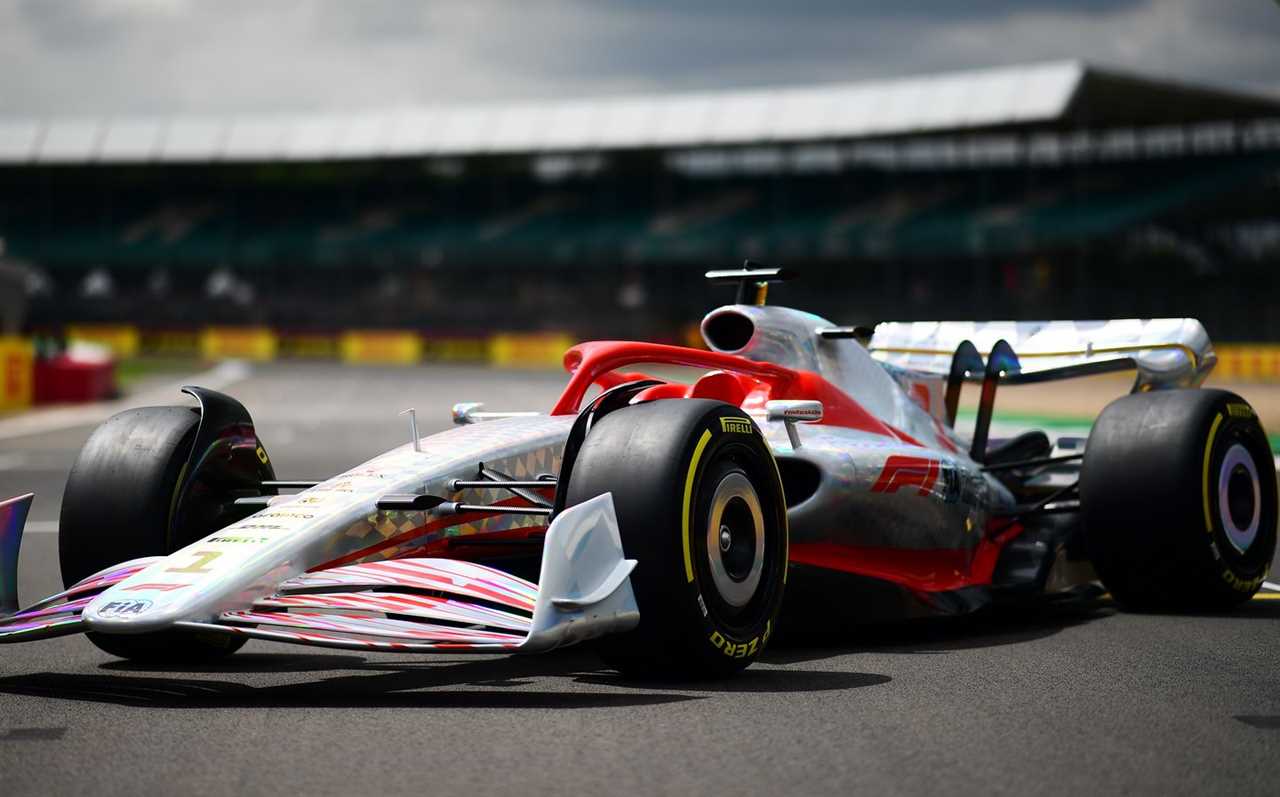
FORMULA ONE is desperately struggling to stay relevant. The switch to 1.6-liter V6 hybrid drives in 2014 should be the – and help enable technological advances for – increasingly environmentally friendly road vehicles in the age of the Toyota Prius. But what does the future hold for gasoline-powered Formula 1 when we enter a new era of all-electric cars?
The question of how F1 can not only remain relevant but survive at all is taken up in a new YouTube documentary. Motorsport In The Electric Age, presented by EV proponent Roger Atkins, asks if we can still see a Formula 1 race in 2031 – ten years and one year after the UK government banned the sale of new petrol and diesel cars.
In the 40-minute film, Atkins discusses the future of motorsport with several top-class employees from Formula 1 and Formula E, the all-electric single-seater racing series founded by Alejandro Agag in the same year, in which Formula 1 switched to hybrids.
F1 has to innovate to survive
Hywel Thomas, Managing Director of Mercedes-AMG HPP – the company that makes engines for Lewis Hamilton and Valtteri Bottas from the Mercedes F1 team – firmly believes that the drive for innovation built into his sport will develop him further as long as the rules are carefully followed are coded to keep it relevant.
A merger with Formula E to form a purely electric racing series is unlikely, according to the experts, but there will be mutual pollination of technology.
Mark Preston, team manager for the Techeetah Formula E team, believes this will come especially true as Formula E develops its battery technology and the ability of cars to extract excess battery power when braking.
But Formula 1 is expected to continue to use some form of liquid fuel in the longer term, suggest the interviewees – either pressurized liquid hydrogen or an environmentally friendly “e-fuel”.
E-fuels are currently being developed, particularly by a consortium that includes Porsche, Exxon Mobil and Siemens. E-fuel technology uses renewable electricity to separate hydrogen from water and combines that hydrogen with carbon from the air to create a hydrocarbon that forms the basis for a form of synthetic gasoline.
Porsche recently said it will run its 911 racing cars on such fuel and that it is a simpler and “cleaner” fuel than regular gasoline. Since it is also made from carbon extracted from the air, proponents claim that it is also climate neutral.
A truly carbon neutral fuel could allow Formula 1 to return to the glory days of the powerful, high revving V8, V10, or even V12 engines making deafening noises.
Red Bull F1 boss Christian Horner has called for exactly such a formula when the next F1 engine regulations come into force in the mid-2020s.
That seems unlikely for the time being – a further development of the current V6 hybrids with a stronger emphasis on electrical performance is the most likely result of the rule changes.
Paddy Lowe, formerly Technical Director of Mercedes-AMG F1 and Williams, points out that the current V6 hybrid engines are already running at 50% thermal efficiency – in other words, half of the fuel they burn is converted into electricity, while the rest is wasted as heat.
In contrast, conventional gasoline and diesel cars are only about 20% efficient after heat loss, according to a 2010 report by the UK Parliament’s Science and Technology Office. However, the same report also finds that about 80% of that is stored in an electric vehicle battery Energy is used to drive the wheels.

Lowe believes that a multi-fuel approach is worthwhile, and motorsport can help get the most out of the “three pillars” of energy – liquid hydrocarbon fuels, hydrogen and batteries.
Pierre Godof, Head of Powertrain Development at Mercedes’s own Formula E team, points out that energy-saving technology for electric cars – such as systems that best find out when a driver should take off the accelerator and let the car coast – can do that on best to be developed and designed in the heat of the racing arena.
F1 will probably last
As Atkins points out in the film, it seems inappropriate to talk about Formula 1 racing and sustainability in the same breath, but that’s a misnomer as F1 cars – and other racing cars – have to operate at the highest levels of efficiency in order to be fast enough to win.
If the focus shifts increasingly to saving fuel or extending the range, this will inevitably lead to more efficient road vehicles in the future, regardless of whether they are powered by batteries, hydrogen or a high-tech e-fuel.
“In motorsport,” says Atkins, “you literally can’t be complacent. Everything has to get better and better. “
By the end of the film, it is clear that Atkins is being encouraged by the talent in the industry, and while there is no clear idea of what a Formula 1 race will look like in 2031, the experts agree that it is in one form or exist in one form will another.
The documentary can now be viewed online for free on the Electric Vehicles Outlook YouTube channel.
Tweet on @ST_Driving Follow @ST_Driving
The post Will Formula 1 survive the age of electric cars? New documentary explores his struggle to stay relevant first appeared on monter-une-startup.




