
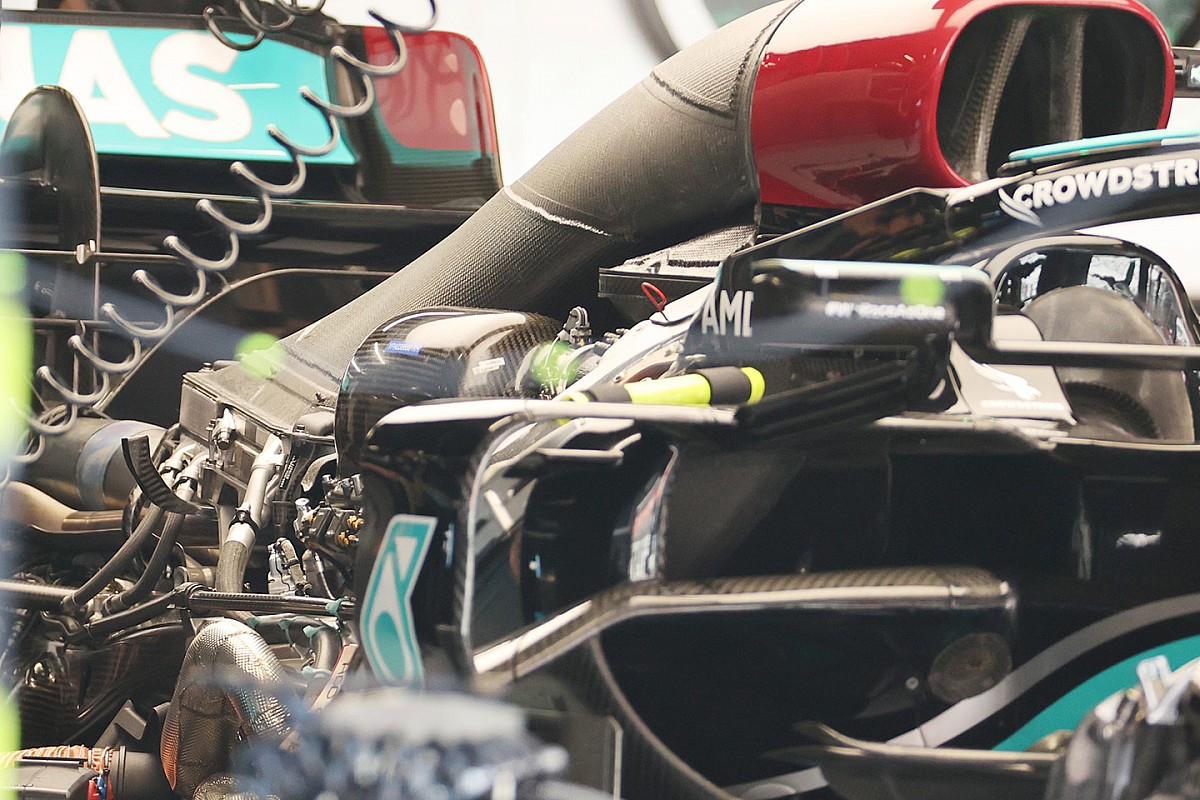
The installation of a replacement ICE was not a big surprise, because Hamilton’s team-mate Valtteri Bottas had already installed a sixth ICE a few races ago.
The behavior is surprising, however, when we consider Mercedes’ near bulletproof reliability during the hybrid era.
But perhaps it should have been expected in a season where the FIA has set a seemingly optimistic target of just three ICEs to cover the entire 23 racing calendar.
And even with a calendar that has shrunk to 22 races, only the Ferrari customer teams from Alfa Romeo and Haas have achieved this goal.
The use of additional engine components has also become a strategic part-time job, because the reduction from ten seats to only five after the first penalty can be worthwhile for the associated performance benefits.
This was clearly a major factor in Hamilton’s performance in Brazil, with the Mercedes engine having a lot more clout when fresh.
This is especially true when compared to the Honda, whose powerplant appears to have a much flatter degradation curve.
We also have to keep in mind that the aggregates are usually operated with a loss of power so that they can compete for a certain number of races.
This is where Hamilton’s new ICE has a significant advantage as an element in this parts pool.
It remains to be seen how long the performance advantage of Hamilton’s new ICE will last, but we should keep in mind that it is typically designed to run on a seven- to eight-race schedule, whereas now it only has four races to complete.
This shorter lifespan, required at the end of the season, opens up the possibility of pushing it harder and longer than usual, although it carries the risk of overusing the pool and the other components in the pool.
DRS problems
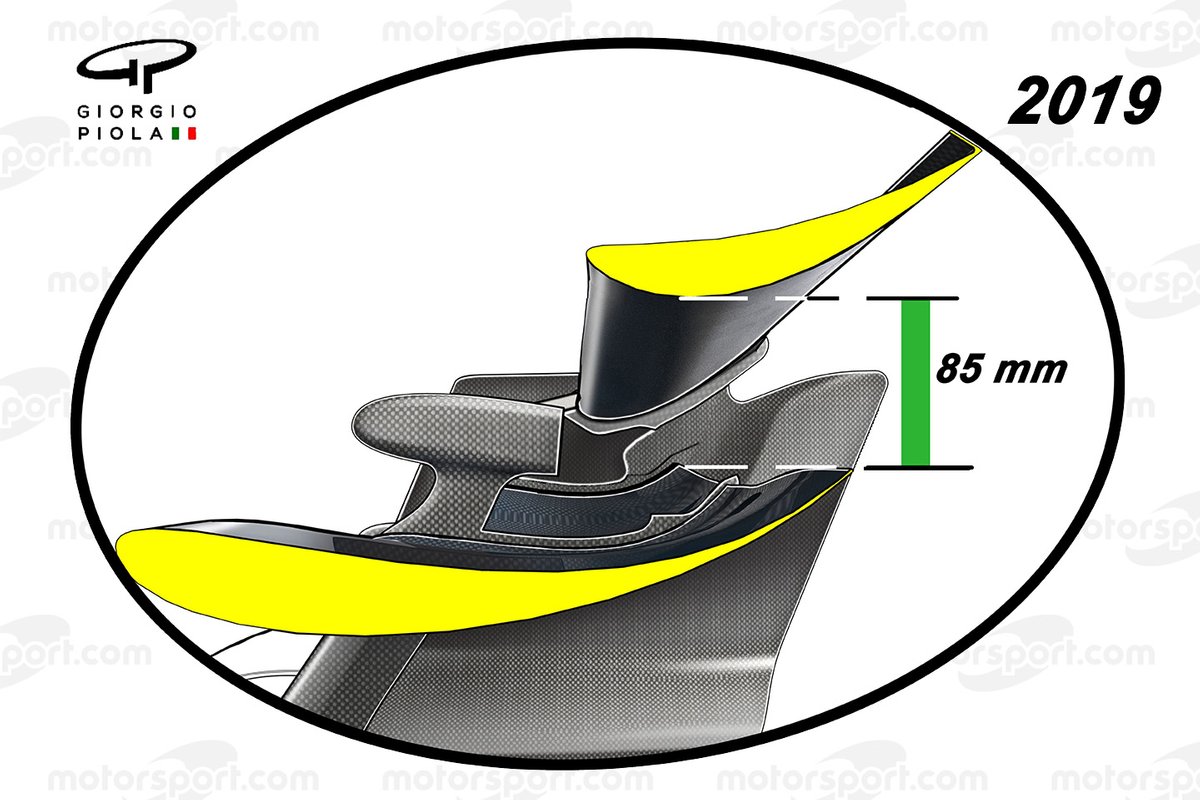
However, after taking advantage of the new drive in qualifying, Hamilton’s Brazilian weekend suddenly got a lot tougher as the FIA discovered that the DRS slot gap on his W12 exceeded the maximum gap of 85mm required to comply with the technical Regulations is required.
Unusually, after the failed inspection, the FIA confiscated the wing and only came to a decision on the disqualification after FP2. At this point, Mercedes had installed another wing of the same specification.
The wing, which opened just 0.2mm more than the regulations allowed, resulted in the FIA disqualifying Hamilton, forcing him to start the sprint from the end of the grid.
The FIA concluded that Mercedes had no intention of operating a wing specification that was out of regulation and that the additional deflection was likely due to additional play in either the DRS actuator or the tenons at the end. This could have been a defect in the mechanics, incorrect assembly of the parts or damage from the bumpy track.
Because of the penalty, comparisons were made with Red Bull’s behavior in recent races.
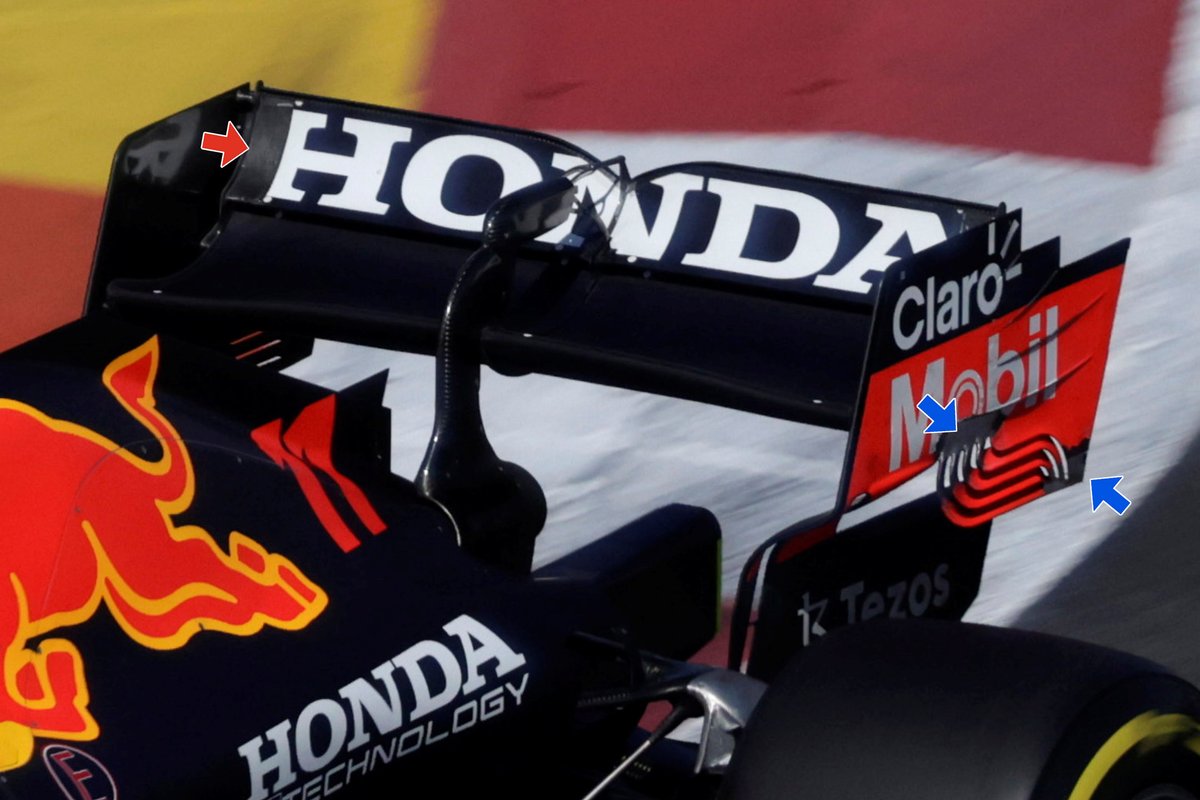
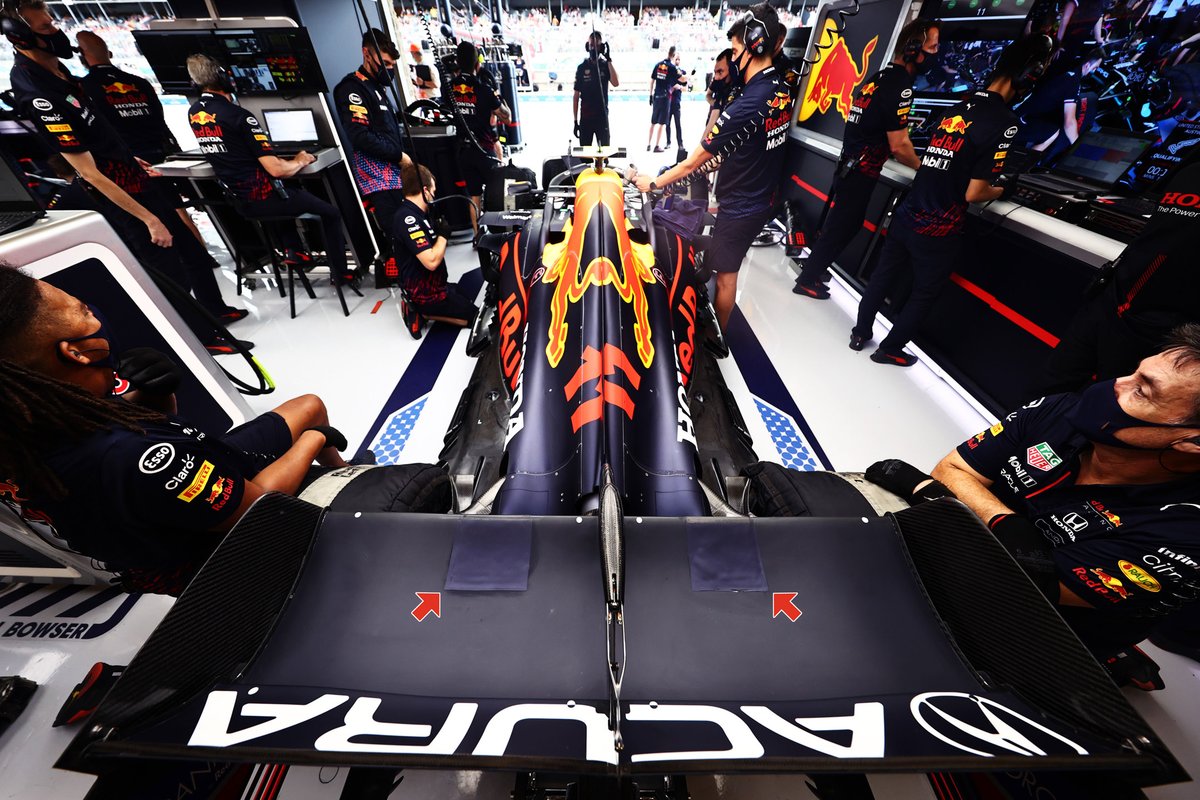
Because the Milton Keynes-based team had to carry out repairs on its rear wing at the United States Grand Prix and the Mexican City Grand Prix.
The question from Mercedes was why the rival was allowed to carry out repairs under Parc Ferme conditions and why he was not granted approval in order to also comply with the regulations.
However, one of the main differences between these cases relates to when the car will be seen by the FIA, as Red Bull did its repairs before qualifying and before the scrutineering process.
In a season in which the two title protagonists are embroiled in a gigantic battle, this policy will increase as the rewards for it can be just as rewarding as those offered on the track.
The post Why Hamilton’s Fresh Mercedes F1 Engine Was a Game Changer first appeared on monter-une-startup.




