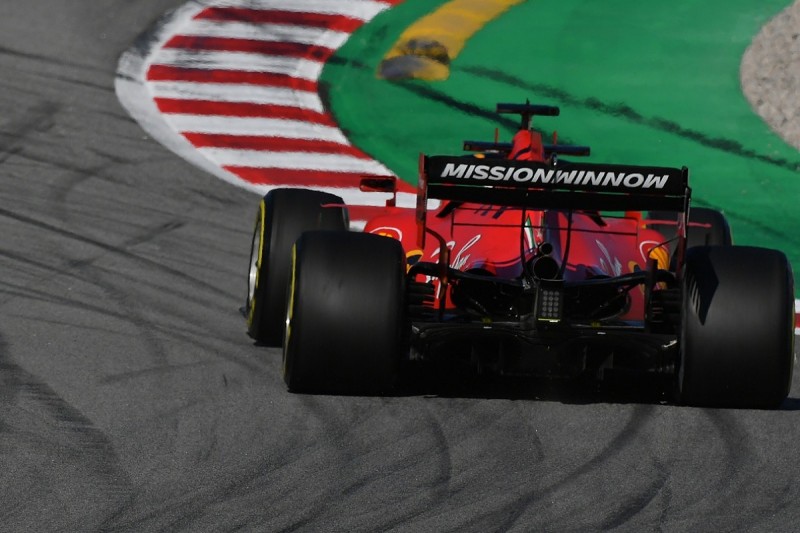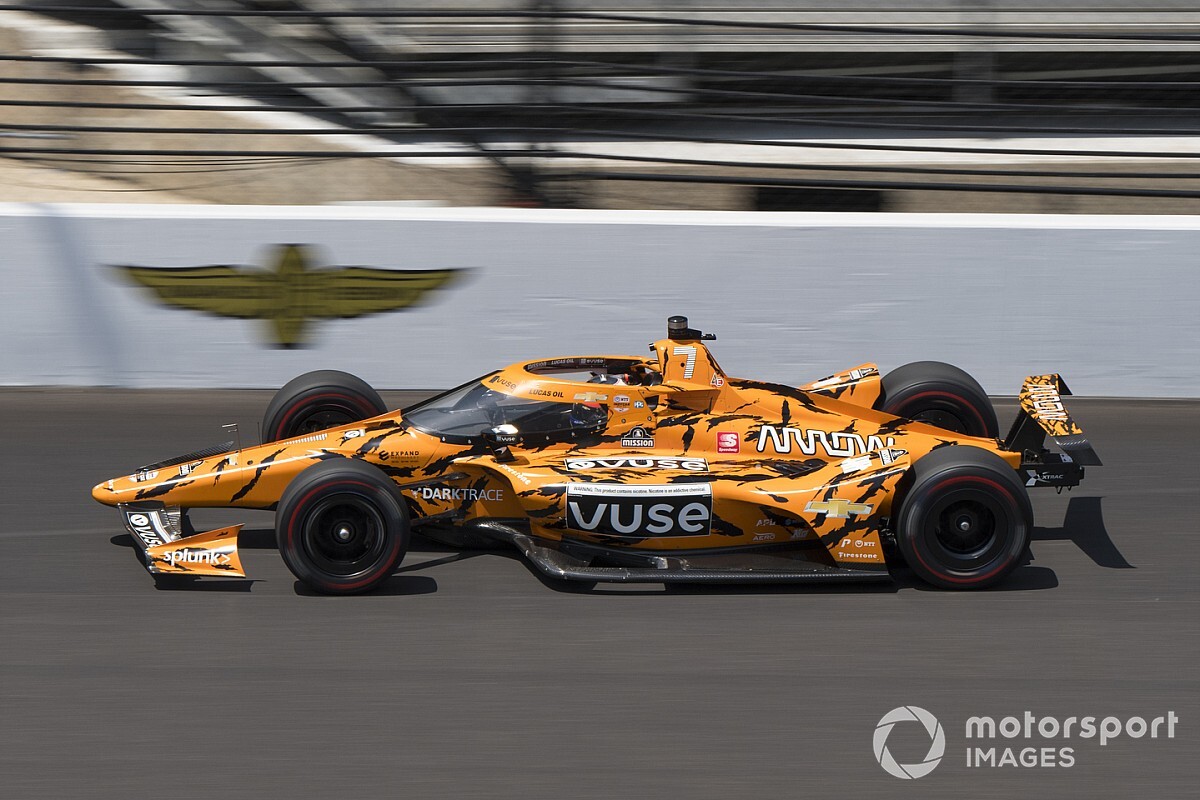
However, the two series run very differently. While F1 has always been the pinnacle of engineering excellence with a huge focus on design and development, IndyCar has prioritized a level playing field with much smaller budgets.
If you look at the key differences and know what each series does better than the other, you can see the richness of open wheel racing at the highest level.
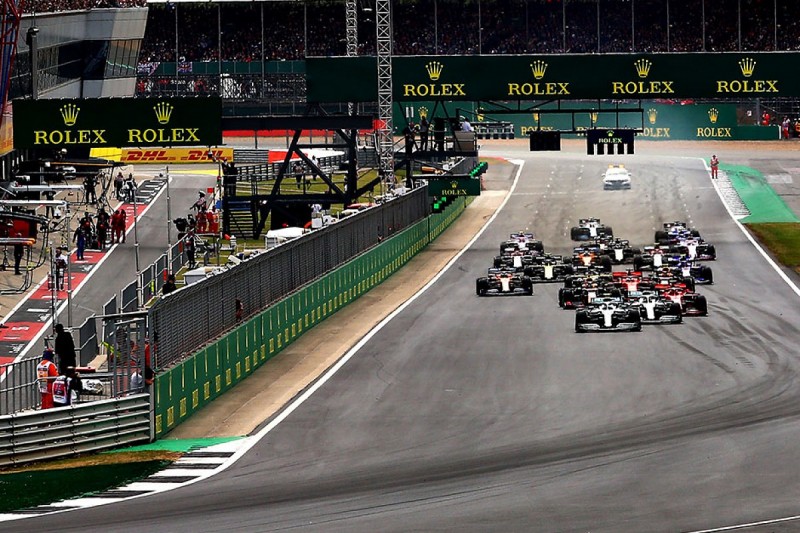
Lewis Hamilton, Mercedes F1 W11 Carlos Sainz Jr., McLaren MCL35, Valtteri Bottas, Mercedes F1 W11 and Lando Norris, McLaren MCL35 at the start of the race
Photo by: Mark Sutton / Motorsport Images
Does F1 or IndyCar have the highest top speeds?
The top speed IndyCar machines can reach is around 240 mph on oval super speedway tracks from 2.2-liter V6s with two turbochargers, while for an F1 car on a road it is typically around 205 mph of turbocharged 1.6-liter V6 hybrid engines – although in 2019 both Sebastian Vettel and Sergio Perez made it to Monza (the track with the lowest downforce on the schedule) and Mexico City (where the air is less high in altitude tight) to reach 223.5 mph. The lower maximum speeds of F1 can be taken into account by prioritizing the output and cornering speeds in the regulations.
However, IndyCar’s superior straight-line speed doesn’t directly mean the cars are faster over an entire lap on the road. Compared to IndyCars, F1 cars accelerate faster and gain a lot of time in corners because they have a lot more downforce. In 2019 IndyCar drove at the US Grand Prix on the Circuit of the Americas and made direct comparisons possible for the first time. Will Power took pole position with a lap of 1: 46.017 seconds and an average speed of 115 km / h. Almost nine months later at the US GP, Valtteri Bottas made it with 1: 32.029 minutes, 14 seconds faster and an average of 133.5 km / h.
With such different approaches in motorsport, it is not really representative to just look at the production speed. IndyCar takes great care to create a level playing field for all teams using the same Dallara chassis and choosing between Honda and Chevrolet. For comparison: F1 currently has four engine manufacturers and each team develops its own cars and parts. As a result, the competitiveness of cars is very different from front to back, and budgets revolve around the battle for points.
How much horsepower do IndyCar and F1 cars have?
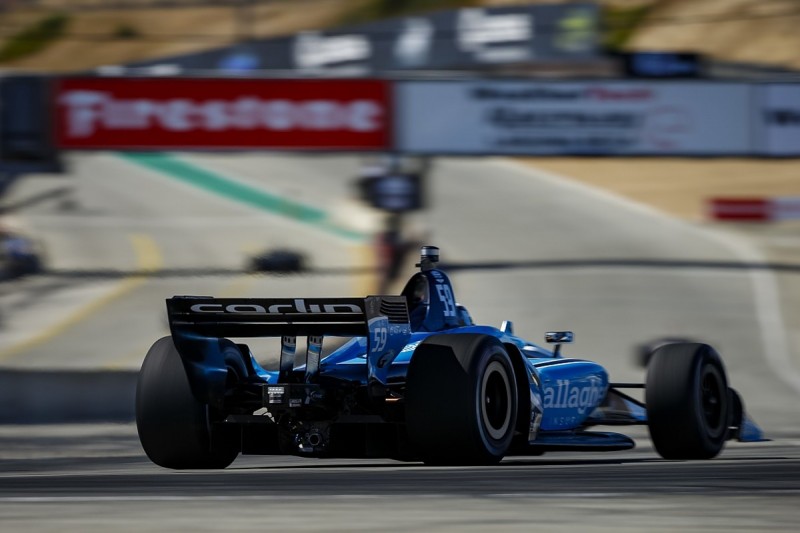
IndyCar machines have between 600 and 750 hp to play depending on the Turbo Boost. On the other hand, manufacturers of F1 engines are currently rather cautious about the performance of their machines. In 2019, Renault announced that it had hit 1000 horsepower combined with the internal combustion engine and hybrid systems, and Ferrari, Honda and Mercedes are believed to have hit that magic number as well.
What assists are there in F1 and IndyCar?
F1 has been using DRS since 2011 to eliminate the aerodynamic disadvantage of running close behind another car and to encourage overtaking. The system allows vehicles that are within a second in front of the vehicle in front to raise part of the rear wing on certain straights to create an opening that improves aerodynamic efficiency and drive the vehicle as it would without the disadvantage the dirty air would be.
IndyCar introduced its push-to-pass system in 2009 to increase overtaking. With a button on the steering wheel, the driver can temporarily increase the engine output by around 50 hp. In 2017, the rules were changed so that each driver receives more than 200 seconds more power than a certain number of uses during the course of the race. In this way, drivers can get out of failed overtaking maneuvers without wasting additional seconds of boost and use this time at a specific point in time.
The BorgWarner turbos from IndyCar are supposed to run at 1.3 bar on superspeedways, but on the Indy 500 on Fast Friday and on the qualifying weekend this value is increased to 1.5 bar, which means about 90 hp more.
How do the audience figures for F1 and IndyCar compare?
As an essentially national series, IndyCar’s television viewership is much lower than that of the global F1 World Championship. In 2019, IndyCar reached an average audience of 5.45 million viewers per race on all NBC-affiliated channels, the series’ official broadcaster. By comparison, F1’s average audience worldwide last year was 91.5 million, with the highest cumulative audience of the year since 2012. The audience for both series, however, increased by 9% compared to 2018.
What is the difference between the IndyCar and F1 qualifying formats?
For all F1 races, qualifying is divided into three sections known as Q1, Q2 and Q3. All drivers compete in the 18-minute Q1 session, with the five drivers who set the slowest times dropping out after this point. The remaining 15 fights to get one of the 10 fastest times to get into the first quarter. In the final qualifying, the drivers are fighting for the fastest time to get as close as possible to the starting grid for the race on Sunday.
The IndyCar qualifying depends a lot on the type of event. In oval races, drivers go out one after the other, with the average of their two timed runs making up their qualifying time. In the case of two-lap races with oval double heads, the starting grid for race 1 is set in the first lap and the starting grid for race 2 in the second lap. With the Indy 500, qualifying is divided into three days, each of which sets a time based on the average of four laps on the first day. Those in the top nine repeat the process in the Fast Nine Shootout and those under 30 in the Last Row Shootout to determine the final grid.
At street and street courses, the drivers go out in groups and the results are decided on their best lap. The field is divided into two parts for the first segment, with the six fastest drivers each entering the next qualifying segment and the rest making up positions 13 and down. The fastest 12 then have ten minutes to complete a lap. The fastest six drive into the Firestone Fast Six shootout, while the remaining drivers end up in positions 12 to 7 on the grid. The last six then have a shootout for pole position.
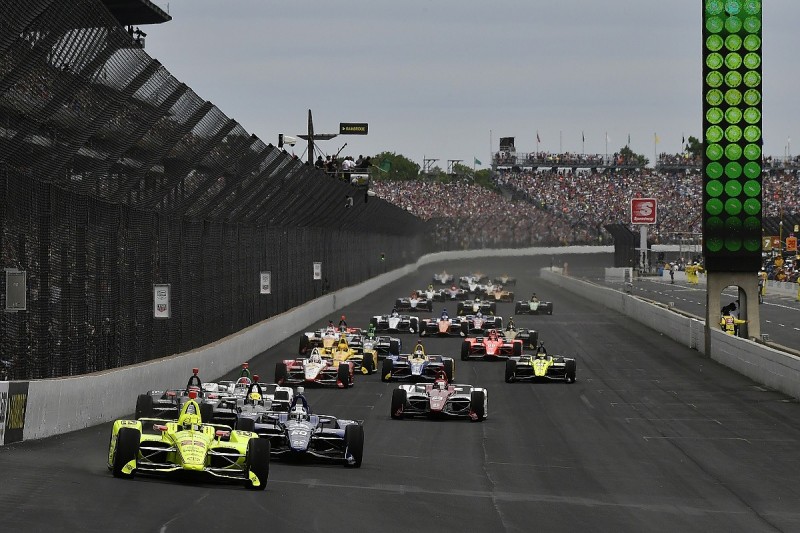
What are the differences between the IndyCar and F1 racing formats?
For F1, the race ends when a distance of 189.5 miles is reached. This usually takes around an hour and a half, but there is also a two-hour limit for each race in bad weather or extended safety car periods. It’s a little more complicated for IndyCar. In oval races there is no time limit and all races are distance, while road and street course events typically have a two hour time limit if the race distance cannot be reached – although there is a provision in the regulations that allows IndyCar, to change the time limit if they deem it necessary. That said, most of them take about an hour and three quarters if they’re running non-stop.
One of the biggest differences between F1 and IndyCar is the location of their races. While IndyCar only left the USA in 2019 to venture across the northern border to Toronto, F1 will travel from Australia to Abu Dhabi through Asia, Europe and North and South America in mid-March / early December. The Globetrotter-F1 therefore has a longer season, both in terms of the number of races and the length in the calendar months.
IndyCar also still has refueling as part of their races, which has been banned in F1 since 2010. The F1 mechanics now change car tires in about two and a half seconds, while the IndyCar pit crews change tires and fill up about 84 liters of fuel in less than ten seconds.
What is the difference between the F1 and IndyCar point systems?
In F1, points are awarded to the top 10 drivers, with 25, 18 and 15 points being awarded to the top three drivers, with the exception of one point for the tenth-placed driver. However, IndyCar is much more generous when it comes to handing out points. The winner receives 50 points, and the second and third 40 and 35 points. Points are given to finishers across the field, while those who are below 25th to 33rd place receive 5 points each. Points are doubled for the Indy 500 and the first through ninth points for qualifying for the Indy 500.
While F1 recently introduced a bonus point for the driver who drove the fastest lap of the race (as long as he finishes in the top 10), IndyCar rewards its drivers with a bonus point for being on pole and leading at least one lap and two points for most laps run.
In F1, each team also receives points in the same structure depending on where their drivers end up (with the exception of the fastest bonus lap point). In IndyCar racing, Honda and Chevrolet from the engine manufacturer are fighting against it and again receive the same number of points as their two best-placed drivers. In addition, the manufacturer who won the race receives five additional points and one additional point goes to the manufacturer on pole.
This is slightly different for the Indy 500, where two points go to the manufacturer on pole and one to the point that is fastest on the first day of qualifying. Engine manufacturers who reach the 2,000 mile threshold will receive a bonus equal to the number of Manufacturer Points earned during the race.