
Although this is an impressive achievement in view of the significant change in the regulations next year, it also shows his commitment to the battle for the championship against the background of the cost ceiling.
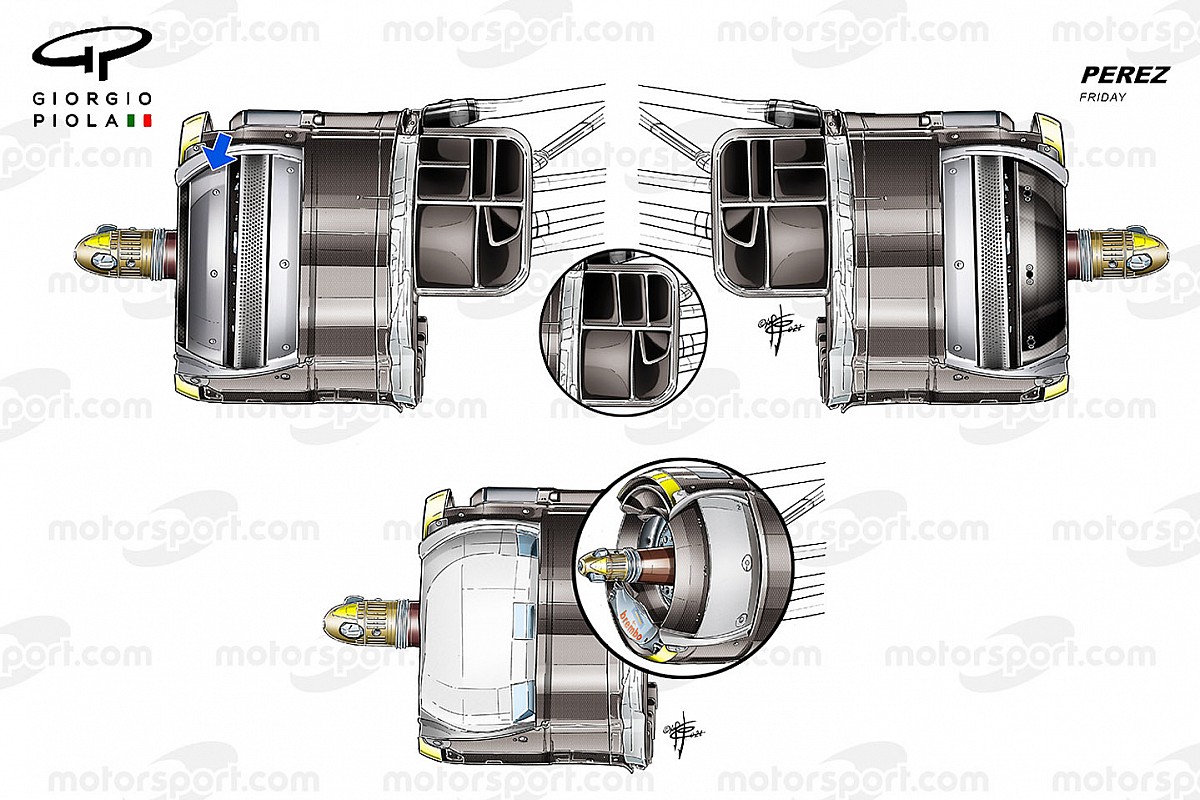
Aside from the new engine cover body, which will be looked at later, Red Bull in Mexico also heralded the changes to the layout of the front brake ducts.
Another new inlet vane assembly was tested (inset) on Friday, which has three vertical channels in place of the horizontally partitioned version it now uses for a number of races.
This is the fifth iteration of the inlet scoop this season and shows Red Bull’s commitment to tweaking the shape of the inlet and the performance it can deliver.
The cladding of the bypass duct, which is incorporated into the front of the assembly, was also specially tailored to the expected requirements of the Autodromo Hermanos Rodríguez.
Typically, the team would use either a full plate or a partial plate, both of which carry a heat reflective material (below) to direct airflow through the wheel surface.
The plate serves as a barrier within the bypass channel for the heat that is dissipated from the brake disc bores inside. This creates a form of temperature control, as the heat is less likely to be exchanged with the rim and thus the tire.
This finely balanced dance between the need to cool the brakes, keep the tires at the correct temperature, and provide aerodynamic support, however, was interrupted for Mexico when the team exposed the brake disc to balance the balance between heat transfer and aerodynamic impact to change.
Two solutions were tested on Friday, with Perez testing a version without the additional panel on the outer collar before switching to the Verstappen solution, where an additional collar with a reflective surface was added to influence the path of the airflow (blue arrow ).
Ferrari new 2022 disc brake comparison
Photo by: Giorgio Piola
Red Bull wasn’t the only team experimenting with a new brake arrangement, with Ferrari making changes in Mexico, too.
The Italian team opened a pair of windows in the inner drum that exposed the brake disc to the airflow so that it could be pulled out of the tread in another way.
Additionally, it began experimenting with a new material it was working on with Brembo for 2022, which resulted in it abandoning the serrated edges and subtly altering the DNA of the drill pattern.
There will be further changes for 2022, but the data collected over the course of the next races under racing conditions will certainly shape the further development until then.
Altitude challenges
The Mexico City Grand Prix is an outlier on the F1 calendar and is held at just over 2,200 m above sea level.
This altitude presents some unique problems for teams as they must try to thrive or even survive in the rarefied air.
It’s also a twofold problem, as reducing air density is devastating from both an aerodynamic and cooling perspective. It requires teams to carefully consider how much performance they are willing to give up in order to achieve their goals.
For example, if the track were at sea level or close by, you would likely see the teams driving their cars much more trimmed, somewhat similar to the aerodynamic setup we would see in Baku.
But due to the altitude, the teams generally ride at their maximum downforce setup, which we would normally see in Monaco or Hungary as there isn’t the same drag penalty as there is in these locations.
When it comes to cooling, teams have to consider several factors, including the brakes and drive unit, with the teams obviously going for something a little more generous to keep temperatures down.
Valtteri Bottas, Mercedes W12
Photo by: Uncredited
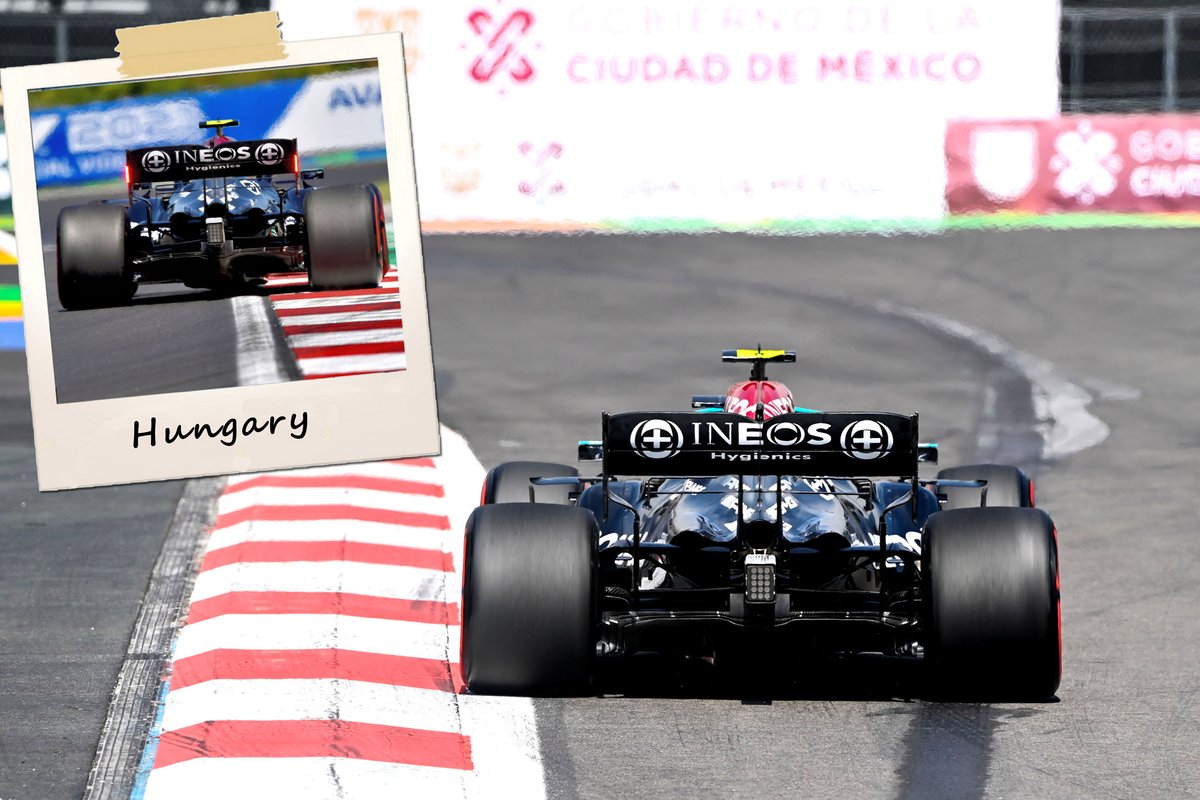
In the case of Mercedes, we can see the synergy between the cooling system used in Hungary and the one used in Mexico.
Not only did the team use a similar sized rear outlet on both occasions, but they also selected the panel next to the halo and chose the largest lamellar panel.
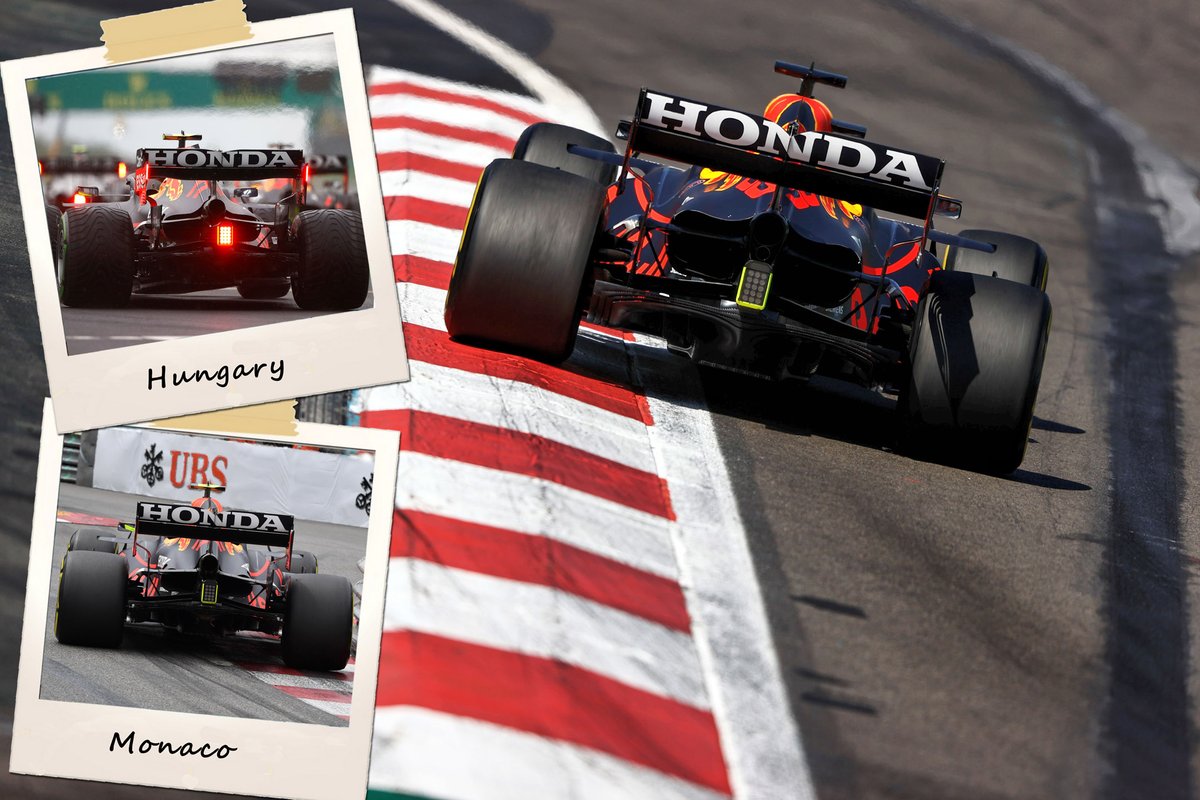
However, Red Bull went a step further and introduced a new, larger engine cover that is sure to only be used at the Mexican Grand Prix.
The larger footprint of this cooling outlet may be better identified by the relative distance between the upper arms of the wishbone and the trailing edge of the engine cover, this tide line being slightly higher in Mexico so that heat can be dissipated more effectively.
Max Verstappen, Red Bull Racing RB16B
Photo by: Uncredited
Red Bull wasn’t the only team to take a novel approach to cooling for Mexico, however, as Alpine also opened an additional vent in the back of the A521’s engine cover to dissipate the resulting heat.
While this type of vent in the back of the engine cover isn’t typically a feature of the A521, it’s not a new feature for F1 teams. Many teams have chosen to have additional sockets of various sizes at this location to aid in cooling during the hybrid era.
The mailbox-like opening is above the tail of the engine and in an area near the turbocharger that has to work harder at altitude to get the same results.
The post The new F1 brake duct optimizations that show that Red Bull is still putting pressure on it first appeared on monter-une-startup.





