
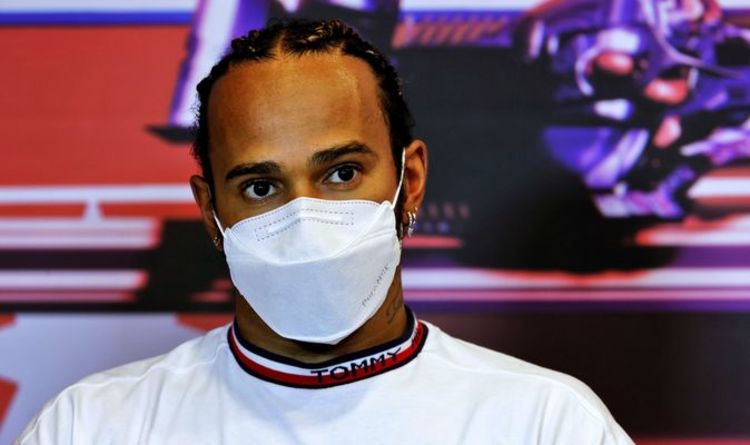
Seven-time Formula 1 World Champion Lewis Hamilton has expressed concern about the changes to the sport’s wholesale regulations for 2022, claiming that the increased weight of cars will counteract efforts to improve sustainability. The Mercedes star has urged F1 to reduce its environmental impact on a number of previous occasions, with Grand Prix races being widely criticized for its fossil fuel consumption and significant logistical challenges.
The organization has announced plans to achieve a net zero carbon footprint by 2030, but it seems like next year’s rules could adversely affect its goal.
The new regulations will introduce simplified aerodynamics and the return of a ground effect formula with the aim of bringing racing closer together and leveling the playing field a little.
It is believed that these changes will reduce the effects of dirty air on car chasing, an issue that has necessitated the recent use of DRS to encourage overtaking in races.
However, the cars will also be the heaviest in history, with the minimum weight currently being no less than 790 kg.
The move to heavier hybrids seven years ago and the introduction of the Halo in 2018 meant the cars got bigger and bigger, with the changes over the next year adding 150kg in weight since the end of the V8 era.
JUST IN: Valtteri Bottas struggled in Baku. to achieve a “positive spiral”
Hamilton, who currently outperforms Red Bull’s Max Verstappen in the drivers’ standings, has suggested that lighter cars would help F1 solve their environmental problems by reducing the amount of energy required to drive them.
The 36-year-old also pointed to the lack of on-track action on circuits like Monaco in recent years, blaming the bulkiness of the current machine.
“I don’t understand why we’re getting heavier,” Hamilton told Motorsport.com. “I don’t particularly understand why we get heavier when all the talk about sustainability is going on, just as the sport is going in that direction.
“As you get heavier and heavier, you use up more and more energy. So this doesn’t necessarily feel in the right direction or in the thought process.
DO NOT MISS
“The lighter cars were more agile, of course not nearly as big, and so the racing, the maneuvering of the car, was better.
“On the tracks that we will be driving, they will be wider. In Baku it is quite wide in some places and of course narrow in other places.
“Monaco has always been relatively impossible to overtake, but now the cars are so big that it is too big for the track. And as I said, the heavier we get, the more energy we have to dissipate.”
“Bigger brakes, more brake dust, more fuel to get you to the places. So I don’t quite understand it. “
Meanwhile, Alfa Romeo driver and F1 veteran Kimi Raikkonen also highlighted the size difference between modern cars and those of yesterday, suggesting that recent rule changes have done little to improve the overall quality of racing.
“It’s a lot when you see the old cars next to this year’s cars or even last year’s cars,” added the 41-year-old. “In some years it is said: ‘How small they look!’
“Well, obviously we’re not here to design. I think if we were still racing [in] In the mid-2000s or whatever year you choose to pick cars, it wouldn’t make a difference to racing.
“There’s just a lot of money going to be wasted on the way here and nothing else has changed.”
The post Lewis Hamilton criticizes the F1 rule 2022 – “I don’t understand why” | F1 | Sports first appeared on monter-une-startup.




