It also ventured into the automotive world and produced several components (especially cylinder heads) for automotive giants such as Toyota and Ford. In addition, Yamaha expanded its motorsport activities in the late 1980s by entering Formula 1 as an engine supplier.
The first race-ready unit, the OX88, was a 3.5-liter V8 loosely based on the Cosworth DFV. In contrast to the legendary engine that the British engineering company had designed a few decades earlier, the OX88, which was used by the German racing team Zakspeed throughout the 1989 season, was a failure of epic proportions.
It was notoriously unreliable and considered the worst engine of the competition, and although Yamaha wanted to improve it in the off-season, changes to Formula 1 regulations led to its premature demise.
After the company temporarily retired for the 1990 season, the company began developing a new V12 with the same displacement in 1991. Code-named OX99, it proved better than its predecessor, but as hard as the engineers tried to improve its performance over the next two years, it also proved uncompetitive.
Despite its lack of Formula 1 success, the OX99 was an advanced engine for its time, and the company’s management was so excited about its potential that they decided to build a street-legal supercar around it.
It all started in 1991 when a German company was commissioned to develop a first version of the car. The sketches made and the estimated costs were anything but pleasant, so the partnership ended quickly. However, they did not abandon the project which was passed on to the UK’s International Automotive Design (IAD).
This time the proposal corresponded to Yamaha’s vision and in early 1992 a working prototype was ready. Designed by Takuya Yura as a single-seater, the car, named OX99-11, received an additional seat until completion.
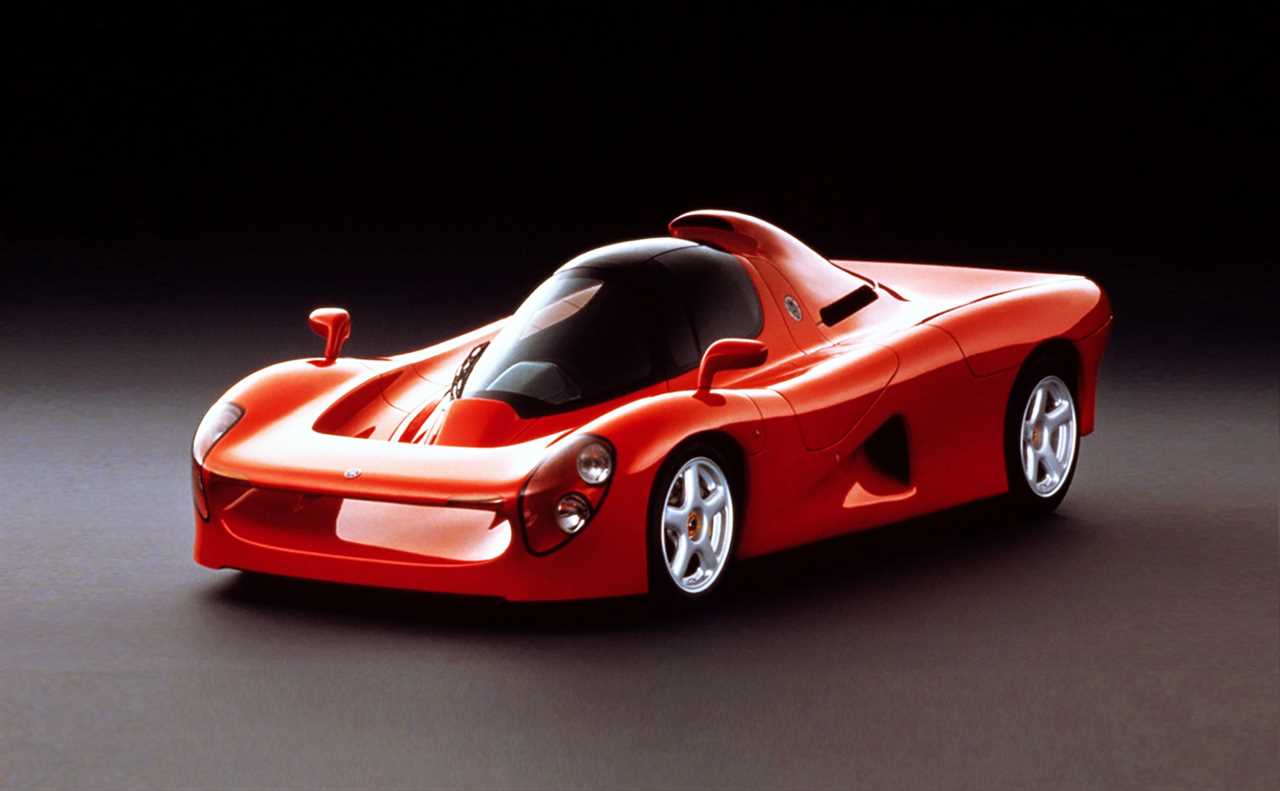
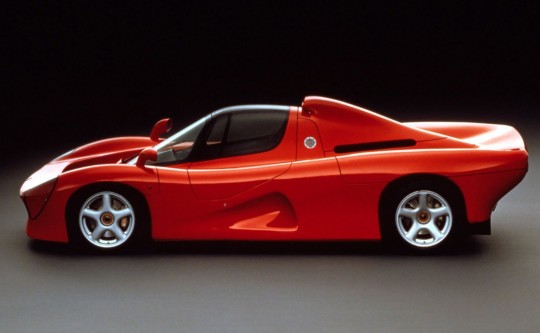
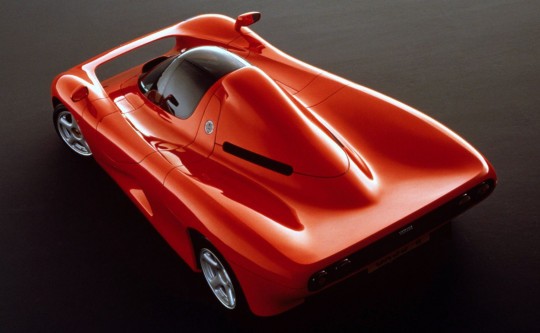
With a motorcycle-inspired tandem seating arrangement under a fiberglass roof, the monstrous super athlete had a lightweight carbon fiber body that looked very much like a Group C endurance racer. It was a masterful mix of aggressive lines and curves that culminated in an open wing integrated into the front apron.
A state-of-the-art monocoque chassis was hidden under the magnificent body. It housed numerous goodies derived from Formula 1 such as the internal pushrod suspension and of course the fire-breathing OX99 V12, which was limited to 400 hp to increase reliability and meet emissions regulations.
In total, the car weighed 2,540 lbs (1,150 kg) and accelerated from 0 to 60 mph (97 km / h) in just under four seconds. It was only a few tenths of a second slower than the McLaren F1, the ultimate supercar of the era.
A total of 3 units were built by IAD before Yamaha ended the partnership due to budget discrepancies. The British subsidiary Ypsilon Technology was selected for the fine-tuning and a pre-series version in just six months.
The OX99-11, due to hit the market for the 1994 model year, was expected to cost around $ 800,000 (now $ 1,480,755), which was McLaren F1 money and enough to run three V12-powered Lamborghini Diablo VTs to buy with four-wheel drive.
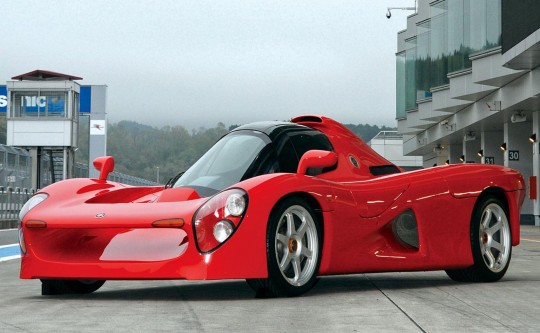
With a financial crisis looming at home in Japan and insufficient pre-orders secured, the company eventually ended the project, which was well over budget at the time.
Although it never went into production, the OX99-11 remains one of the most interesting concept cars of the 1990s and one of Yamaha’s most ambitious projects.
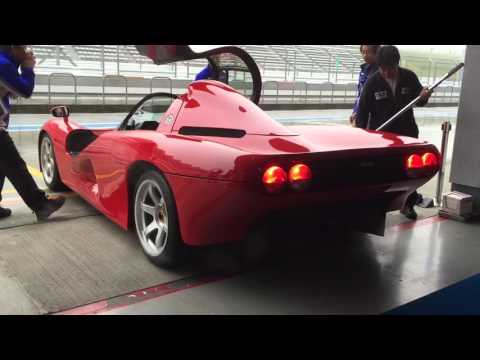
Today the manufacturer proudly presents all three prototypes at various motorsport events across the country, where they can be seen on demonstration laps. In a rare video posted on YouTube by sxe10cj, you can see (and hear) this amazing machine being driven out of the box.