
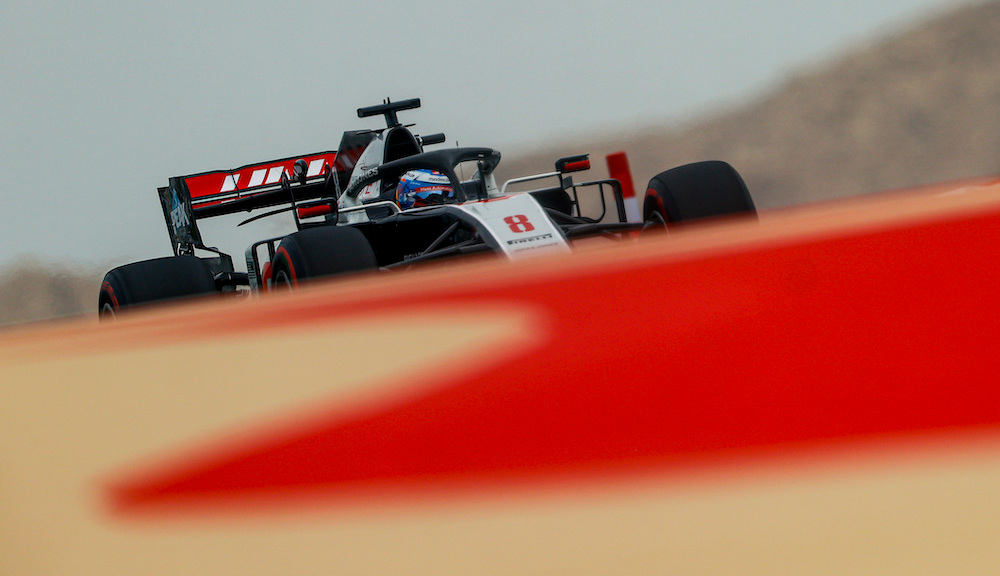
Gene Haas got into Formula 1 for a very specific reason, to increase Haas Automation brand awareness around the world. He was doing well at the North American level, but Formula 1 could help the cause worldwide.
And it all started so well. The Haas F1 story began spectacularly in 2016 when the team achieved incredible results in Australia and Bahrain. Although the team only scored 11 points later in the season, the final record of 29 points shouldn’t be overlooked.
The following year saw further progress as 47 points were accumulated, although the eighth position of the Constructors’ Championship remained the same. And then came 2018, the first year of stability for Haas in terms of regulations, and the Ferrari partnership helped produce a car good enough for fifth overall and 93 points.
But everything seems to have been downhill since then. The 2019 season brought in just 28 points, marking the start of a dismal three-year track during which the team stopped updating the car to save money. Günther Steiner openly admitted that in the past 12 months it was primarily a matter of keeping the team running.
“Sometimes survival is a racing strategy. I’m just trying to survive, ”is the last line I get from Gene Haas as we discuss exactly where his team is at the moment. But it sums up its recent past.
“I think we did really well up to 2019, we had a lot of power and the cars were very competitive,” he says. “But then we did fuel-efficient races where we actually had to lift a lot and idle, which really hurt us. Then in 2019 we had a lot less horsepower compared to the Ferrari cars, and that hurt. We did very well in qualifying, but when the race came our performance was close.
“When Ferrari reduced its power in 2020, it was pretty obvious that all Ferrari engines were underperforming compared to Mercedes, Honda and Renault. Our boat is tied to the Ferrari ship. So if they go slow we go slower – I don’t think there is much you can do about it.
“We have no control over the parts we receive from Ferrari. We believe Ferrari can fix the problem, and not only Ferrari has this problem, but Honda and Renault too – all of them are deficient in the Mercedes engine. They built an extremely powerful, long-lasting engine with high fuel efficiency that no other team could come close to.
“For me, what Formula 1 is all about is really amazing. More power for Mercedes to dominate so much of the thing, but who wants to go to a race when you know who’s going to win every damn race there is? It’s just getting boring. “
Those words suggest frustration, but Haas is pragmatic about where his team stands in F1. The COVID-19 pandemic could have ended for several teams, but protecting Haas F1 – even at the expense of performance – wasn’t a tough decision for the 68-year-old.
Part of Haas’ plan for survival when the pandemic broke out was to effectively eliminate the entire development program for the VF-20. Coates / Motorsport Images
“It really wasn’t difficult,” he says. “Even as a group, we felt that this COVID thing was going to be a bigger lockdown than if people said it would only take a few months and then it would go away. So we immediately shut down the monster that spends a lot of money, mostly because we wouldn’t go to the races.
“The most expensive part of entering the races is usually freight and travel. That’s why we stopped most of them almost immediately. We got a huge saving there and that really helped. Instead of having a budget of $ 150 million, it went down to $ 80 million, and a lot of that … $ 35 million came from FOM and then more from sponsorship, so we actually did pretty well . “
Part of that savings was also achieved through the lack of an upgrade program, as Haas felt it did not offer enough valuable return to justify the amount spent.
“I’ve always spoken to the drivers, and I think we spent between $ 20 million and $ 40 million a year on these updates in 2018-2019. Every time I talked to the drivers it was like, ‘Well that didn’t work out! ‘”, he says. “Why are we spending all this money on updates?
“That’s one of the things that we got rid of pretty quickly, which is all of these updates, because I was pretty convinced we weren’t going to be racing. At best I thought we were going to do four or five races, so bringing all of these updates for a very short season wouldn’t work. But in the end we did a lot of races. We didn’t bring any updates per se – and I’m not sure who brought many updates – but from a practical point of view they didn’t really seem like it made the car much better. “
Although Haas fears that the budget cap that will be introduced in F1 starting this season could limit the ability of smaller teams to invest and achieve the same level as the larger outfits, he has put on his business hat sooner than that of his racing driver when he looks at where his team is going.
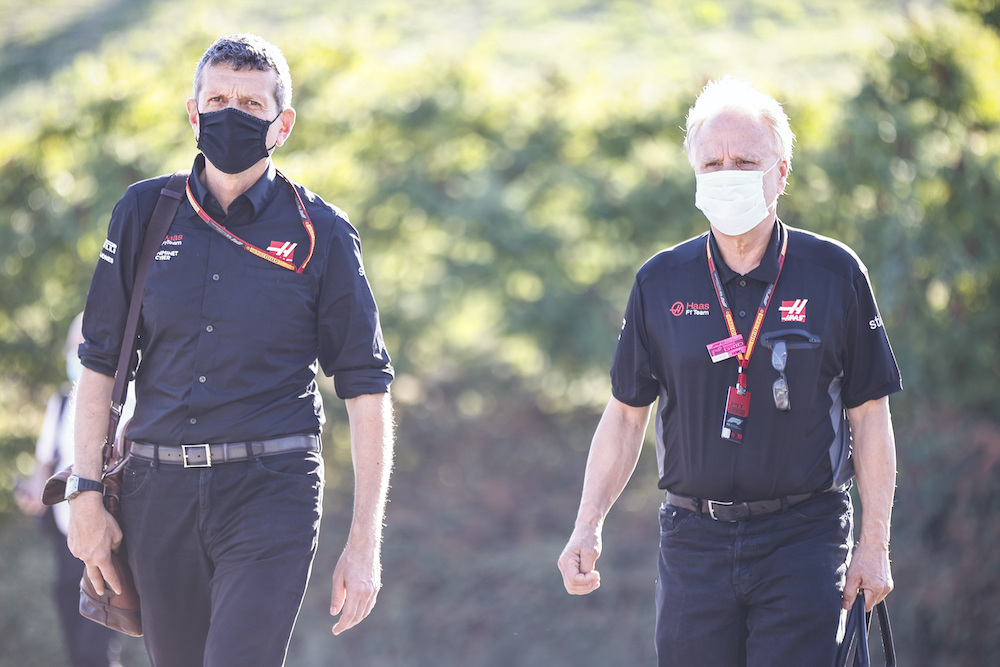
Haas (top right, with team boss Günther Steiner) set a tight budget last year, but believes that the team has benefited from it: “When you’re leaner, you can sometimes achieve more results.” Hone / Motorsport Bilder
“I am optimistic about the future,” he says. “I know this year will be difficult because we basically have the same car as last year and the Ferrari power plant will be very similar to last year’s. So we know this will not give us a competitive advantage. So I think that we have the attitude to realize our position, we will probably always be three out of four positions behind Ferrari. It kind of tells us where we’re going to race.
“And that’s okay, that’s Formula 1, the pinnacle of motorsport. We know we’re not going to beat any of the Mercedes teams so we just have to take what we have and learn to make the most of what we have, which is not bad. This whole sport is a lot more than just the technical challenges and engine development and all that stuff, it also participates in races and drivers and all that other aspect of the glory of Formula 1 racing. Which one is fun! “
Part of that optimism stems from the way Haas was able to run in 2020 and still score some points despite the stress from the Ferrari engine. Effort was reduced and the team made more efficient, which meant that its owner was ready to sign the new Concorde deal and commit to the sport.
“When we were in the middle of the global pandemic last year, Günther (Steiner) and I agreed, ‘OK, how much money do we actually want to spend on it?'” He says. “I actually set a very tight budget, and to be honest, we got (relatively) more points with a smaller budget than with a larger budget. I just feel like maybe it ate too much and sometimes you can be leaner and get more results.
“So we leaned everything down and found a character that I felt comfortable with, and Günther agreed that he could work in it. We changed our focus a bit, we have some well supported riders and I think financially we are very stable. I am looking forward. With the cards that have been dealt we cannot sit here and win hands or bid the pot. So our position is basically to hold on and see what the future holds.
“In 2022 and 2023, a lot of things changed. So we are in holding mode. Let’s see what we’re going to do here. But we are also very stable financially. I didn’t have to mortgage my real estate, my racing shop, or anything. We’re not doing what some of the other teams are doing and we’re pledging everything they need to race. We only work with the money and budgets that we have, and we can do that very successfully. That guarantees us that we will be there for at least the next five years. “
This management approach makes Haas feel in a strong position. Despite specific contrasting incidents from Romain Grosjean’s happy escape in Bahrain and Nikita Mazepin’s actions on social media late last year, the general reason for owning an F1 team continues to feature the Ohioan’s hoped-for return.
In addition, Haas is now in a place where he feels stable in sports. He has a business model that works for him and controls one of the valuable franchises that have signed up for the race for the foreseeable future.
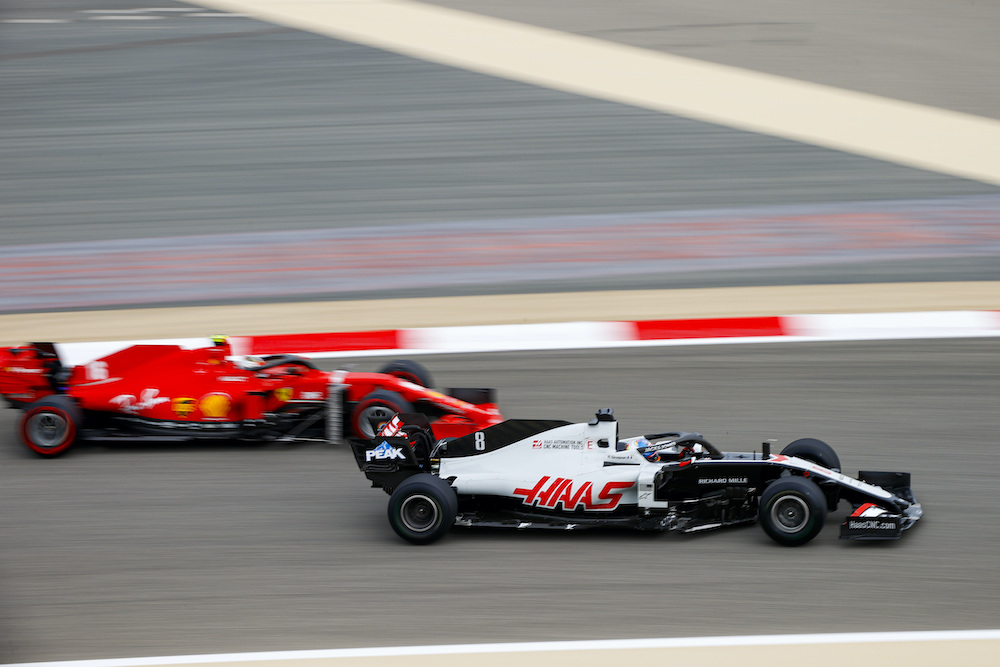
Haas’ recipe for longevity in Formula 1 is based on the team that works as far as possible and maintains a good relationship with the technical partner Ferrari. Coates / Motorsport Images
“From a business point of view, participating in Formula 1 was extremely successful in promoting our brand name,” he says. “It’s a great sport because there is no other sport like Formula 1 and there is a lot of excitement. We have brought a lot of customers to races and I hope that Formula 1 can continue to bring so much prestige and excitement to races because sport is a big part of many people’s lives. Car racing has been around for about 120 years, so I think it’s something that I would love to see further and definitely be a part of.
“A satellite team? Yes, we want to be the best satellite team we can be. Do I want to make the investment and try to duplicate a Mercedes, Red Bull or McLaren? No. Because the budget cap doesn’t get you to do it in the first place, you still can’t! The best we can hope for is basically being a good satellite team and having a close relationship with the team that we are the satellite team on, which is Ferrari.
“Ferrari is obviously a big name in auto racing and it’s great to be in line with them, but I don’t think I ever expected that we could ever beat a Ferrari directly because their cars will always be better than anything what we can build. That is our lot in life and I have to live in it and I can do it well.
“It makes a business, it’s not as expensive as it used to be. I think with the budget cap and the deals I made with Günther, etc., we have developed a budget that is very sustainable and does not require all of my fortune to sit in the world. I don’t actually have any loans at all, so we can stay in Formula 1 as long as we want in the future, and that’s how I want to be right now.
“In 2022 and 2023, doors may open. Maybe things will happen. Maybe some of the big teams call it the end. All this electrification of the entire auto industry is going to be very annoying for the established conventional automakers so you never know when either of them might get out and there may be some opportunities to do something else there. So who knows … “
The post INTERVIEW: What’s next for Gene Haas’ Formula 1 team? first appeared on monter-une-startup.




