
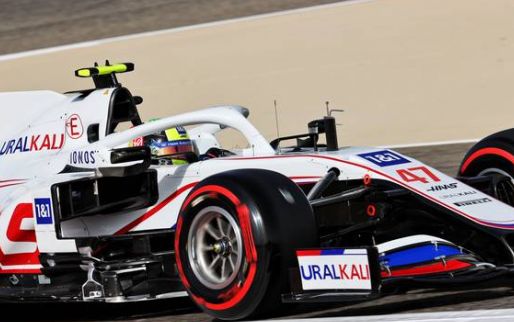
Haas suffered a lot in the last two races and ended up at the bottom of the grid in both races. These difficulties are expected to continue in 2021. Most experts and fans expect the team to come last in the overall standings. But will it continue on this path for the future?
Backstory
Haas has experienced two consecutive troubled seasons. In 2019 they faced a poor upgrade in Bahrain that caused the tires to overheat severely, and in 2020 they had to deal with an underpowered Ferrari engine. This year, team boss Gunther Steiner stated that Haas will be running a very limited development program for its current car. That, together with the signing of two rookie drivers, doesn’t seem to improve their positioning either. No wonder, then, that another year will follow this painful trend in 2021. But here’s why Haas believes things are on the rise for 2021 and beyond.
Continue reading
Haas to make final improvements at Imola: “Step back to move forward”
medium
It’s a well-documented fact that Haas is heavily sponsored by Uralkali – the Russian fertilizer company – which is partly owned by Nikita Mazepin’s father, Dmitry Mazepin. One would expect Nikita to be on the team and a significant flow of money from Uralkali sponsorship to go into the team’s accounts. German web hosting company 1 & 1 also recently got on board, which is likely due to a German driver, Mick Schumacher, driving for the team. By supporting both riders on the team with the support of their main sponsors, Haas would receive more financial resources in the long run.
Since the Concorde deal was signed by the Haas team, Gene Haas would be expected to continue to be involved in supporting the team and its endeavors. However, we shouldn’t expect him to spend endless amounts of money on team development and other expenses. The team is most likely dependent on the cost caps playing in its favor and would require an efficient allocation of resources. Until that efficiency can be fully achieved, the Haas F1 team would benefit from a more stable inflow of cash to reach themselves, to hit the cost cap, and to perform better in the future.
Continue reading
Haas faces a difficult year: “Points would be a great result”
consistency
Consistency in the driver line-up should be expected for their future in F1. In the case of Mick Schumacher, his performances this season could set him apart. However, with he’s a Ferrari-backed junior, there seems little reason why another team would pick him up, as he was apparently destined for the legendary Italian brand. Also, Ferrari’s Carlos Sainz has shown a strong work ethic that appears to keep him at Ferrari in the medium term, if not longer. This would mean Mick would likely be staying at Haas for a decent time.
If you look at other drivers on the current grid who have wealthy relatives helping their way into Formula 1, and the minimal heat they generate in the driver market, it seems Nikita Mazepin would follow this trend. Not to mention the significant sponsorship he brings would mean his position on the Haas team doesn’t appear to be in jeopardy right now. So Mazepin would try to stay in Haas long term.
With drivers staying the same over the next few years, moments like technical debriefings, simulator sessions, and driver feedback will become more fluid as drivers and team staff learn better communication techniques and patterns to reach conclusions. That coupled with a full year to gain experience and understand the team’s goals and procedures would give them more confidence going forward.
Look forward to something
Haas has already come out and has made a strong statement that there will be no development for the current car over the course of the year, with the focus firmly on 2022. While this lowers expectations for the current season, it shows Haas’ long-term commitment to her sport. as well as an opportunity for pragmatic thinking. This will enable a greater allocation of resources and focus on the next generation of F1 vehicles for an instant better pace advantage.
The agreement with Ferrari to bring Simone Resta to the technical department at Haas shows a stronger connection between the legendary Italian brand and the young American team. This not only strengthens the long-term bond between the two teams, but also enables the transfer of technical knowledge and skills from a leading team to a team that wants to fight at the top. This, coupled with the in-depth aerodynamic test restrictions that allow lower teams to make greater use of WindTunnels, could provide a wealth of data and information to work with to correlate research and development with upgrade data.
Because of this, Haas keeps looking ahead and tries to bring his team back to the higher heights they had reached in previous years.

Continue reading





