
The 2023 season will be exactly 50 years since Ferrari last competed in the top ranks of the sports car world championship under the guise of the sports car world championship: Select from “International championship for sports prototypes”, “World championship for brands” , “World Sports Car Championship”, “World Sports-Prototype Championship”, “World Endurance Championship” and a few others.
Since then there has been a scarlet depiction on the endurance championship grids – think of the Ferrari F40, 550 Maranello, 430/458/488 and similar competitors in GT categories, as well as the 333SP designed by Dallara. But at the sharp end, Maranello’s red cars have long been noticed by their absence.
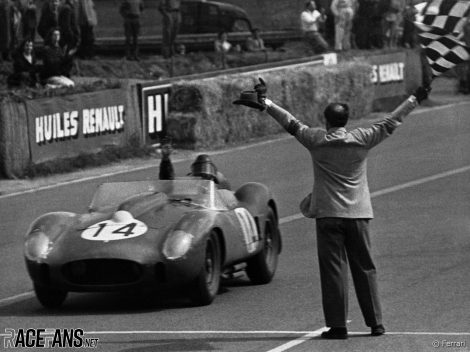
Prior to 1973, Ferrari was a mainstay of sports car racing, often neglecting the premier category of motorsport to achieve two-seater successes with designs like the stylish yet solid 250LM, the sensationally slippery 330 P4 – certainly one of the most beautiful races ever – and the sublime 312PB that won everywhere except Le Mans in 1972, which Ferrari allegedly hadn’t gotten into for fear of failure.
It could happen that sports car racing and Formula 1 do not go together. After John Surtees’ F1 title in 1964, Ferrari was not able to win another title until 1975. The return to F1 success came two years after a prototype program was discontinued that took Ford and lost against Ford, recently immortalized at Le Mans. 66 (aka Ford vs Ferrari). McLaren can confirm the no-mixing theory: during his sports car years, whether in CanAm, WSC or Le Mans, his F1 fortune suffered as a result.
Ferrari hadn’t had a top-class sports car program in decades. Even so, in 2023 – the centenary year of Le Mans – Ferrari will step into the WEC top-of-the-line Le Mans hypercar after evaluating LMDh, the chassis supplied by four different designers (including Dallara) with mandatory hybrid drives. The former is a constructor category – with restrictive regulations – while LMDh is so un-Ferrari that it is surprising that it has even been considered; Likewise, this indicates a full due diligence process.
The program was supposed to be announced in early December, but the sudden departure of Ferrari President and CEO Louis Camilleri after a fight against Covid resulted in a postponement. It was finally confirmed three months later by Ferrari President John Elkann, with Antonello Coletta, director of the company’s sporting activities department (not F1), being confirmed as program director in addition to his role as director of GT racing.
“In over 70 years of racing on circuits around the world, we have led our closed-wheeled cars to victory by researching cutting-edge technological solutions: innovations that flow from the circuit that make every road car produced in Maranello exceptional,” said he Elkann. “With the new Le Mans hypercar program, Ferrari reaffirms its commitment to sport and its determination to be a protagonist in major global motorsport events.”
Display | Become a RaceFans supporter and
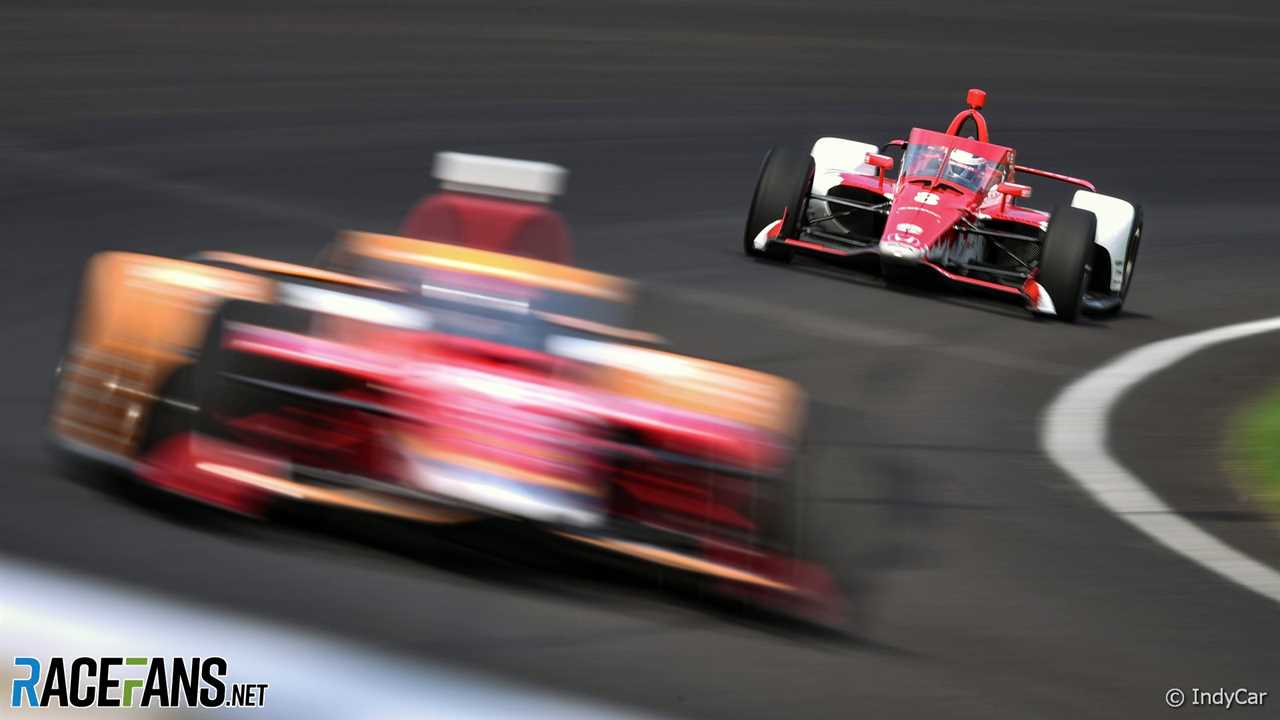
The move wasn’t unexpected: Camilleri alluded to both IndyCar and WEC programs to advance plans to reduce the F1 cap by $ 30 million to $ 145 million. Ferrari is known to have had extensive discussions with IndyCar – these went beyond just supplying engines to that single chassis category – before deciding to focus on WEC. However, a Maranello insider claims that some form of IndyCar involvement is still on Ferrari’s radar.
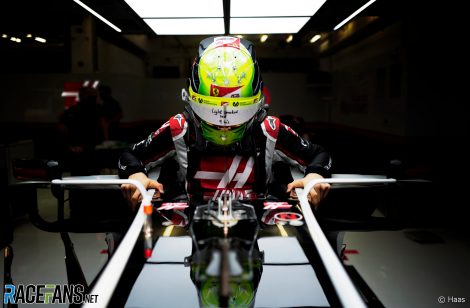
Analysis: How Schumacher and Resta fit into the new Ferrari customer team model at HaasThe obvious conclusion is that Ferrari chose WEC as an alternative to laying off staff laid off by the budget cap – RaceFans put the final figure at around 200 – but a Ferrari spokesman firmly believes the decision will was taken independently. Indeed, as shown here, setting up a separate facility to provide technical services to Haas F1 has previously required a significant number of skilled engineers.
However, it cannot be denied that F1’s cost-saving initiatives, which include the budget cap, various testing restrictions, and component sharing, have unlocked human, financial, capital, and technical resources, particularly deployed in other categories when needed where they can be transmitted directly. For example, Ferdinando Cannizzo, former head of F1 innovation and hybridization, is technical director.
Ferrari’s GT spokesman confirmed to RaceFans that the entire program will be carried out in-house and only specific components and services will be outsourced. He pointed out that sales of customer cars could follow after the program was set up; The first priority, however, is to ensure success in a field with the reigning WEC champion Toyota as well as Peugeot and Glickenhaus with Porsche, Audi and Acura in LMDh.
Can Ferrari be successful in F1 and WEC at the same time? The US is Ferrari’s largest market, accounting for 30% of all European sales combined and larger than China at 26%, so Ferrari is expected to use its considerable clout to convince IMSA to adopt LMH as first class , and attract additional brands – whether incomers or upgrades from LMDh. In any case, Ferrari’s return to sports car racing is a huge boost for a category that has been overshadowed by F1 for (too) long.
The question is less whether Ferrari can beat Toyota and Peugeot in a head-to-head battle than whether Maranello has the strength to do so without jeopardizing his return to winning form in F1. As Ferrari discovered 50 years ago, winning in sports cars is free when victory comes at the expense of success in F1. Ferrari’s goal must be to win both world titles at the same time.
Display | Become a RaceFans supporter and
News focus
Search all News Focus articles
Share this RaceFans article with your network:
The post Why Ferrari wants to be successful in both the WEC and F1 first appeared on monter-une-startup.Did you miss our previous article...
https://formulaone.news/ferrari/quickfire-qampa-carlos-sainz





