
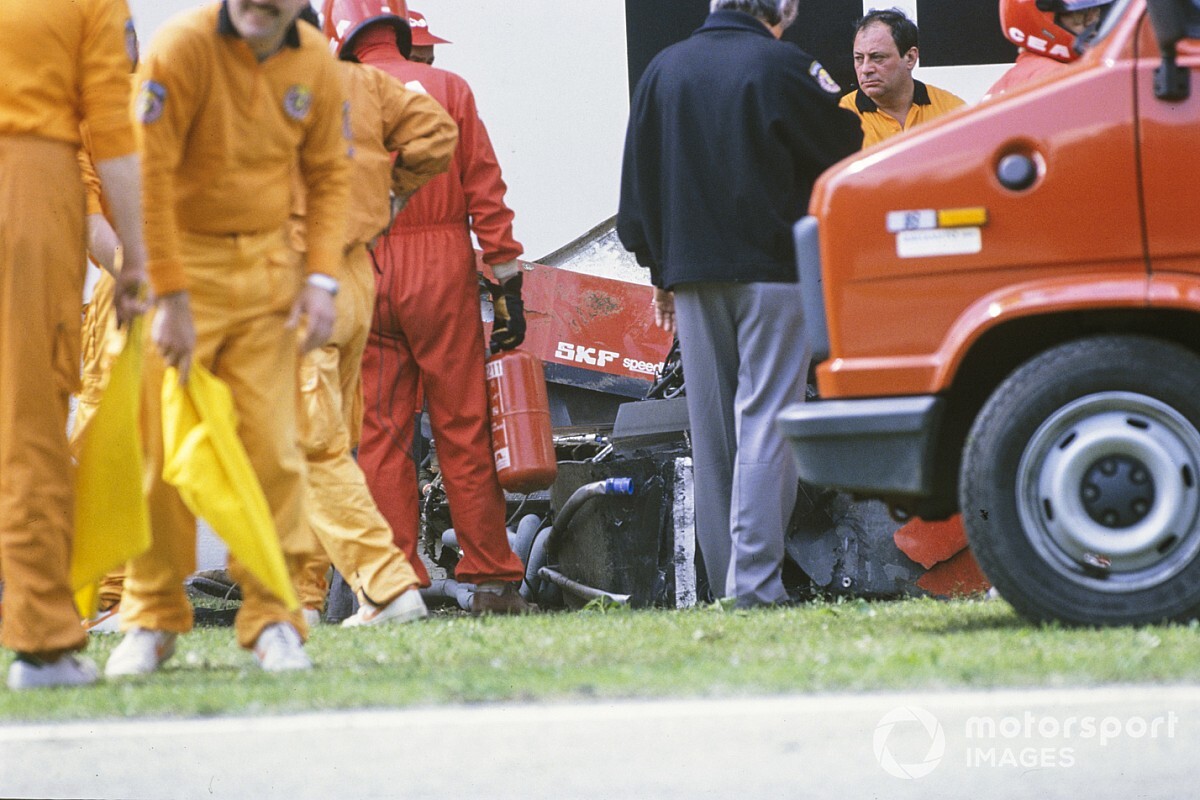
Everyone feared the worst when they saw the fire engulf the car. The rapid arrival of the fire fighters within seconds of the incident was a major factor in the survival of the Austrian driver.
Berger, passed out from the ferocity of the fall, escaped with second-degree burns to his hands, bruises and broken ribs. However, it was another wake-up call for the F1.
Because although the carbon fiber monocoque introduced by John Barnard at McLaren in 1981 had absorbed the energy (believed to be 100G) upon impact, the side exposure of the fuel tank had resulted in nearly a full tank of fuel starts to burn.
The fire fighters were supposed to save the life of Gerhard Berger, Ferrari
1/.3
Photo by: Sutton Images
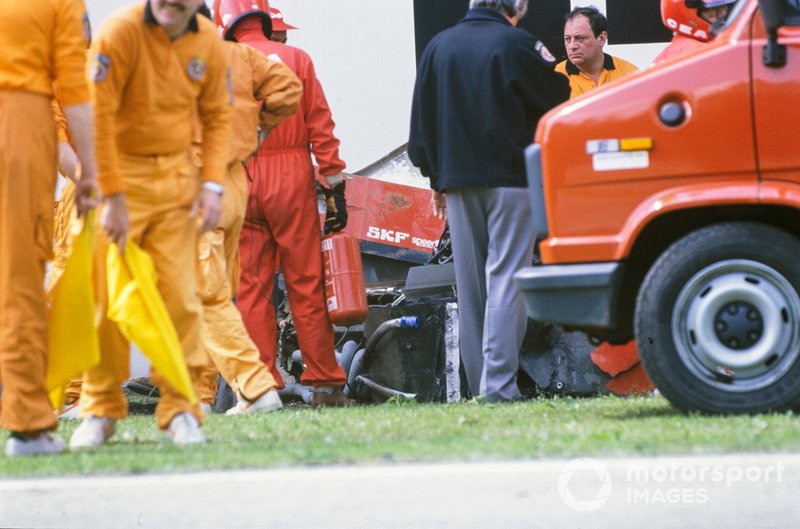
Marshals visit Gerhard Berger’s Ferrari 640 after an accident
2/.3
Photo by: Ercole Colombo
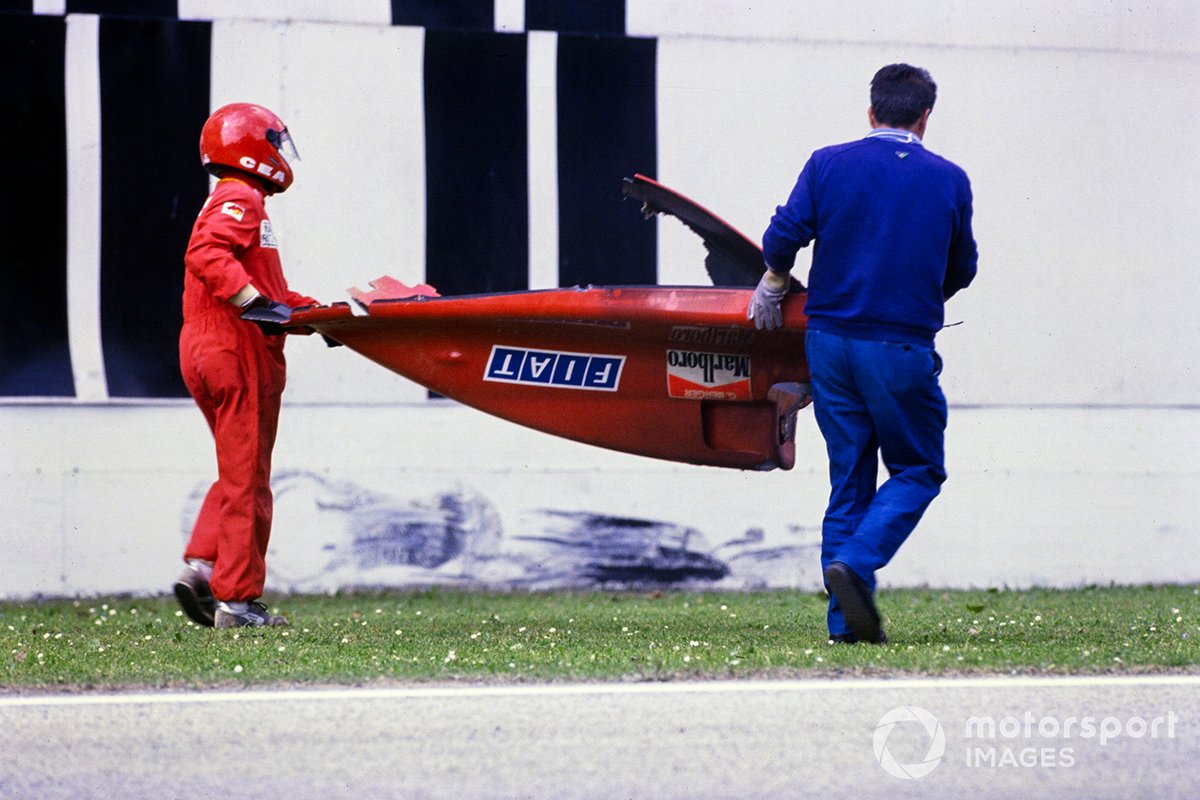
Marshals carry away the rear body of Gerhard Berger’s Ferrari 640 after an accident
3/.3
Photo by: Ercole Colombo
After the race, Ferrari focused on figuring out the cause of the accident in order to prevent further events.
It turned out that the front wing had failed, which later collapsed under the steering wheel, turning it into a sled that went straight into the wall.
Also read:
Barnard and his design team hadn’t really considered Berger’s exuberant curb-hopping driving style. Their calculations were more or less focused on the forces transmitted downwards rather than the upward trajectory forced when they hit the curbs.
Ferrari’s technical director also spearheaded the rule manufacturer’s decision to ban flexible front wing endplates [5]The teams still use stiff versions for their aerodynamic effect: they are more prone to ground knocks and damage.
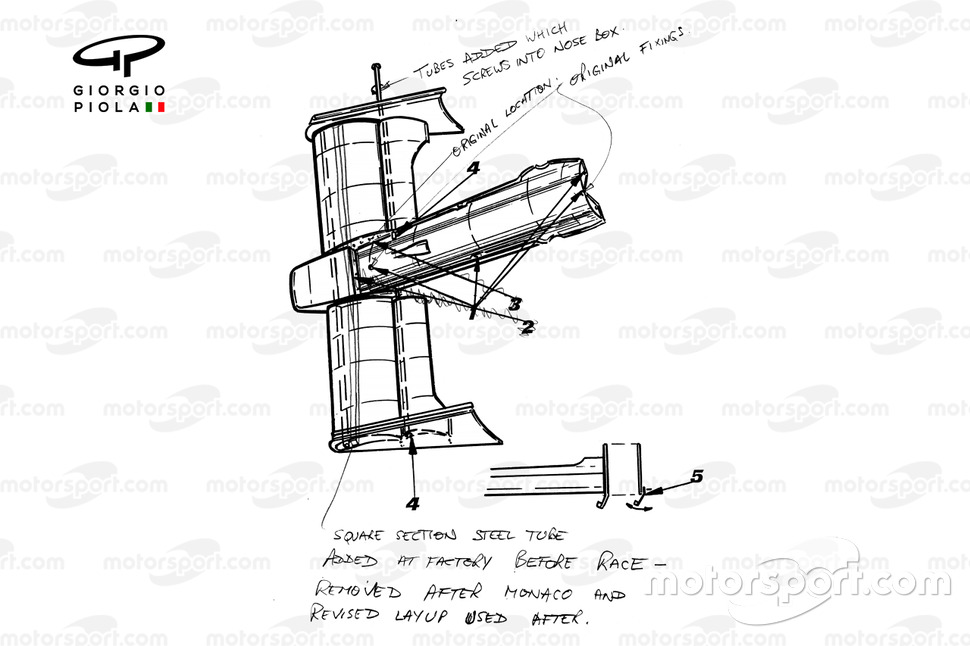
Ferrari 640 front wing with John Barnard corrections
Photo by: Giorgio Piola
In preparation for the next race in Monaco, Ferrari made changes to the carbon structure of the wing to strengthen the affected area. The quick response wasn’t enough, however, as Mansell’s penchant for using the front wing as a guide and thereby cutting off the Armco barriers resulted in a similar failure during practice.
Another later hot fix that resulted in metal being inserted into the wing support tube was prepared for qualifying and later improved for subsequent races.
However, Berger’s accident turned out to be a defining moment for Formula 1 as the fire – live on the world television feed – led to future regulatory changes, with changes to fuel tanks and chassis being the focus of the sport’s efforts.
The designs used at the time were a hangover from the less safety-oriented decades that preceded them, when fuel tanks were still allowed to occupy the space next to the driver. This was a major factor in this accident, which was to be changed in the years that followed.
As part of an overhaul triggered by the Berger crash, the fuel tank not only had to be completely enclosed in the structure of the monocoque, but also a new bladder construction, which is insensitive to penetration, had to be homologated to a strict safety level.
The FT5 bladder is a standard that is still used today. It is a flexible and lightweight construction made from Kevlar fibers that are tightly woven and then coated with an advanced elastomer so that they can be inserted through a small window in the monocoque.
Development of the Ferrari 640/641/642 chassis
1/.5
Photo by: Giorgio Piola
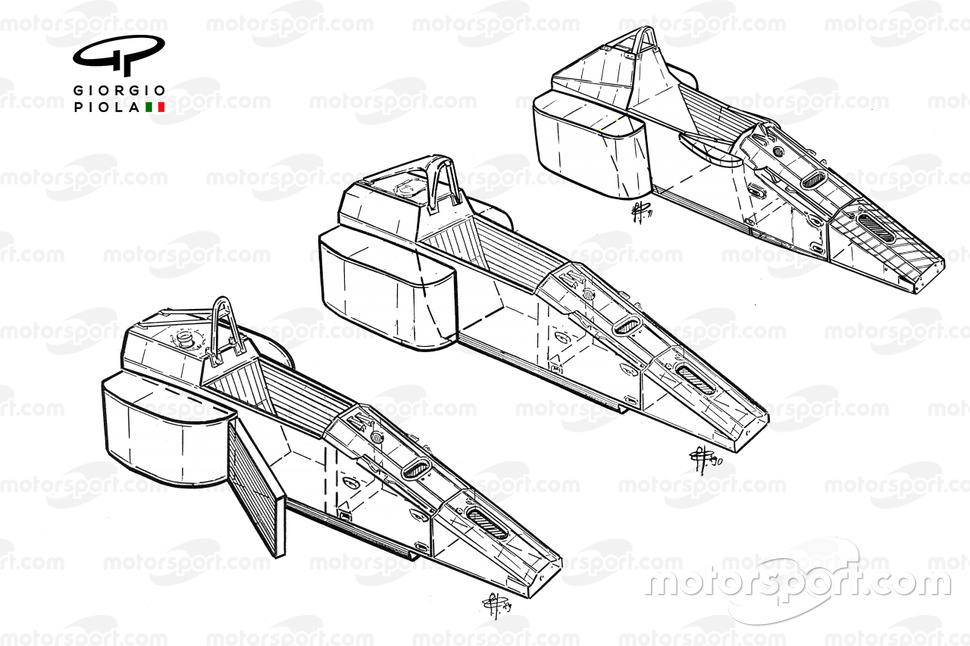
Side by side here we see the differences between the chassis 640, 641 and 642 and their fuel tanks.
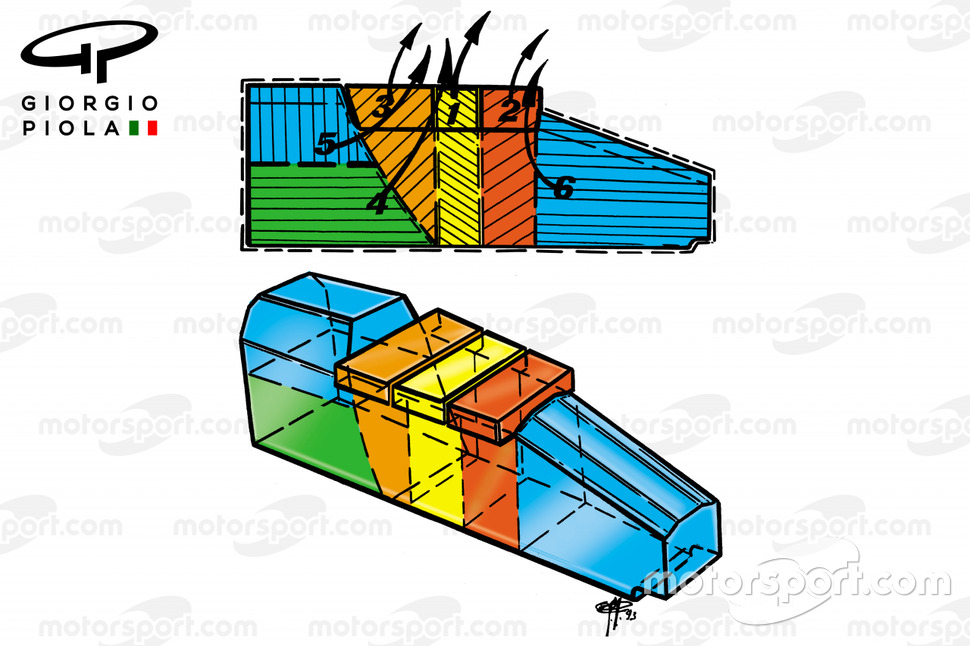
Ferrari 640 male form
2/.5
Photo by: Giorgio Piola
The Ferrari 640’s carbon fiber monocoque was made from a male mold, a process Barnard used on his first carbon car at McLaren and then adopted again for Ferrari. The construction of the monocoque helped take the massive loads that the car had suffered in the accident.
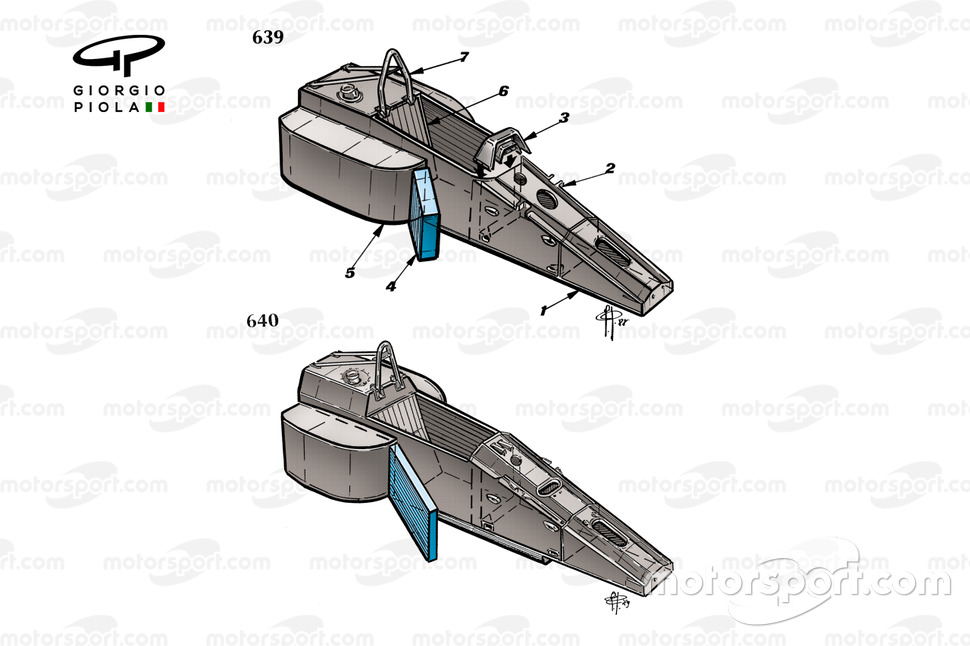
Ferrari 639 and 640 cockpit
3/.5
Photo by: Giorgio Piola
The stillborn 639 saw many changes when the car morphed into the 640 for the ’89 season.
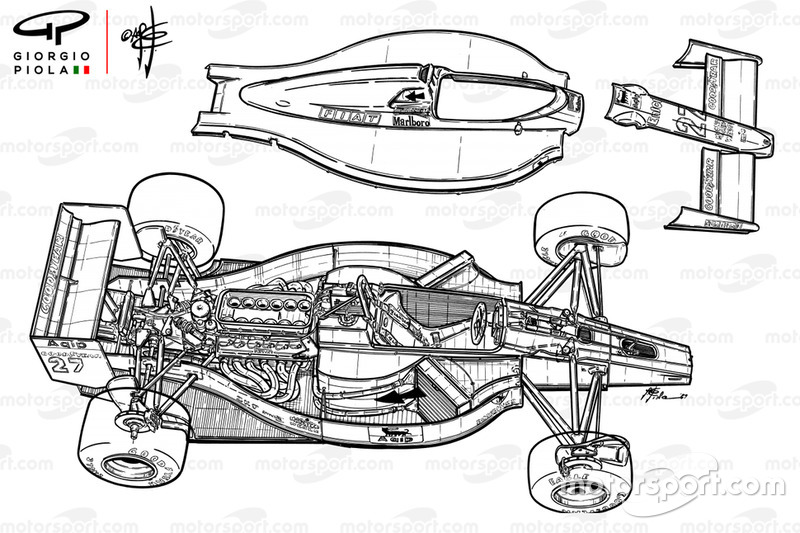
Ferrari F1-89 (640) 1989 exploded view
4th/.5
Photo by: Giorgio Piola
This exploded view of the 640 shows the chassis and fuel tank relative to the rest of the car.
Ferrari F1-90 (641) sectional drawing
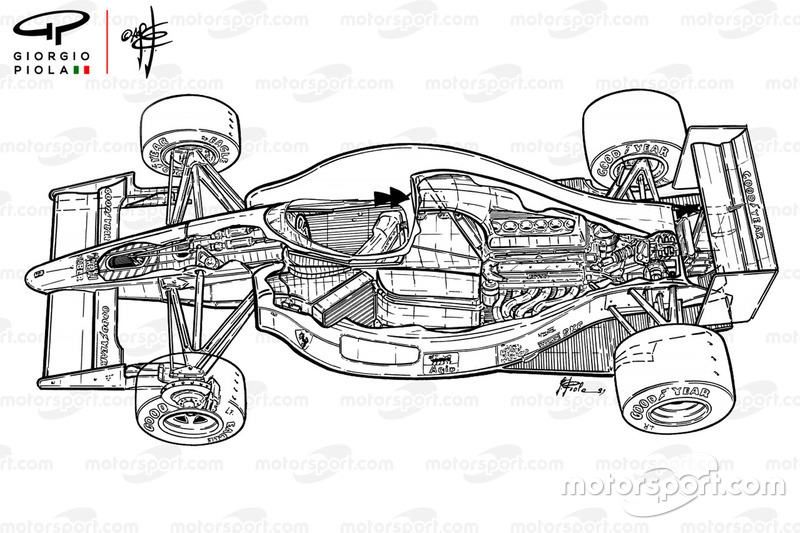
5/.5
Photo by: Giorgio Piola
This section of the 641 gives a comparison of how the chassis and fuel tank differ in design from the 640.
The post The lessons F1 learned from Berger’s fiery Imola crash first appeared on monter-une-startup.Did you miss our previous article...
https://formulaone.news/ferrari/if-attention-shifts-to-double-headers-at-texas-motor-speedway-can-indycar-gain-more-momentum-nationwide





