
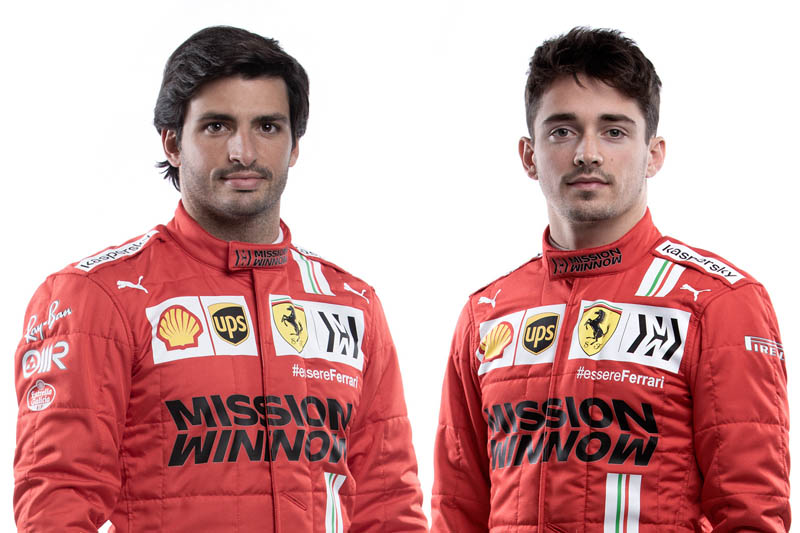
Less than a week after the French GP, Formula 1 is back in action this weekend in the first of two races on the Spielberg circuit. This Sunday it is the turn of the Styrian Grand Prix and the Austrian GP on July 4th. This is the second edition of the race that bears the name of the region and which first took place last year when the venue hosted the first two runs of the 2020 season at 700 meters above sea level, after the long delay due to the pandemic.
At just 4.3 kilometers and only 11 bends, the Spielberg route is one of the shortest on the calendar. There are long straights that demand a lot of power from the engines, but also demanding changes of direction, which make it a route with medium downforce. A lap takes just over a minute and the average speed is one of the highest of the season. In fact, Spielberg, along with Monza, are the tracks that don’t put too much pressure on the brakes and only use around 10 seconds per lap. The only really hard braking point is at Turn 3, at the top of the incline leading to the highest point of the track, which together with the braking point for Turn 4 offers the best overtaking opportunities. There are three DRS zones: on the main straight, on the incline between curves 2 and 3 and on the straight between 3 and 4.
The cars will hit the track for the first time on Friday, with the usual two hour-long free practice sessions starting at 11:30 a.m. and 3:00 p.m. Qualifying takes place on Saturday at 3 p.m. before the last free practice session takes place at 12 p.m. The second Styrian Grand Prix starts on Sunday at 3 p.m., with the drivers covering 71 laps and a distance of 306,452 km.
Ferrari in Spielberg (1997-2020)
GP entered 15
Debut Austria 1997 (M. Schumacher 6 .; E. Irvine ret.)
Win 3 (20%)
Pole positions 4 (26.67%)
Fastest laps 3 (20%)
Total platforms 16 (35.56%)
Grand Prix of Styria: facts & figures
7. The furthest back starting position from which a race for this current Spielberg configuration was won. In 2001 David Coulthard made it. The Scot takes the price for the podium from the very back: In 1998 he qualified 14th and finished the Austrian Grand Prix in second place.
12. The number of districts in Styria – Styria as it is popularly known – including the city of Graz (330,000 inhabitants). With an area of 16,388 km², it is the second largest in Austria after Lower Austria. The Spielberg-Runde is located in the Murtal district, which was founded in 2012 with Judenberg as the capital.
29. The average number of overtaking maneuvers in the 15 Grands Prix races with Spielberg’s current configuration. The race with the most position changes so far was the Austrian GP in 2016 with 66. It is followed by last year’s Styria race with 45 and then the Austrian GP in 2018 and 2019 with 42. The race with the fewest was the Austrian GP in 2003, won by Michael Schumacher in the Ferrari F2003-GA, with only 15 overtaking maneuvers.
1957. The year of the first car race in Austria. It was an event for sports and GT vehicles that took place on a laid-out track at Zeltweg airfield, a few kilometers from Spielberg. Victory went to the Austrian Ernst Vogel in a Porsche, the victory in the GT class went to the Italian Dore Lete di Priolo at the wheel of an Alfa Romeo. The year of the first car race in Austria.
5942. The length of the Osterreichring in meters, the earliest incarnation of the Spielbergbahn from 1969. It was very fast and had many changes in incline as it was carved into the flank of a hill. Over the years, as the cars got faster, the track became too dangerous and thus obsolete for Formula 1 cars and the last race was held in 1987. Eight years later, the new owners hired the architect Hermann Tilke, who redesigned the route to make it shorter and safer and give Spielberg new life. This route was used from 1997 to 2003. After that, Formula 1 returned to Austria from 2014 after the route was rebuilt again.
This week in Ferrari history
23/6. Two weeks before the 2020 championship resumed after a long break due to the Covid 19 pandemic, Scuderia Ferrari and its two drivers were back on the track for a day of testing in Mugello. Sebastian Vettel and Charles Leclerc took turns at the wheel of an SF71H. The main purpose was to get back used to driving and make sure the team could rehearse their garage procedures and apply health protocols set by the FIA to get the season back on track.
24/6. 110 years ago, in 1911, Juan Manuel Fangio Deramo was born in Balcare, Argentina. This exceptional driver from the 40s and 50s was a driving force in the early days of Formula 1. He won the world championship five times (1951, 1954, 1955, 1956, 1957) – a record that remained unbroken until 2003 when Michael Schumacher secured himself his sixth title, his fourth with Scuderia Ferrari. Fangio was known for his incredible speed, tactical acumen and a talent for always choosing the best car that was available to him. In 1956, Fangio drove a single season for Ferrari in Formula 1, won three races with the D50 in Argentina, Great Britain and Germany and took the title in Monza. The Argentine also won in sports cars with the Maranello team. His most important victory was the Sebring 12-hour race in 1956, which he shared with Eugenio Castellotti in an 860 Monza.
25/6. The Frenchman Patrick Tambay, born in Paris in 1949, will be 72 years old. From the middle of the 1982 season until the end of 1983 he drove for Scuderia Ferrari. He took part in 21 races with the Maranello brand and won two of them in Germany in 1982 with the 126 C2 and the San Marino Grand Prix 1983 in a 126 C2B. In both seasons Tambay played his part and collected points for Ferrari’s constructors championship title.
26/6. In 1949 Ferrari took its first victory at the Le Mans 24 Hours with a 166 MM. It was driven by the Italian Luigi Chinetti and the Englishman Peter Mitchell-Thomson, the 2nd Baron Selsdon, who financed the entry. Chinetti drove the first ten and a half hours and handed over to his team-mate at 4:30 a.m. with a three-lap lead over the field. Mitchell-Thomson drove just 72 minutes before handing over to Chinetti, who crossed the finish line, one lap ahead of the Frenchman Henri Louveau’s Delage and the Spaniard Juan Jover.
27/6. In 2015, Marc Gene, the coach of the Ferrari F1 Clienti drivers and ambassador for Scuderia Ferrari, drove a Ferrari F10 Formula 1 car at the Goodwood Festival of Speed in England. There was also former Scuderia driver Rene Arnoux, who took the team three wins in their 1983 season, which won the constructors’ championship. In the famous English hill climb, the Frenchman drove a 599XX, one of the very powerful vehicles used in Ferrari’s XX program.
The post Styria GP: Preview – Ferrari first appeared on monter-une-startup.




