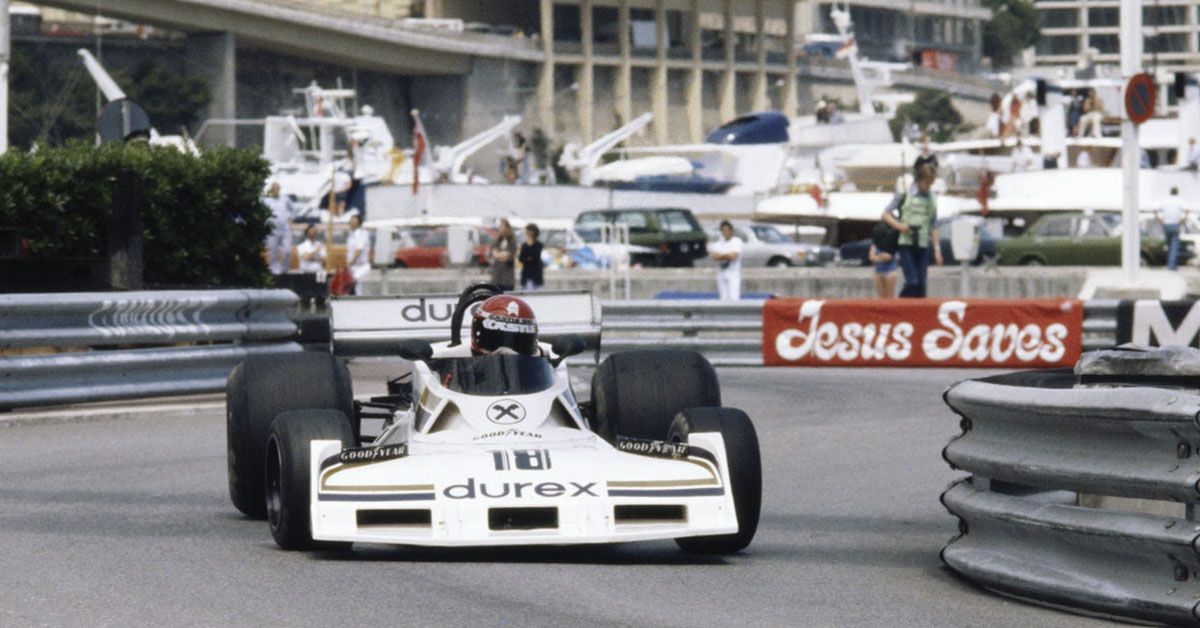
During the splendor of formula One, Cars were mechanical “beasts”. Without electronics or driving aids (power steering, traction control), the driver could only steer with one hand and shift gear with the other.
If you’ve never seen footage of an old school F1 driver in his cockpit struggling with his car to keep it on the track, do yourself a favor and check it out today. In the meantime, you can think of him as a rodeo cowboy riding a bucking bull and struggling to stay mounted while the beast tries to fend him off.
In the past, Formula 1 was less about the business side of sport and more about pure racing. It was emotionally and physically demanding for the drivers (see Senna, who won the 1991 Brazilian Grand Prix), extremely dangerous and often fatal for both drivers and spectators. But most of it is in the past.
Now, all of the regulations that keep increasing every year, along with advances in technology in safety for both cars and racetracks, have made Formula 1 evolve. As a result, F1 has become a sport more in keeping with today’s society; safer, more socially responsible and “politically correct”.
Formula 1 back to the day
Via: I’m a motor
There used to be fierce, brutal head-to-head races in Formula 1, in which cars usually crashed and went up in flames, with fatal consequences. It had the “glamor” of the grid girls and the long haired drivers and epic sideburns smoking in the paddock. In the 1970s, it was common for tobacco, alcohol and condom sponsorship on Formula 1 cars to trigger censorship on television coverage of Formula 1 in England.
However, all of this was before political correctness became a problem. But thirty or forty years ago, many of the characteristics that shaped Formula 1 are unthinkable today.
Modern Formula 1
Street: Brand
In 2018, Formula 1 announced that grid girls would be banned from the paddock for this year’s season, a decision that sparked much controversy among fans. “Although the use of grid girls has been indispensable in F1 GPs for decades, we believe that this practice does not correspond to our brand values and does not correspond to the norms of modern society.
We do not believe this practice is appropriate or relevant for F1 and its fans, old and new, around the world, “announced Sam Bratches, F1 managing director for commercial operations, a new move among the many measures taken by Liberty Media has the “big circus” and adapt Formula 1 to today’s society.
Speaking of F1 drivers, they are true athletes these days, and in many cases they live up to that image. It is therefore unthinkable today that drivers on the grid smoke or have habits that contradict their athletic status.
Also, drivers are currently using the power of their image and social media to send messages on social topics, such as: B. to protest against racism or to support the rights of LGBT people.
Via: Drivetribe
Formula 1 has been closely linked to tobacco sponsorship since the 1960s. However, much of the revenue from that sponsorship disappeared with widespread tobacco advertising bans that had been in place in most countries since the mid-2000s. And while you don’t see any real-world cigarette brands sponsoring Grand Prix or Formula 1 cars, tobacco is associated with the sport in one way or another.
Via: Reddit
For example, a report jointly written by the anti-tobacco NGO STOP and the F1 financial reporters Formula Money states that the tobacco companies Philip Morris International (PMI) and British American Tobacco (BAT) advertise with Ferrari or national tobacco advertising bans. “
Via: The guardian
“Both PMI and BAT use their F1 links in corporate PR and social media; together they use car starts, team successes, F1 esports and more to grab the attention of F1 fans. In addition, research suggests that even the tobacco brands that quit the sport benefited from long-term memories of their association with Formula One, “the report said.
The controversy is not over
VIa: Sky Sports
Although the driver and audience have stated that modern F1 races are no longer as exciting as they used to be, we can still consider Formula 1 as an exciting motor sport, even though the fiercest critics claim that today’s Formula 1 is the most boring version of the sport of all time.
Anyone over 40 who loves Formula 1 enjoyed the Prost and Senna era but fed up with Schumacher’s monopoly. And for some the same thing is happening now, but with different names.
Today we have the seven-time world champion Lewis Hamilton against the hottest Formula 1 driver, according to many fans today, the Dutchman Max Verstappen.
And while the rivalry between Max and Lewis may, for some, be a bit more polite and therefore less sharp and attractive than that of the Brazilians and French, the 2021 F1 season proves that this category is regaining the excitement that made it famous in the world 1980s and 1990s. For example, it has been many years since the last race on the calendar, like this season in Abu Dhabi, the world championship title for F1 drivers was decided. Not to mention what happened at the Saudi Arabia Grand Prix this season.
A decaffeinated motorsport?
Via: Motorsport
In 2011, the FIA announced that it would replace the 2.4-liter V8s in F1 cars with a 1.6-liter V6 turbo configuration for the 2014 season. The new formula reintroduced turbocharged F1 cars, which last appeared in 1988.
In contrast to their predecessors from the 80s, however, many feared that these new V6 turbo engines would take away an essential element from Formula 1; loud engine noises. Perhaps the main reason so many of us were excited about the sport.
And they were right. The current engines are quiet compared to the screeching V10s and V8s of yesteryear. The monstrous, deafening roar we loved so much has been replaced with a flat, less impressive tone. As Lewis Hamilton once said: “The current Formula 1 engines sound terrible and make the spectacle sad”.
What does the future hold for F1?
Via: Motorsport
Nobody can predict the future of Formula 1, but one thing is certain; It’s hard to imagine that it could be as exciting as it used to be, even compared to the last few years. Not so long ago, in 2007, the cars of the Toro Rosso F1 Team had Cosworth V10 engines.
Nevertheless, Formula 1 is still the premier class of motorsport. It is the ultimate in racing and technology. In addition, many of the changes this sport has undergone over the past thirty years have made it better. Either because of the political correctness or because Formula 1 was “saved” by reality TV (Netflix’s Drive To Survive) or simply because this sport has really developed for the better, F1 is more sustainable, more inclusive and more popular than ever.
Continue reading
About the author
Eduardo Zepeda
(46 published articles)
Eduardo Zepeda is a car lover, author, gasoline mechanic, and RV enthusiast from León, Mexico. He has lived in different parts of Mexico, the United States, and Canada and loves traveling around his home on wheels with his wife and dogs. He has worked as a copywriter and content strategist for the past 7 years, publishing content on manufacturing industries such as automotive, aerospace, and general industry.
More from Eduardo Zepeda