
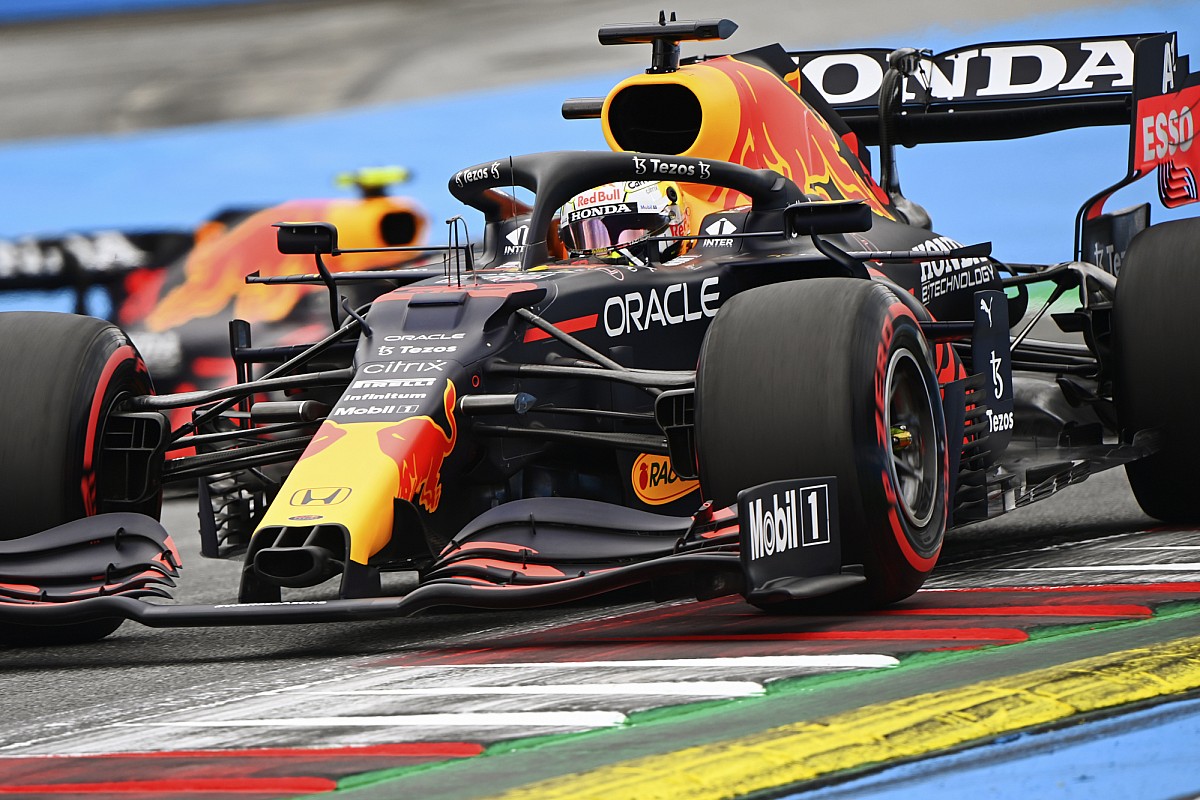
Red Bull has asked Formula 1 to pursue a “clean sheet” approach for their next generation of engines before a crisis meeting between the manufacturers on Saturday.
F1 announced in February that it would continue plans for a new powertrain formula from 2025, having meanwhile agreed to halt development of the existing V6 hybrids.
On Saturday afternoon there will be a meeting in Austria that will shape the orientation of the new units, including the existing unit manufacturers Ferrari, Mercedes and Renault as well as interested parties such as Audi and Porsche.
Red Bull will also be present at the meeting ahead of its development into a powertrain manufacturer in 2022 when it takes over outgoing partner Honda.
The focus of the meeting is on the use of sustainable fuels – widely recognized as a decisive development for the future of Formula 1 – as well as the balance between hybrid and internal combustion engine drive in the next generation of engines.
Red Bull F1 boss Christian Horner sees the series as an opportunity to “do something good for the sport” with the new engine regulations and should not consider taking over the existing engines due to the effort and complexity involved.
He also indicated that he wanted to postpone the introduction of the new units to 2026, a year later than currently planned.
“This engine will be with us for the next 10 years when it is introduced,” said Horner.
“I’d rather take the time to develop something exciting, different, and relevant that meets the criteria of cost and performance and promotes the close race.
“Of course we shouldn’t ignore sound and emotion either. For me, these are the criteria to focus on.
“It would be a great shame to take over what is currently a very expensive engine and try to make it cheap. You cannot fly first class and pay for an economy ticket.
Hopefully there will be an opportunity – especially if it were for ’26 – to develop an engine that is sustainable, that is environmentally friendly, that uses biofuel, that is a bit more clean, perhaps with elements of standardization where the costs are clear are “controlled instead of just transferring what we currently have.”
Also read:
The presence of Audi and Porsche at the meeting is due to the renewed interest of the VW Group in a possible F1 engine project, with the focus on a sustainable and inexpensive engine.
Horner believed that Red Bull would have the same interests as any new manufacturer looking to join Formula 1, despite not being an OEM who may need some level of road relevance.
“I would say that every new manufacturer that comes in is obviously interested in having a clean sheet, I would have thought,” said Horner.
“You can understand that existing manufacturers have invested in these engines and want to move IP into the new engine.
“But of course this current engine is extremely expensive, and how you can reduce costs has not yet been achieved in all of the discussions I have participated in.
“So I think it’s not that easy to implement a cost cap, because of course an engine is much more difficult to monitor when combustion applies to many other aspects, especially if you are an OEM team or an engine manufacturer in the formula 1 are.”
Horner believed that the clean sheet should include a reduction in test bench and set-up time to “encourage creativity” and a “safety net” so that manufacturers can catch up if they do something wrong.
“We have to come up with something that is relevant and right for the sport,” said Horner.
“Of course, it’s not just about the engine, it has to be built into a car with low drag in order to achieve this efficiency. So it also has an enormous impact on the chassis side.
“That’s why I think a goal for 2026 would be the right path for Formula 1 for me.”
But he felt that the final decision had to be with the F1 regulator, the FIA, and the commercial rights holder to make a call that was best for the series.
“We should leave that to regulators and commercial rights holders to find something that they think is right for the sport,” Horner said.
“You should pay the specialists, some independent specialists, to do this study and then come up with the rules.
“If the teams like it, they’ll take part, and if they don’t, they won’t be in time for the new Concorde deal for 2026.”
The post From 2026, Red Bull wants a “clean sheet” for new Formula 1 engines first appeared on monter-une-startup.




