
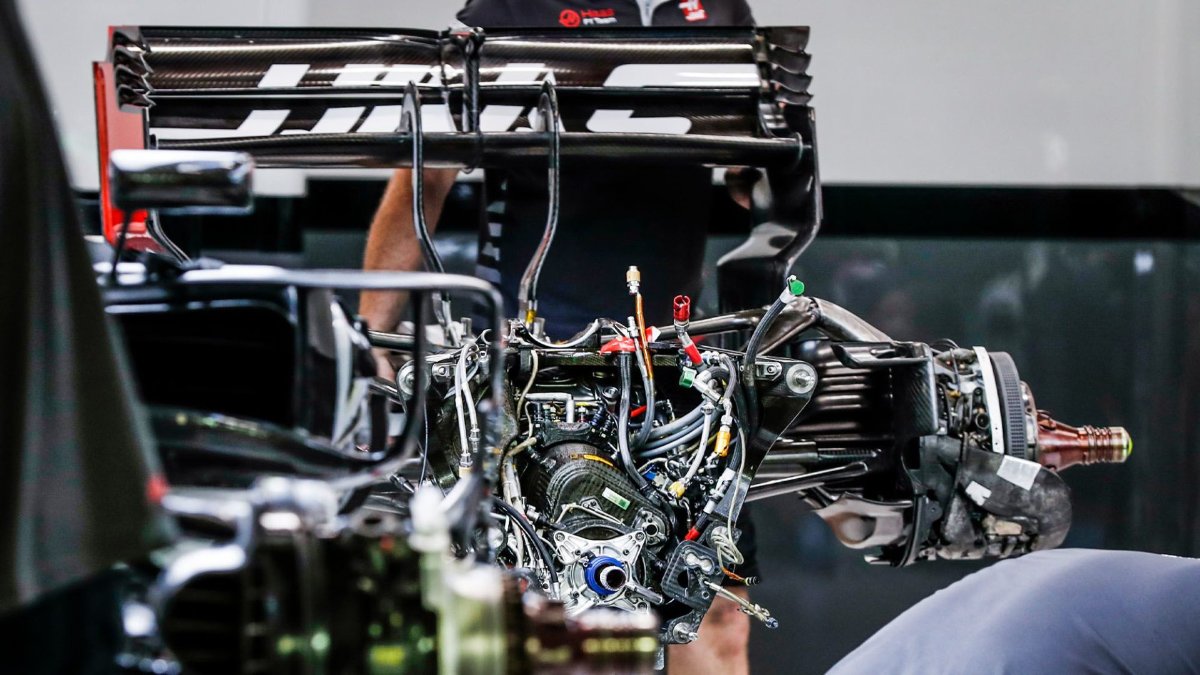
Formula 1 cars are the premier class of automotive engineering. They’re so fast that it wouldn’t be unfair to call an F1 car a missile on wheels. And speed depends on two main reasons – aerodynamics and performance. While aerodynamics are heavily dependent on external elements such as fenders and the body of the car, the power is generated by the engine.
ADVERTISING
The article continues below this ad
But an ominously fast engine is nothing without a gearbox, a gearbox that transfers torque to the drive shaft. Therefore, transmissions in F1 cars are incredibly important and quite expensive.
So expensive that you could buy about five Ferrari street cars for the price of a Ferrari F1 gearbox.
ADVERTISING
The article continues below this ad
Do Formula 1 cars have a dual clutch transmission?
A dual clutch transmission is standard in modern supercars and hypercars. Even so, an F1 car or most racing cars do not have a DCT. Instead, they have a sequential transmission, similar to that used on motorcycles.
Put simply, a DCT is nearly 100 pounds heavier than a sequential gearbox. And that’s a lot of weight for a racing car.
In other words, a sequential transmission makes more sense because F1 cars only engage the clutch once, typically at the start of the race. In F1 cars, too, the gears simply have to be changed between gear changes due to the requirements of the sport. So while a DCT would allow a smoother gear change, a sequential gear change enables less power and time loss.
There are more extensive and technical explanations as to why sequential is preferred over DCT.
But in short, it’s simply because a sequential gearbox is faster and lighter.
How much does an F1 gearbox cost?
Obviously, since the transmission is one of the most complex and important elements of an F1 car, it is quite expensive.
The cost of Formula 1 crashes. 
Motor unit $ 10 million
Monocoque $ 650,000 – 1.2 million
Front wing & nose cone $ 300,000
Gearbox $ 600,000
Transfer $ 250,000
Tires (tire kit) $ 1714
So don’t crash next time.
And when you see something go wrong, think about that cost. pic.twitter.com/iD3ccnraQ9
– HarryWood (@xlfellas) May 15, 2019
How can gear damage lead to a grid penalty?
To be clear, a driver receives a grid penalty if they change their gearbox. It does not necessarily have to be damaged and the regulations do not provide for any compensation.
ADVERTISING
The article continues below this ad
According to the FIA regulations, a driver can change his gearbox after six races. This is simply because a sequential transmission degrades after a few races due to high temperatures and forces.
Since a transmission is such a critical factor in performance in Formula 1, richer teams could easily swap it out after each race to get the most of it.
So the grid penalties are a way of curbing new gearboxes as a benefit to level the playing field. This is of course a bit unfair, considering that a damaged gearbox shouldn’t really earn you a grid penalty.
ADVERTISING
The article continues below this ad
But it’s one of those things where the benefits of regulation overlap its disadvantages.
Did you enjoy reading this article? Download our exclusive app for 24×7 coverage, latest memes and social media banter. Click here to download.
The post Formula 1 transmissions: are they double clutches? How much do they cost and why do they result in grid penalties? first appeared on monter-une-startup.Did you miss our previous article...
https://formulaone.news/ferrari/c-challenge-the-pictionary-challenge